

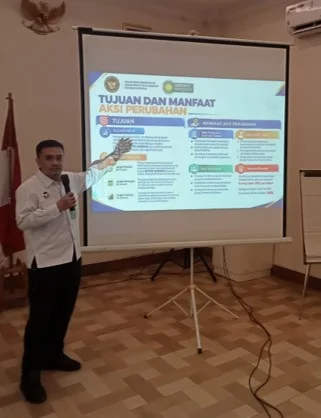
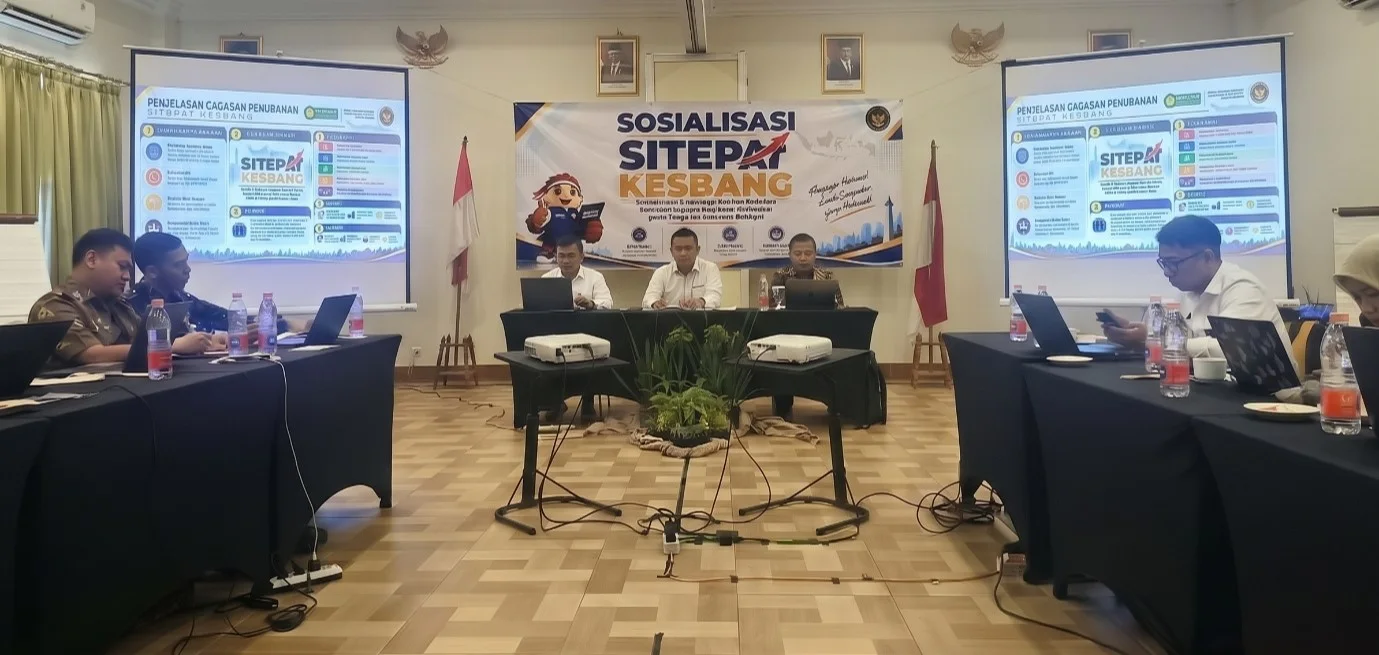
BOGOR, JurnalPost.com – The Coordinating Ministry for Political and Security Affairs (Kemenko Polkam), through the Assistant Deputy for National Unity Coordination, held a socialization event for the Evaluative Follow-up Instrument System through Accurate and Measurable Monitoring (SITEPAT KESBANG) at the Sahira Pakuan Hotel, Bogor, on Tuesday (17/11/2026).
This activity serves as a step toward strengthening the governance of monitoring and evaluation (M&E) regarding the follow-up of policy recommendations, ensuring that implementation is more systematic, measurable, and accountable.
The socialization is part of the implementation of a Change Action focused on improving the quality of monitoring and evaluation through the development of operational instruments that can be utilized in daily tasks.
SITEPAT KESBANG is designed to assist the policy recommendation monitoring process, ranging from identifying recommendations and recording responses to tracking follow-up progress and categorizing completion status based on verifiable supporting evidence.
Through this instrument, the monitoring process is expected to focus not only on achieving numerical targets but also on the quality of information and the clarity of policy follow-up implementation.
Promoting More Orderly and Accountable Governance
Assistant Deputy for National Unity Coordination, Cecep Agus Supriyanta, emphasized the importance of governance innovation that can meet organizational needs while providing tangible benefits for improving the quality of task execution.
According to him, the development of monitoring and evaluation instruments must be accompanied by a commitment to use them consistently and sustainably.
“The existence of SITEPAT KESBANG is expected to be more than just an administrative tool; it should be part of an effort to build a more orderly, consistent, and accountable monitoring and evaluation mechanism. The most important thing is how this instrument can be utilized sustainably to support the improvement of coordination quality and the implementation of policy recommendation follow-ups,” said Cecep Agus Supriyanta, Assistant Deputy for National Unity Coordination.
Strengthening this mechanism is considered essential to ensure that the progress of every policy recommendation can be monitored through clear and documented information.
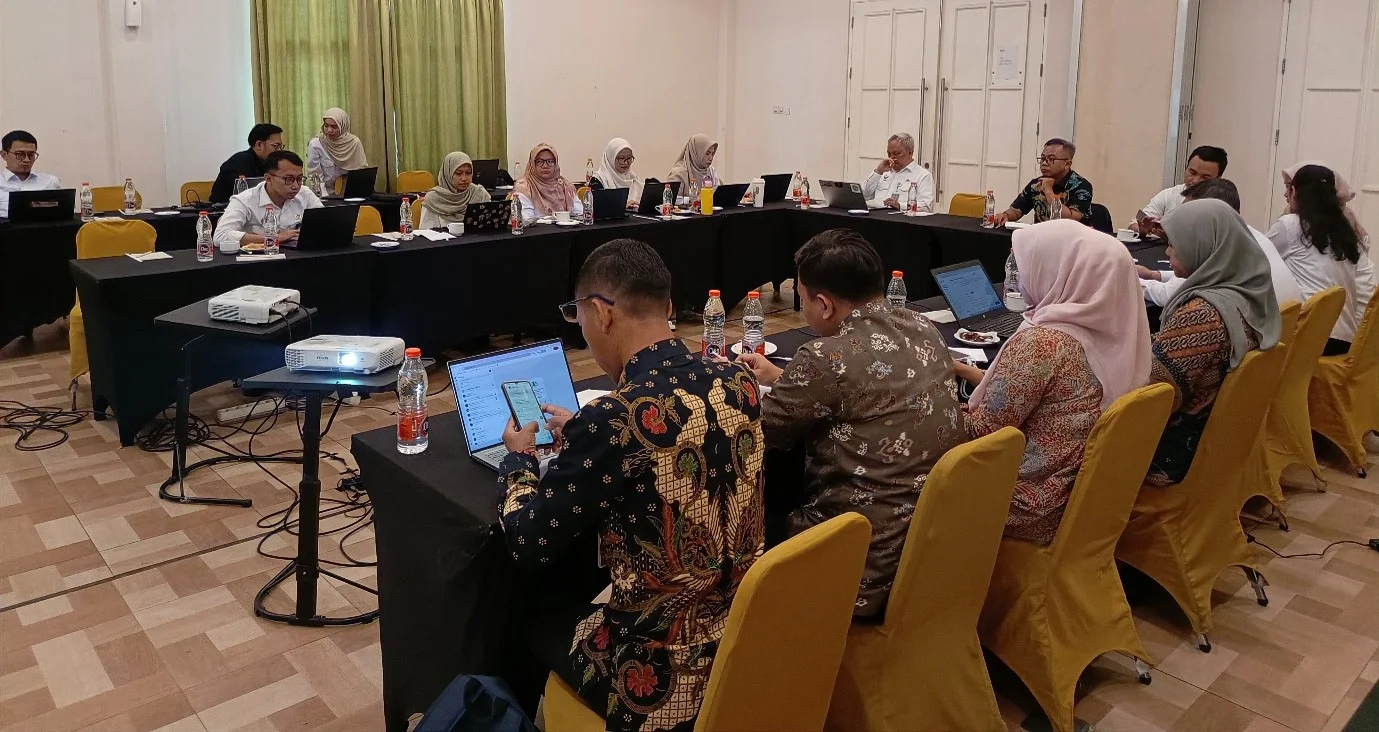
Consequently, coordination between parties involved in implementing recommendations is expected to be more effective.
SITEPAT KESBANG Provides More Structured Monitoring
Meanwhile, the Head of the National Defense Division, Leonardo Mukti Nugroho, explained that SITEPAT KESBANG was developed in response to the need for strengthening operational mechanisms in monitoring policy recommendation follow-ups.
The instrument is expected to help ensure that every recommendation submitted can be identified, its progress recorded, and tracked based on relevant supporting evidence.
“Until now, the follow-up of policy recommendations has needed to be supported by a monitoring mechanism capable of presenting information in a more structured manner. Through SITEPAT KESBANG, we are striving to provide an instrument that helps ensure every recommendation is identified, its follow-up status is clearly recorded, and it is supported by relevant and verifiable evidence,” explained Leonardo Mukti Nugroho, Head of the National Defense Division.
Leonardo emphasized that the main focus of this Change Action is not merely to increase the percentage of policy recommendation follow-up achievements.
More importantly, the development of SITEPAT KESBANG is directed toward strengthening the quality of the monitoring and evaluation process, particularly regarding the accuracy of information, clarity of completion status, and the credibility of supporting evidence.
This approach is expected to help the organization obtain a more objective overview of the progress of policy recommendation implementation.
Socialization Serves as a Space for Discussion and Alignment
During the event, participants received explanations regarding the background of SITEPAT KESBANG's development, its objectives, implementation principles, scope, and the operational definitions used within the instrument.
The socialization material also covered the objects of monitoring and evaluation, as well as the division of roles for parties involved in the recording and monitoring process.
In addition to the presentation of materials, the activity served as a discussion space to align perceptions and gather input regarding the application of the instrument in daily tasks.
A participant from the Ministry of Home Affairs (Kemendagri) expressed appreciation for the development of SITEPAT KESBANG.
According to the participant, the existence of this instrument has the potential to simplify the monitoring of policy recommendation follow-up progress because information is presented in a more structured way.
“In our view, this instrument is quite helpful because it can provide more structured information regarding the position and progress of policy recommendation follow-ups. With the classification of status and supporting evidence, the monitoring process is expected to become easier and not rely solely on general reports,” said a participant from the Ministry of Home Affairs.
Input from participants is a crucial part of efforts to ensure the developed instrument meets the needs of coordination and policy monitoring.
Strengthening Synergy and Consistency in Policy Follow-up
Through the SITEPAT KESBANG socialization, all involved parties are expected to have a shared understanding of the mechanism for monitoring and evaluating policy recommendations.
The successful implementation of this instrument requires coordination, synergy, and consistency in recording, updating information, and providing supporting evidence for every follow-up action taken.
Furthermore, the sustainable use of the instrument is expected to facilitate the identification of recommendations that have been completed versus those that still require follow-up.
With more structured information, the implementation of monitoring and evaluation can serve as a foundation for improving coordination effectiveness and refining the decision-making process.
The implementation of SITEPAT KESBANG within the Assistant Deputy for National Unity Coordination at the Coordinating Ministry for Political and Security Affairs is expected to be a concrete step in building more effective, transparent, and accountable monitoring and evaluation governance.
This strengthening also serves as part of an effort to improve the quality of policy coordination, ensuring that the resulting recommendations do not stop at the submission stage but are monitored through to the follow-up process.









Comments 0
Write a Comment Share your response