

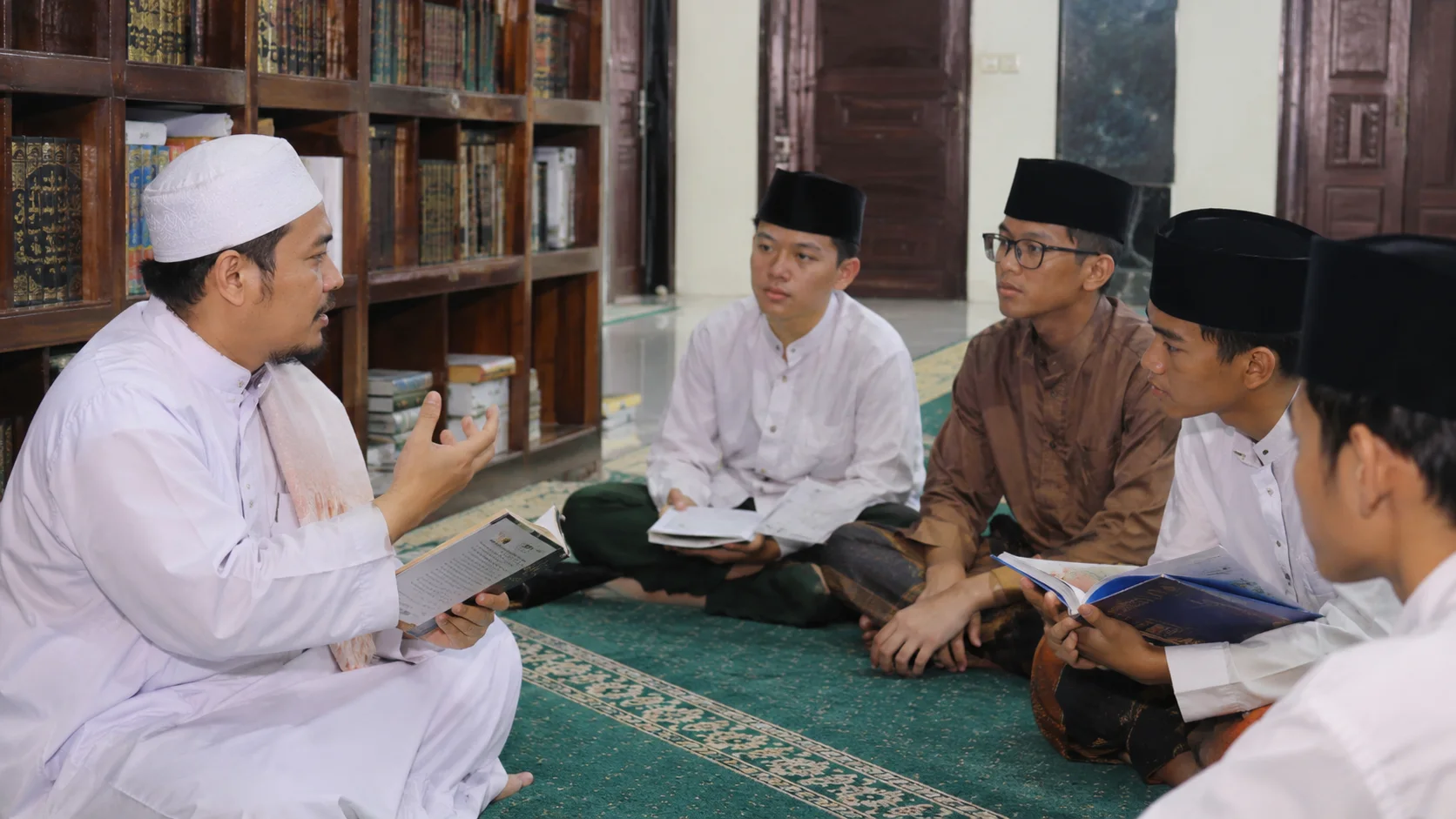
JurnalPost.com - Islamic boarding schools, or pesantren, have long been recognized as educational institutions that focus not only on mastering religious knowledge but also on shaping the personality and character of their students. Within these walls, students do more than just learn to read classical texts, memorize the Quran, understand hadith, or master various Islamic disciplines. They are guided to embody adab (etiquette), discipline, responsibility, humility, and the ability to apply their knowledge in daily life.
However, in educational practice, a student's success is sometimes still measured primarily by academic ability. Students are often deemed successful if they can memorize vast amounts of material, grasp lessons, achieve high grades, or complete their education with distinction. Yet, there is another equally vital aspect: how that knowledge shapes their behavior and personality.
This is where it is essential to understand the difference between taklim and tarbiyah. Both are crucial elements in Islamic education, but they carry different emphases. Taklim relates to the process of conveying and teaching knowledge, whereas tarbiyah encompasses the process of nurturing and developing human beings so they grow into virtuous individuals.
So, why do students need tarbiyah more than just taklim? Is teaching knowledge alone insufficient to produce a generation that is both learned and virtuous?
The Meaning of Taklim and Tarbiyah
Simply put, taklim can be understood as the process of teaching knowledge to someone. In the taklim process, there is an activity where a teacher conveys material, explains concepts, provides understanding, and guides students to know things they previously did not.
Taklim holds a very important position in Islam. In fact, the activity of teaching knowledge is mentioned in several verses of the Quran. Allah the Almighty states:
وَيُعَلِّمُهُمُ الْكِتَابَ وَالْحِكْمَةَ
"And He teaches them the Book (the Quran) and Wisdom (the Sunnah)." (QS. Al-Baqarah: 129).
This verse demonstrates that the teaching of knowledge is a vital part of the prophets' mission in guiding humanity.
Meanwhile, tarbiyah has a broader scope. It is not merely about the transfer of knowledge, but also the process of guiding, nurturing, maintaining, and developing human potential gradually. It includes the cultivation of faith, character, habits, discipline, and personality formation.
Thus, if taklim emphasizes the question, "What should the student know?", then tarbiyah asks a deeper question: "What kind of person should the student become after receiving this knowledge?"
These are not two concepts to be pitted against each other. Taklim is an essential part of the educational process, while tarbiyah provides the direction so that the knowledge learned can shape a person's character and behavior.
Why Is Instruction Alone Not Enough?
1. Knowledge Does Not Always Correlate with Character
A person might know many arguments about honesty but not necessarily be accustomed to speaking the truth. One might understand the laws regarding backbiting but still easily gossip about others. Even someone who has mastered various texts on etiquette may not necessarily demonstrate good manners toward their teacher.
This shows that knowing what is good does not always mean being able to practice it.
Knowledge requires a process of cultivation to become a habit and be reflected in behavior. Students are not just given an understanding of the importance of respecting teachers; they need to be guided to practice it. They are not just taught about patience; they need to be trained to face situations that demand it.
This is where tarbiyah plays its role. It bridges knowledge and practice so that learning does not stop as information stored in the mind, but becomes part of a person's character.
2. Adab Must Be Modeled, Not Just Taught
In the tradition of Islamic education, adab holds a very important position. Adab is not just subject matter that can be delivered through lectures or writing; it must be visible in daily life.
A teacher who teaches patience, for example, needs to demonstrate patience when dealing with students. A teacher who teaches honesty must provide an example of honesty. Likewise, an educator who teaches humility must show a humble attitude in their interactions with others.
The Prophet Shallallahu ‘alaihi wa Sallam is the ultimate model in education. He did not just convey revelation and teach knowledge; he also displayed noble character in real life.
Allah the Almighty states:
لَقَدْ كَانَ لَكُمْ فِي رَسُولِ اللَّهِ أُسْوَةٌ حَسَنَةٌ
"There has certainly been for you in the Messenger of Allah an excellent pattern." (QS. Al-Ahzab: 21).
This verse teaches that education occurs not only through words but also through example. Students need figures they can emulate, not just individuals who can explain theories about goodness.
3. Tarbiyah Forms Habits, Not Just Knowledge
Good education does not end when the teaching session concludes. Rather, the success of education is visible in the habits formed after learning.
In the pesantren environment, habits such as waking up before dawn, maintaining cleanliness, performing congregational prayers, respecting others, guarding one's speech, and being responsible for tasks are all part of the nurturing process.
These habits may seem simple, but they have a significant influence on the formation of a student's character.
A student who is accustomed to maintaining cleanliness does not just know that cleanliness is part of Islamic teaching; they possess the awareness to maintain it without needing to be constantly ordered.
Likewise, a student who is accustomed to discipline will learn to manage their time and be responsible for their obligations.
Tarbiyah requires a process, repetition, patience, and mentorship. Character is not formed through a single piece of advice, but through continuous habituation.
4. Students Need Guidance in Facing Life
Pesantren is not just a place to prepare students for academic exams; it is also a place to prepare them for life.
In daily life, students will face various issues, ranging from differences of opinion, friendship conflicts, disappointment, failure, and limitations, to the temptation to do things that contradict religious values.
Taklim can provide knowledge about how Islam teaches the resolution of a problem. However, tarbiyah helps students apply that knowledge when they truly face those situations.
For example, a student may have studied a hadith about the virtue of restraining anger. However, when a dispute occurs with a friend, they still need guidance to control their emotions and resolve the problem in a good way.
Thus, tarbiyah does not just form students who know Islamic teachings, but also guides them to make those teachings a guide for facing life.
Tarbiyah and Taklim in the Perspective of the Quran
Interestingly, the Quran describes the mission of the Prophet Shallallahu ‘alaihi wa Sallam through several interrelated elements of education: reciting the verses of Allah, purifying the soul, and teaching the Book and Wisdom.
Allah the Almighty states:
هُوَ الَّذِي بَعَثَ فِي الْأُمِّيِّينَ رَسُولًا مِنْهُمْ يَتْلُو عَلَيْهِمْ آيَاتِهِ وَيُزَكِّيهِمْ وَيُعَلِّمُهُمُ الْكِتَابَ وَالْحِكْمَةَ
"It is He who has sent among the unlettered a Messenger from themselves reciting to them His verses and purifying them and teaching them the Book and wisdom." (QS. Al-Jumu'ah: 2).
This verse provides a very important picture of education in Islam. The mission of the Prophet Shallallahu ‘alaihi wa Sallam was not only to teach knowledge but also to perform tazkiyah, or the purification of the soul.
This means that Islamic education has intellectual, spiritual, and moral dimensions. Knowledge needs to be accompanied by the cultivation of the soul so that a person is not only intelligent in understanding religion but also possesses faith and good character.
When linked to pesantren education, activities such as studying classical texts, Quranic memorization, hadith studies, and learning religious sciences are part of taklim. Meanwhile, the cultivation of worship, the instilling of adab, the example set by teachers, the habituation of righteous deeds, and personality mentorship are part of the tarbiyah process.
Both need to go hand in hand. Taklim without nurturing risks producing knowledge that is not reflected in behavior. Conversely, nurturing without a foundation of correct knowledge can lose its direction. Therefore, pesantren must provide an education that combines both.
Challenges of Modern Pesantren Education
One of the challenges of pesantren education today is the tendency to measure student success based on achievements that are easily seen and counted, such as the number of Quranic memorizations, the number of texts studied, exam grades, or competition achievements.
These indicators are certainly important. However, there are questions that need reflection: does a student with extensive memorization always show good adab? Does a student who understands many religious materials always manage their speech? Does successfully completing learning targets automatically indicate educational success?
These questions are not meant to diminish the academic achievements of students, but to remind us that the success of Islamic education should not be limited to the cognitive aspect.
Pesantren need to provide balanced attention to the development of a student's knowledge, faith, and character.
This can be done through several steps:
Strengthening the role model of educators. Teachers need to be examples in attitude, worship, discipline, and daily interactions.
Integrating adab into learning. Every learning activity should not only be oriented toward conveying material but also contain values of adab that can be practiced.
Building an educational pesantren culture. Regulations, routines, and daily activities need to be directed toward forming responsibility, independence, discipline, and care.
Providing personal mentorship. Every student has a different background, ability, and set of challenges. Therefore, they need attention and guidance tailored to their individual needs.
Evaluating the development of character and behavior. Student success needs to be viewed not only from academic grades but also from the development of worship, responsibility, adab, and the application of knowledge.
The Goal of Education Is Not Just to Make Students Know
Ultimately, pesantren education is not just a process of transferring knowledge from teacher to student. Education is a long process of guiding human beings to recognize the truth, love goodness, and strive to apply it in life.
Students do need taklim to possess knowledge. However, they also need tarbiyah so that the knowledge shapes their personality and becomes a guide for action.
We certainly hope that pesantren will produce a generation that is not only capable of reading and memorizing the Quran but also reflects the values of the Quran in their behavior.
Not only capable of explaining hadith about character, but also striving to adorn themselves with the character taught by the Prophet Shallallahu ‘alaihi wa Sallam. Not only understanding religious laws, but also possessing the awareness to carry out and maintain the boundaries of Sharia.
Because the success of education is not measured by how much knowledge is successfully conveyed, but by the extent to which that knowledge influences the life of the person who learns it.
Students do not just need a teacher who can teach them many things, but an educator who is willing to guide them into becoming better individuals. Because the goal of Islamic education is not just to produce learned people, but to form human beings who are knowledgeable, faithful, and possess noble character.
Bibliography
Al-Qur'an al-Karim.
Al-Attas, Syed Muhammad Naquib. (1999). The Concept of Education in Islam: A Framework for an Islamic Philosophy of Education. Kuala Lumpur: ISTAC.
Langgulung, Hasan. (1986). Manusia dan Pendidikan: Suatu Analisa Psikologi dan Pendidikan. Jakarta: Pustaka Al-Husna.
Nata, Abuddin. (2010). Ilmu Pendidikan Islam. Jakarta: Kencana.
Tafsir, Ahmad. (2012). Ilmu Pendidikan Islami. Bandung: Remaja Rosdakarya.








Comments 0
Write a Comment Share your response