

Introduction
Historically, students have always been viewed as an intellectual group playing a vital role in the dynamics of social change. Throughout various moments in the nation's history, students have frequently served as the driving force behind the birth of critical ideas, critiques of public policy, and social transformation movements that bring change to society.
This role demonstrates that students do not merely function as learners within higher education institutions, but also as agents of change (agent of change) who bear a moral responsibility to oversee social, political, and cultural developments within the community.
From an academic perspective, students are also positioned as part of an intellectual community possessing the ability to think critically, reflectively, and analytically. These capabilities serve as essential tools for understanding various social issues in depth while formulating constructive ideas for societal life.
Therefore, the responsibility of students is not limited to academic achievement but also encompasses moral and intellectual duties in responding to evolving social issues.
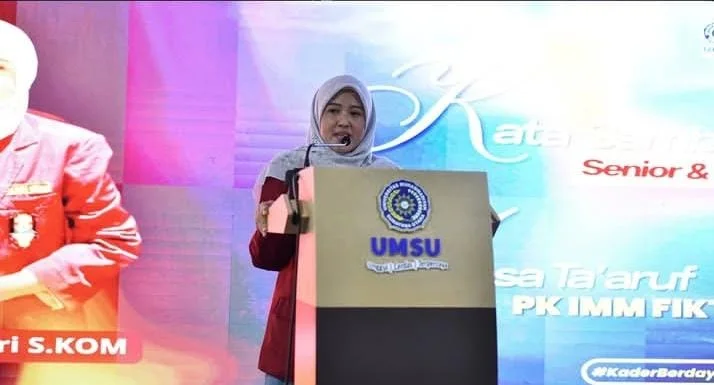
In the context of Islamic student movements in Indonesia, the Muhammadiyah Student Association (IMM) holds a strategic position as a cadre organization that integrates the dimensions of intellectuality, religiosity, and humanity.
Since its establishment in 1964, IMM has been committed to forming student cadres who are not only excellent in academics but also possess high moral integrity and social concern. IMM's cadre orientation emphasizes the importance of balance between developing intellectual capacity, building moral character, and strengthening the spirituality of its members.
As a cadre organization, IMM has a responsibility to build a strong intellectual tradition among students. This tradition is reflected through various activities, such as scientific discussions, studies of Islamic thought, forums for the dialectics of ideas, and literacy activities that encourage cadres to continuously develop their critical thinking skills.
Through this intellectual tradition, IMM cadres are expected to be able to understand social reality more comprehensively while providing constructive intellectual contributions to society.
However, in practice, the dynamics of the current student movement face various challenges. Student organization activities are often dominated by administrative tasks and practical work programs. Meanwhile, reflective discussion spaces that encourage the development of critical thinking and moral awareness remain relatively limited.
This condition potentially causes the intellectual tradition, which should be the soul of the student movement, to experience a reduction in meaning and fail to develop optimally.
Furthermore, the development of information technology and the flow of globalization influence how students access and produce knowledge. Information available quickly and instantly is often not accompanied by a process of deep reflection. As a result, students are at risk of being trapped in shallow and pragmatic patterns of thinking without undergoing adequate critical analysis.
This phenomenon highlights the importance of providing a space for reflection capable of integrating rational and moral dimensions into the students' thinking process.
In this context, students are not only required to be able to think critically from an intellectual standpoint but also to possess ethical awareness in understanding various social issues. This awareness is necessary so that the ideas produced are not merely academic in nature but also have a value orientation that sides with humanity and social justice.
One approach that can be used to address these challenges is the concept of moral dialectics as a contemplative space within the student intellectual movement.
Moral dialectics is a critical thinking process that combines rational dialogue with moral reflection to produce a more comprehensive understanding of an issue.
Through a dialectical process grounded in moral values, students do not only learn to defend arguments rationally but also to understand different perspectives and develop an intellectual attitude that is open and responsible.
Thus, moral dialectics can serve as a contemplative space for student intellectual movements, including within the IMM environment. Through a reflective dialectical space based on moral values, IMM cadres can develop critical thinking that is not only oriented toward the search for intellectual truth but also contributes to the formation of social and moral awareness in society.
Morality as the Foundation for Character Building in the Muhammadiyah Student Association
Morality is a set of values that serves as a guide for individuals in determining actions considered right or wrong. In the world of education, morality plays an important role in shaping character, integrity, and the social responsibility of students.
Education does not only function to develop intellectual abilities but also to build ethical awareness so that students are able to use the knowledge they possess responsibly in society.
Thus, the educational process does not merely produce individuals who are academically intelligent, but also individuals who have a moral commitment to contribute to social life.
Character education in higher education is an important aspect of preventing moral decline among students, while simultaneously helping to build their integrity and social responsibility as part of the intellectual community.
In the context of the Muhammadiyah Student Association (IMM), moral values are one of the main foundations in the organization's cadre-building process.
IMM is not only oriented toward developing the intellectual capacity of its cadres but also toward character building based on the values of religiosity, intellectuality, and humanity as the identity of the movement.
These three values serve as the foundation for IMM cadres in developing critical thinking while maintaining moral integrity in every organizational activity.
Religiosity emphasizes the importance of internalizing Islamic values in daily life. Intellectuality encourages cadres to continuously develop critical and scientific thinking skills, while humanity directs cadres to have concern for issues of humanity and social justice.
These values are internalized through various cadre-building processes that take place systematically within the IMM organization, such as training activities, studies of Muhammadiyah ideology, intellectual discussion forums, and literacy activities that encourage the development of critical and reflective thinking skills.
Through this process, IMM cadres are not only formed as individuals with academic abilities but also as young intellectuals with a moral commitment to social change.
In the tradition of the Muhammadiyah movement, the development of intellectuality always goes hand in hand with moral formation and a commitment to the progress of Islamic civilization.
Muhammadiyah has been known from the beginning as a movement of tajdid or renewal that encourages the integration of scientific development, the renewal of Islamic thought, and the strengthening of humanitarian values in social life.
Therefore, the intellectual movement within the IMM environment is directed not only at strengthening the academic capacity of cadres but also at developing moral awareness oriented toward the benefit of the people and the progress of society.
By integrating intellectual and moral dimensions into the cadre-building process, IMM is expected to be able to produce intellectual cadres who are not only critical in their thinking but also possess an ethical commitment to fight for the values of justice, humanity, and the progress of civilization.
Dialectics as a Method of Critical Thinking
Dialectics is a method of thinking that emphasizes the process of dialogue, the exchange of ideas, and critical argumentation to obtain a deeper understanding of a truth.
In the context of the Muhammadiyah Student Association (IMM), dialectics is an important medium for building a tradition of critical thinking among cadres.
Through the dialectical process, IMM cadres are encouraged not only to accept an idea passively but also to test, criticize, and reflect on various thoughts developing within the organization and in the wider social reality.
This process encourages IMM cadres to question existing assumptions, evaluate developing arguments, and consider diverse perspectives in understanding an issue.
Through open dialogue and the exchange of ideas, dialectics becomes a space for cadres to develop analytical skills and build a more comprehensive understanding of the various social dynamics faced.
In the practice of the IMM intellectual movement, dialectics does not only function as a means of discussion but also as a medium for forming critical and reflective intellectual awareness.
Through discussion forums, thought studies, and intellectual dialogues that take place within the organization, IMM cadres are trained to present arguments rationally, respect differences in views, and develop constructive thinking for the progress of society.
Therefore, dialectics can be understood as an important instrument in building the intellectual character of IMM cadres who are not only critical in thinking but also possess reflective abilities in understanding various social issues.
Moral Dialectics as a Space for Intellectual Contemplation
The concept of moral dialectics is the integration of moral values and the dialectical method in the process of thinking and discussing.
In this approach, moral values serve as the foundation that directs the critical dialogue process so that the search for truth is not only rational but also considers ethical aspects.
Moral dialectics can be understood as a process of intellectual reflection that involves critical dialogue and moral consideration in understanding a reality.
This process allows students not only to view an issue from a rational standpoint but also to consider the ethical and social dimensions contained within it.
Thus, dialectics does not merely become a space for the exchange of ideas, but also a process of reflection that encourages the birth of a more comprehensive understanding of various social issues.
This reflection process then leads to the practice of contemplation in the student intellectual movement.
Contemplation is a process of deep reflection on the experiences, knowledge, and life realities encountered.
In the context of the intellectual movement, contemplation allows students not only to understand an idea theoretically but also to reflect on its meaning and implications for social life.
Through the process of contemplation born from critical dialogue, students can develop intellectual awareness that is not only analytical but also has a moral orientation in responding to various societal issues.
In the perspective of Kuntowijoyo's thought, Muslim intellectuals have a responsibility to connect science with efforts toward social transformation.
Kuntowijoyo introduced the concept of prophetic social science, which is a scientific approach oriented toward the values of humanization, liberation, and transcendence as the basis for building just social change (Kuntowijoyo, 2019).
When linked to the Muhammadiyah Student Association (IMM) movement, this concept is relevant because the IMM cadre-building process does not only emphasize the development of intellectuality but also the formation of moral awareness and the social responsibility of cadres.
In this context, moral dialectics can become a contemplative space that allows IMM cadres to reflect on various intellectual ideas within the framework of prophetic values.
Intellectual discussions that take place within the organization are not only directed at theoretical discussions or the mere exchange of ideas, but also at efforts to understand social reality critically and formulate solutions that side with the values of humanity and social justice.
Thus, moral dialectics does not only become a method of critical thinking but also a space for the formation of intellectual awareness oriented toward social transformation in the IMM intellectual movement.
Conclusion
Morality and dialectics have a close relationship in building the tradition of the intellectual movement within the Muhammadiyah Student Association (IMM).
Morality functions as a value foundation that shapes the character of cadres so that they possess integrity, social responsibility, and a commitment to the values of humanity and justice.
Meanwhile, dialectics becomes a critical thinking method that encourages cadres to engage in dialogue, exchange ideas, and reflect on various social issues rationally and openly.
The integration between morality and dialectics gives birth to the concept of moral dialectics as a space for intellectual contemplation in the student movement.
Through this process, IMM cadres are not only trained to present arguments logically but are also invited to consider the ethical dimension in every thought developed.
Thus, the discussions and intellectual activities that take place within the organization do not stop at the mere debate of ideas but also become a means of deep reflection on the social reality faced by society.
In the context of IMM cadre-building, moral dialectics can strengthen the intellectual tradition based on the values of religiosity, intellectuality, and humanity.
These three values become the foundation for cadres to develop critical thinking while maintaining a moral orientation in every intellectual movement.
Through a reflective and ethically valuable dialectical space, IMM cadres are expected to be able to produce ideas that are not only academic in nature but also contribute to efforts toward social transformation that is just and progressive.
Ultimately, moral dialectics can be understood as a contemplative space that brings together intellectual rationality and moral awareness in the student movement.
The existence of this space is important to ensure that the IMM intellectual movement remains relevant in responding to the dynamics of the times, while simultaneously holding fast to prophetic values that lead to humanization, liberation, and transcendence in the life of society.
Bibliography
Afrizal, A., Lahmi, A., & Dahlan, D. (2025). Progressive Islam in the perspective of Haedar Nashir and its implications for education. Jurnal Pendidikan Tambusai, 9(3).
Kartini, E., & Mimbar, L. (2022). Character education in higher education influences moral decadence among students. Journal Ilmiah Rinjani, 10(1).
Kuntowijoyo. (2019). Islam as Science: Epistemology, Methodology, and Ethics. Tiara Wacana.
Nurpratiwi, H. (2021). Building the character of Indonesian students through moral education. JIPSINDO.
Putri, D. S., Nurmalisa, Y., Sari, D. P., & Saputri, R. Y. (2025). Instructional design of Pancasila education in strengthening moral character in the digital era. Jurnal Pendidikan Kewarganegaraan.
Rahman, M. H., Sulianti, A., & Isyuniandri, D. (2024). Implementation of student character education through Pancasila learning. Jurnal Civic Hukum, 9(1).







Comments 0
Write a Comment Share your response