

JurnalPost.com - Education is the primary foundation for a nation's progress. However, the quality of education cannot be measured solely by the number of children who have access to schooling. A more critical metric is the extent to which students truly master knowledge and skills after completing their learning process.
One international benchmark used to assess these capabilities is the Programme for International Student Assessment (PISA), organized by the Organisation for Economic Co-operation and Development (OECD) for students aged 15 years.
The PISA 2025 results indicate that the quality of learning in Indonesia still faces major challenges. Therefore, improving national education quality must focus on strengthening foundational literacy and numeracy competencies through better teacher quality and classroom instruction, rather than merely through changes in policy or curriculum.
The Gap in Indonesia's Educational Achievement
The first set of data reveals a significant gap between the achievements of Indonesian students and the average of OECD member countries.
Based on the PISA 2025 results, Indonesia's science score increased to 389 points from 383 points in 2022. The reading score also rose from 359 to 365 points. Meanwhile, the mathematics score actually declined from 366 to 364 points (OECD, 2026).
For comparison, the average score of OECD member countries reached 482 points for science, 461 points for reading, and 463 points for mathematics (Jawa Pos, 2026).
Consequently, there is a deficit of 93 points in science, 96 points in reading, and 99 points in mathematics. This gap demonstrates that the quality of learning in Indonesia still requires serious attention.
The second set of data shows a more concerning condition: the high percentage of students who have not yet reached foundational competency levels.
According to the OECD report, 63.2 percent of Indonesian students have not reached Level 2 in science, 72.89 percent in reading, and 83.07 percent in mathematics (Sindonews, 2026).
Level 2 is the minimum competency threshold used by PISA to assess students' ability to apply basic knowledge and skills.
This means that nearly three out of four Indonesian students have not reached the minimum competency level in reading, while more than eight out of ten students have not reached the minimum competency level in mathematics.

These figures show that the primary issue in Indonesian education is not merely related to achieving high-level academic performance, but also the weak mastery of foundational skills.
This condition is increasingly alarming when viewed against previous PISA results. In 2022, Indonesia's reading literacy score reached only 359 points, which was the lowest achievement since 2000 (Pristiandaru, 2023).
Although there was an increase in 2025, the change was not significant enough to indicate a comprehensive recovery in learning quality.
The Role of Teachers in Strengthening Literacy and Numeracy
Strengthening foundational competencies must center on teacher quality because the ability to read, write, understand information, and calculate is shaped through daily classroom learning processes.
A well-designed curriculum will not yield maximum results if teachers lack the competence to teach conceptual understanding rather than mere rote memorization.
Conversely, teachers with strong pedagogical skills can identify students' learning difficulties early and adjust teaching methods based on each child's needs.
In this context, improving teacher competence must be a priority in national education policy.
Frequent changes in education policy also have the potential to increase the administrative burden on teachers. As a result, the time and attention that should be dedicated to improving learning quality are instead consumed by various administrative obligations.
Therefore, improvements in education quality should provide teachers with more space to focus on teaching, mentoring, and evaluating student learning progress.
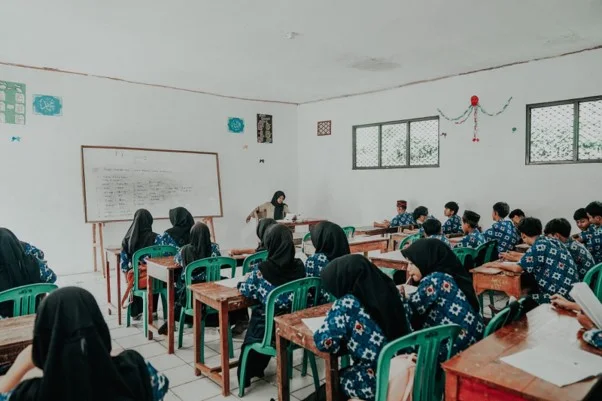
Figure 1. Classroom learning activities. Teachers play a crucial role in shaping students' literacy and numeracy skills.
Source: Pexels, photo by El Jusuf, accessed on 16 November 2026.
Score Increases Do Not Guarantee Education Quality
Some parties consider the PISA 2025 results to show encouraging progress for Indonesian education.
The government, for instance, stated that amidst the trend of declining scores in several OECD member countries over the last few years, Indonesia's educational achievements have been relatively stable and even showed improvement in reading and science (JPNN, 2026).
This perspective is understandable when looking at the direction of score trends. However, stability does not always mean that the quality of education is adequate.
An increase of a few points is still relatively small when compared to the gap of nearly 100 points against the average of OECD member countries.
The OECD also assessed that the change in Indonesia's average achievement between PISA 2022 and PISA 2025 was not statistically significant.
This indicates that score increases cannot be used as the sole indicator of success in improving national education quality.
In other words, while Indonesia has shown progress in some areas, such advancement is not yet sufficient to overcome fundamental issues in literacy and numeracy mastery.
As long as the majority of students have not reached the minimum competency standard, educational success should not be judged solely based on an increase in average scores.
Strategic Steps to Improve Education Quality
Based on these conditions, there are several steps that need to be prioritized to strengthen students' foundational competencies.
First, teacher training must be conducted continuously and oriented toward classroom teaching practices. Training should not merely consist of theoretical material delivery but must also equip teachers with effective strategies for teaching literacy and numeracy.
Second, diagnostic assessments need to be utilized regularly to determine the actual capabilities of each student. The results of these assessments must serve as the basis for determining learning approaches that match the needs and understanding levels of each child.
Third, special attention must be given to early elementary school grades. Reading and numeracy skills that are not well-formed at the initial stage of education can lead to learning difficulties at subsequent levels.
Fourth, the availability of appropriate reading materials needs to be expanded, both in schools and in the family environment. The presence of books suitable for the age and interests of students can help foster a reading habit from an early age.
Furthermore, parental involvement also plays an important role in supporting learning success. A family environment that encourages children to read, discuss, and solve simple problems can reinforce the competencies acquired at school.
Figure 2. Students reading at school. The availability of appropriate reading materials supports the development of reading habits from an early age.
Source: Pexels, photo by Roman Odintsov, accessed on 16 November 2026.
Conclusion
The PISA 2025 results show that Indonesia still faces fundamental issues in improving the quality of education. The achievement gap compared to the average of OECD member countries and the high proportion of students who have not reached minimum competency prove that strengthening foundational skills must be a top priority.
The increase in scores in reading and science is worth appreciating. However, this progress should not lead the government or the public to ignore the ongoing educational challenges.
Improving education quality requires consistent policies, enhanced teacher competence, learning that meets student needs, and support from the school and family environment.
By focusing on strengthening literacy and numeracy from primary education, Indonesia has a greater opportunity to build a generation that not only has access to education but also truly masters the knowledge and skills needed to face the future.
References
JPNN. (2026). PISA 2025 shows Indonesia's literacy and science scores increased rapidly, cool!
https://www.jpnn.com/news/pisa-2025-menunjukkan-nilai-literasi-dan-sains-indonesia-meningkat-pesat-keren
Jawa Pos. (2026). Reading and science scores up, 83 percent of students have not mastered basic mathematics.
https://www.jawapos.com/pendidikan/2609130307/skor-membaca-dan-sains-naik-83-persen-siswa-belum-kuasai-matematika-dasar
Katadata. (2026). Infographic: Indonesia's major educational homework.
https://katadata.co.id/infografik/6aab76271fb8c/infografik-pekerjaan-rumah-besar-pendidikan-indonesia
OECD. (2026). PISA 2025 Results (Volume I): Indonesia.
https://www.oecd.org/en/publications/pisa-2025-results-volume-i-country-notes_2d4ff9ea-en/indonesia_9c880f8a-en.html
Pristiandaru, D. L. (2023, 9 December). PISA 2022: Indonesia's reading literacy records lowest score since 2000. Kompas.com.
https://lestari.kompas.com/read/2023/12/09/130000486/pisa-2022--literasi-membaca-indonesia-catatkan-skor-terendah-sejak-2000
Sindonews. (2026, 14 September). PISA 2025: Reading and science scores up, learning foundation still needs strengthening.
https://www.rctiplus.com/news/detail/gaya-hidup/5472952/pisa-2025--skor-membaca-dan-sains-naik--fondasi-belajar-masih-perlu-diperkuat







Comments 0
Write a Comment Share your response