

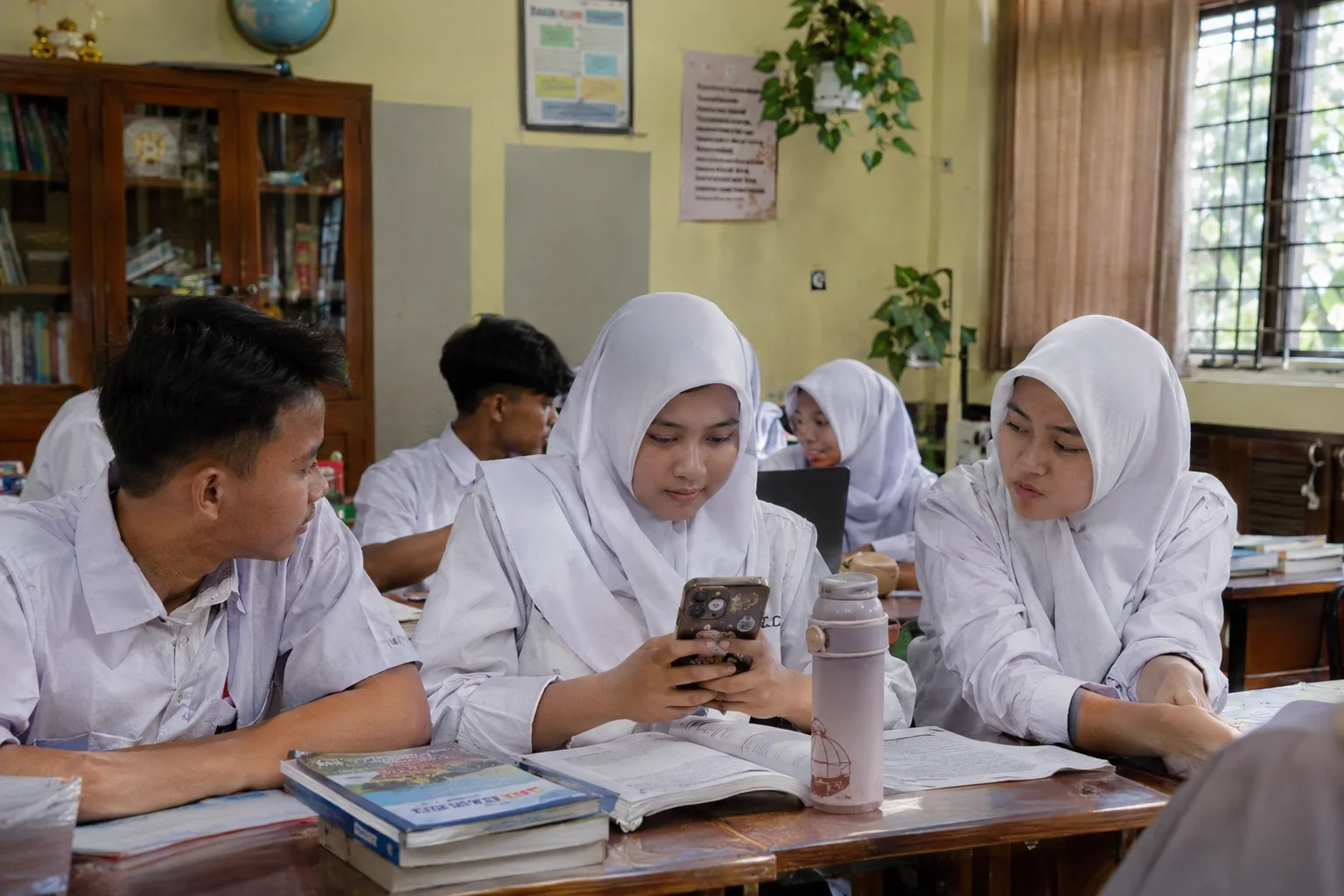
JurnalPost.com - Recently, many issues have raised concerns regarding character and moral standards among the younger generation. These range from a decline in politeness toward teachers and low levels of responsibility to a lack of care and respect for others. Various videos that have gone viral on social media often leave us disheartened.
This is no longer just a matter of typical teenage delinquency. Such incidents act as a cracked mirror, reflecting serious underlying issues in character education. So, what is actually happening to the next generation of our nation?
There is a saying that small things considered trivial can leave a profound impact. Behavior initially dismissed as a joke can develop into a bad habit if left unchecked. This is especially true when such actions are recorded, disseminated, and eventually become public consumption.
However, there is one question we must reflect upon: Are apologies and the imposition of sanctions enough to change a person's character?
The answer is not necessarily.
Character transformation does not occur simply because someone has been punished. It requires a process of habituation, guidance, and continuous supervision. A student needs to understand why their actions were wrong, how their behavior affects others, and how they must take responsibility.
Therefore, the imposition of sanctions should be accompanied by opportunities for self-reflection and behavioral improvement. We must ensure that students do not merely fear punishment, but actually grasp the moral values behind the mistakes they have made.
Panca Waluya and the Challenges of Character Education
In West Java, there is a character education program known as Panca Waluya. This program promotes five core values, namely: cageur (healthy), bageur (kind), bener (truthful), pinter (smart), and singer (diligent).
Two of these are bageur, which emphasizes kindness and respecting others, and bener, which relates to honesty, integrity, and righteous behavior.
These values certainly have noble goals. However, their implementation is not always as easy as the concept suggests.
The case that occurred at SMAN 1 Purwakarta in April 2026, when several students engaged in inappropriate behavior toward a teacher and the video spread on social media, serves as a reminder that character education still faces real challenges.
How can the values of politeness and mutual respect be instilled if a student still dares to demean their own teacher?
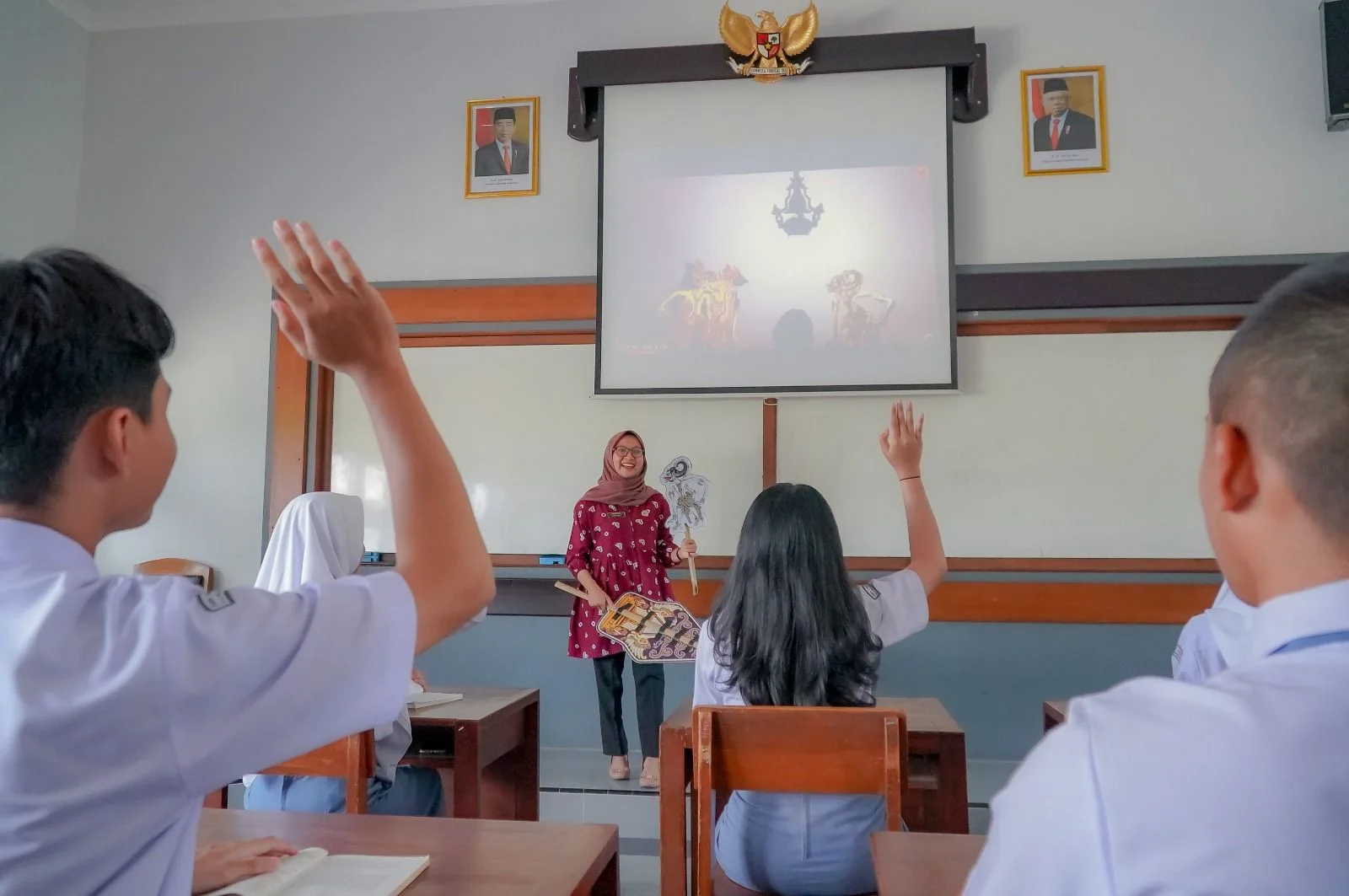
This incident should serve as a point of evaluation, not only for the school but for all parties involved in a child's education. While one incident cannot be used to measure the character of an entire generation, it is sufficient to remind us that character education must not stop at being a slogan or a ceremonial activity.
So, is all of this purely the school's fault?
It feels too simplistic to point to the school as the sole party responsible. After all, what about the role of the family? And what about the influence of the digital world that enters a child's life almost every day?
Schools do not exist in a vacuum. Behavior that emerges in the classroom can be influenced by a child's experiences at home, their social circle, and the various things they see on social media.
Home is a Child's First School
Every time a new school year begins, many parents are busy looking for the best school for their children. They consider the quality of teachers, facilities, school achievements, and are even willing to spend significant amounts of money to provide the best education.
All of that is certainly important. However, have we ever asked ourselves, "Has our own home become the best place for our child to grow?"
Children may spend several hours at school, but the majority of their early life experiences are formed through interactions with their family.
Parenting styles, communication at home, economic conditions, the fulfillment of basic needs, and daily habits can all influence a child's character development.
Often, what shapes a child's attitude is not just the prestige of their school, but the atmosphere they feel at home.
Do they feel safe enough to share their stories? Do they see their father and mother respecting each other? Or do they hear shouting more often than warm conversation?
These simple questions are actually very important.
Children learn about honesty not only when a teacher explains it in class, but also when they see their parents being honest. Children understand the meaning of respecting others when they themselves are treated with respect. The same applies to empathy, responsibility, and the courage to apologize.
Schools help develop a child's knowledge and skills, while the family has a fundamental role in instilling moral values from an early age. The two cannot be separated.
Therefore, do not just ask which school is best for your child. We also need to ask, has our home become a good place for them to learn about life?
Because character education is not enough to be taught through words alone. Children need real examples from those closest to them.
The Digital World, a Learning Space That Is Hard to Control
Beyond family and school, there is another powerful force currently shaping the character of the younger generation: the digital world.
Technological development can be likened to a double-edged sword. On one hand, children gain access to information and broader learning opportunities. On the other hand, they also face hoaxes, cyberbullying, hate speech, and content that is not always appropriate for their age and emotional development.
The ease of accessing social media allows children to witness various behaviors and then imitate them without understanding the potential consequences.
Not all digital influences are negative. Many contents teach creativity, care, and new knowledge. The problem arises when children are left to use technology without guidance and the ability to filter information.
Research on character education for elementary-aged children during online learning in the digital era highlights the importance of educators' attention to character formation amidst technological development.
Other research on the management of the Panca Waluya character education program also emphasizes the need to integrate character values into school activities and the habituation of responsible technology use.
In the context of the Purwakarta case, the spread of the video showing inappropriate behavior toward a teacher demonstrates that ethical issues can escalate when classroom behavior is brought into the digital space.
This is where the teacher's role becomes increasingly complex. Teachers are no longer just conveyors of subject matter, but also mentors who help students understand communication ethics, respect privacy, and consider the impact of what they post.
However, this task cannot be burdened on teachers alone. Parents also need to be aware of their children's digital activities, build open communication, and provide examples of responsible social media use.
Punishment Should Educate, Not Humiliate
After understanding the various factors that influence a child's character, the next question is how should we respond to students who make mistakes?
Punishment can indeed be a form of consequence. However, its primary goal is not to hurt or humiliate, but to help students realize their mistakes and improve their behavior.
The thoughts of Ki Hadjar Dewantara provide important lessons on this. In applying punishment to students, there are three principles to consider: punishment must be aligned with the offense, given fairly, and carried out immediately after the offense is known through an appropriate process.
These principles remind us that discipline should not be applied arbitrarily.
Students who make mistakes do need to be held accountable. However, accountability does not have to be manifested through actions that degrade their dignity.
If punishment only makes a student feel ashamed, afraid, or humiliated in front of others, they may not necessarily understand the actual mistake. In fact, such methods can create new problems.
Conversely, an educational approach gives students space to acknowledge their actions, understand the consequences caused, repair relationships with the aggrieved party, and demonstrate change through concrete actions.
In cases of misconduct toward teachers, for example, an apology is an important step. However, the guidance process should not stop there. Schools and families must continue to support the student so that similar behavior does not recur.
We certainly hope that students have respect for their teachers. However, true respect should grow from awareness, not merely from fear of sanctions.
Character Education Requires Cooperation from All Parties
The issue of the younger generation's character cannot be solved by one party alone.
Schools have the responsibility to strengthen character education, improve educator competence, create a safe learning environment, and consistently implement anti-bullying policies.
Families play a role in building positive parenting, maintaining communication with children, providing role models, and supervising technology use without ignoring the child's need to be heard.
Meanwhile, society also has a responsibility to create a healthy social environment, not normalize behavior that demeans others, and support the growth of mutual respect.
The digital world also needs to be a shared concern. Digital literacy education should not only teach how to use devices, but also how one should behave and be responsible for their actions in cyberspace.
These three environments—family, school, and society, which now also interact through digital space—must move in tandem.
We cannot expect schools to produce polite students if children are accustomed to witnessing rude behavior at home. We also cannot demand that parents work alone when children are faced with various influences from the school environment and social media every day.
Ultimately, the case that occurred in Purwakarta should serve as a collective reflection, not just a viral event that is talked about and then forgotten.
If we truly desire a generation with character, change is not enough to start by demanding children to be better. Adults, educational institutions, and the community environment also need to demonstrate the values they have been teaching.
Because what we see in children today is inseparable from how they are guided and treated during their growth and development process.
If we hope for a better future, that change must start from ourselves, from our homes, from our schools, and from the way we behave in the digital world. Not later, but today.
Reference Sources
Husain, Alma Pratiwi. (2021). Character Education for Elementary-Aged Children in Online Learning in the Digital Era. Nusantara: Indonesian Journal of Education, 1(3), 439–456. https://doi.org/10.14421/njpi.2021.v1i3-1
Cahyono, R. B., Gumelar, D. I., Mustopa, E. S., and Warta, W. (2025). Management of Panca Waluya Character Education in Fostering Wise Technology Use in the Digital Era. El-Idare: Journal of Islamic Education Management, 11(2), 63–71. https://doi.org/10.19109/elidare.v11i2.32865
Arditha, A. A., et al. (2025). Identification of Internal and External Factors Affecting Bullying Behavior in Elementary School Students and Alternatives. Pendas: Scientific Journal of Elementary Education. https://doi.org/10.23969/jp.v10i04.36747
Susilo, Sigit Vebrianto. (2018). Reflection on Ki Hadjar Dewantara's Educational Values in Efforts to Restore the Identity of Indonesian Education. Cakrawala Pendas Journal, 4(1). https://doi.org/10.31949/jcp.v4i1,710
Reporting on the case of inappropriate student behavior toward a teacher at SMAN 1 Purwakarta, 18–20 April 2026. https://www.detik.com/jabar/berita/d-8452336/kronologi-lengkap-kasus-siswa-lecehkan-guru-di-sman-1-purwakarta





Comments 0
Write a Comment Share your response