

JurnalPost.com - For many children, school is a place to play, learn, and make friends. However, for others, the school gate can feel like an entrance to a daunting day. There may be taunts waiting in the classroom, friends who intentionally distance themselves during recess, or anxiety that they do not know who to share with.
This is one perspective on bullying, a problemthat is sometimes dismissed as trivial, even though its impact can leave lasting marks on a child's life.
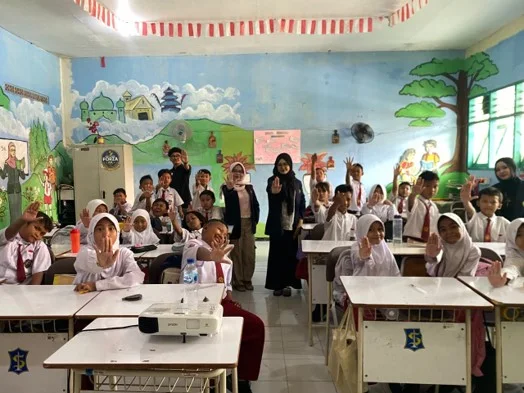
Driven by a concern for this issue, students from the Guidance and Counseling study program at the State University of Surabaya (UNESA) provided a psychoeducation service titled “Together Against Bullying” for grade IV C students at SDN 1 Babatan.
Through this activity, which lasted for 60 minutes, students were encouraged to recognize various forms of bullying, understand the feelings of victims, and learn how to be friends who are brave enough to reject violence.
When Jokes Turn Into Bullying
“It’s just a joke.” This phrase might sound common when a child is reprimanded for teasing a friend. But what if that joke continues even though the target feels sad or offended?
Bullying is behavior intended to hurt or demean others, which generally occurs repeatedly and involves an imbalance of power between the perpetrator and the victim. This condition makes it difficult for victims to defend themselves.
The impact is not always immediately visible. Children who experience bullying may feel afraid, lose self-confidence, struggle to concentrate on their studies, or even become reluctant to attend school.
The elementary school years are a critical period for instilling an understanding of empathy, friendship, and behavioral boundaries toward others. Children need to understand early on that actions considered funny by one party are not necessarily pleasant for another.
These prevention efforts are also in line with the Regulation of the Minister of Primary and Secondary Education Number 6 of 2026 regarding Safe and Comfortable School Culture. This regulation emphasizes the importance of physical protection, psychological well-being, and social and digital security within the educational environment.
Psychoeducation activities serve as a way to introduce these values through learning that is relevant to the students' daily lives.
Recognizing the Four Forms of Bullying
One of the main goals of the “Together Against Bullying” activity was to help students understand that bullying does not always take the form of physical violence.
During the presentation, students were introduced to four forms of bullying that can occur in school environments or on digital media.
First, physical bullying. This behavior includes hitting, pushing, kicking, or damaging a friend's belongings with the intent to hurt or intimidate.
Second, verbal bullying. This takes the form of teasing, insults, name-calling, or verbal threats.
Third, social bullying. This type of bullying can occur through acts of intentionally and repeatedly excluding someone, spreading gossip, or influencing other friends to stay away from the victim.
Fourth, cyberbullying. A form of bullying carried out through digital technology, such as sending insulting messages, spreading rumors, or humiliating someone on social media.
This explanation is important because some children may only understand bullying as hitting or pushing. In reality, hurtful words and persistent exclusion can also cause significant psychological harm.
Learning Through Games and Shared Commitment
Delivering material about bullying to elementary students requires an age-appropriate approach. Therefore, this activity was not just a lecture, but a blend of brief explanations, games, visual presentations, and group activities.
The activity began with greetings, introductions, and an ice-breaking session to create a more familiar atmosphere.
Before the material was presented, students were asked to make a mutual agreement, such as respecting one another, listening when others speak, and not laughing at a friend's answers.
These simple agreements are essential for creating a safe learning space where students feel comfortable expressing their opinions.
In the next session, the facilitators explained the definition, forms, and impact of bullying using PowerPoint and short videos. Visual aids helped students understand examples of behavior they might encounter in their daily lives.
After the presentation, students recited an “Anti-Bullying Commitment” together. Through this commitment, they expressed their willingness to refrain from bullying and to respect their peers.
The activity continued with a game called “Recognize the Behavior.” The facilitators provided questions based on behavior cards, and students were asked to determine whether the examples constituted bullying.
Students who answered correctly received prizes as a form of appreciation. The classroom atmosphere became lively as the children showed enthusiasm for participating.
Through this game, students were reminded of the characteristics of bullying, especially behaviors that are hurtful, repetitive, and involve an imbalance of power.
They also received guidance on what actions to take when facing or witnessing bullying.
Students were reminded not to retaliate with violence. Instead, they were encouraged to find a safe place, support the victimized friend, and ask for help from a teacher or a trusted adult.
Measuring Student Understanding Through Group Evaluation
Toward the end of the activity, the facilitators asked students to form small groups of three.
Each group was tasked with summarizing the material, answering five simple evaluation questions, and mentioning one thing they had learned.
The questions covered the definition of bullying, examples of verbal bullying, the impact on victims, and the appropriate actions to take when seeing a friend being bullied.
Through this evaluation, the facilitators sought to gauge how well the students understood the material presented.
Group activities also provided an opportunity for students to discuss, listen to their peers' opinions, and practice teamwork.
Thus, learning does not stop at the ability to define bullying, but is directed toward understanding how to treat others better.
The Role of Teachers and Parents in Preventing Bullying
Bullying prevention cannot be achieved through a single educational activity. The school environment and the family also have a responsibility to build habits of mutual respect.
In daily life, not all children are brave enough to share the bullying experiences they have endured. Some feel afraid, embarrassed, or worried that the situation will worsen if they report it.
Therefore, parents need to pay attention to changes in a child's behavior, such as sudden reluctance to go to school, increased isolation, irritability, or a decline in academic enthusiasm.
Recurring physical complaints, changes in eating habits, and personal belongings that are frequently lost or damaged can also be reasons to talk to the child further. However, these signs do not always mean a child is being bullied, so they must be interpreted carefully.
Teachers also play a crucial role in creating a classroom environment that is open to student reports and does not allow demeaning behavior to be treated as normal.
Through the “Together Against Bullying” psychoeducation, grade IV C students at SDN 1 Babatan were introduced to the importance of recognizing bullying, respecting others' feelings, and seeking help when facing unsafe situations.
This activity serves as a reminder that bullying prevention can start with simple things. This includes not joining in to laugh at a friend, having the courage to safely address hurtful actions, accompanying a friend who is being excluded, and listening to a child's story without judgment.
A safe and comfortable school is not formed solely through written rules. It requires the involvement of teachers, students, and parents to build habits of mutual respect in daily life.
From the classroom, simple games, and shared commitments, children can begin to understand that every friend deserves to feel safe, accepted, and valued.







Comments 0
Write a Comment Share your response