

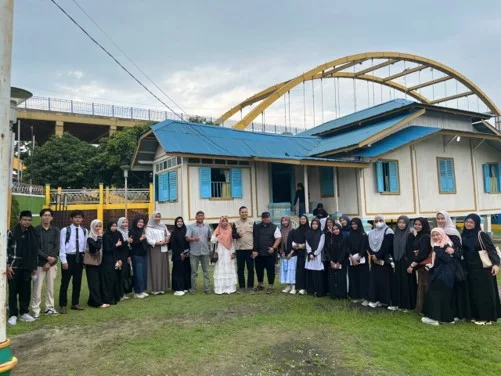
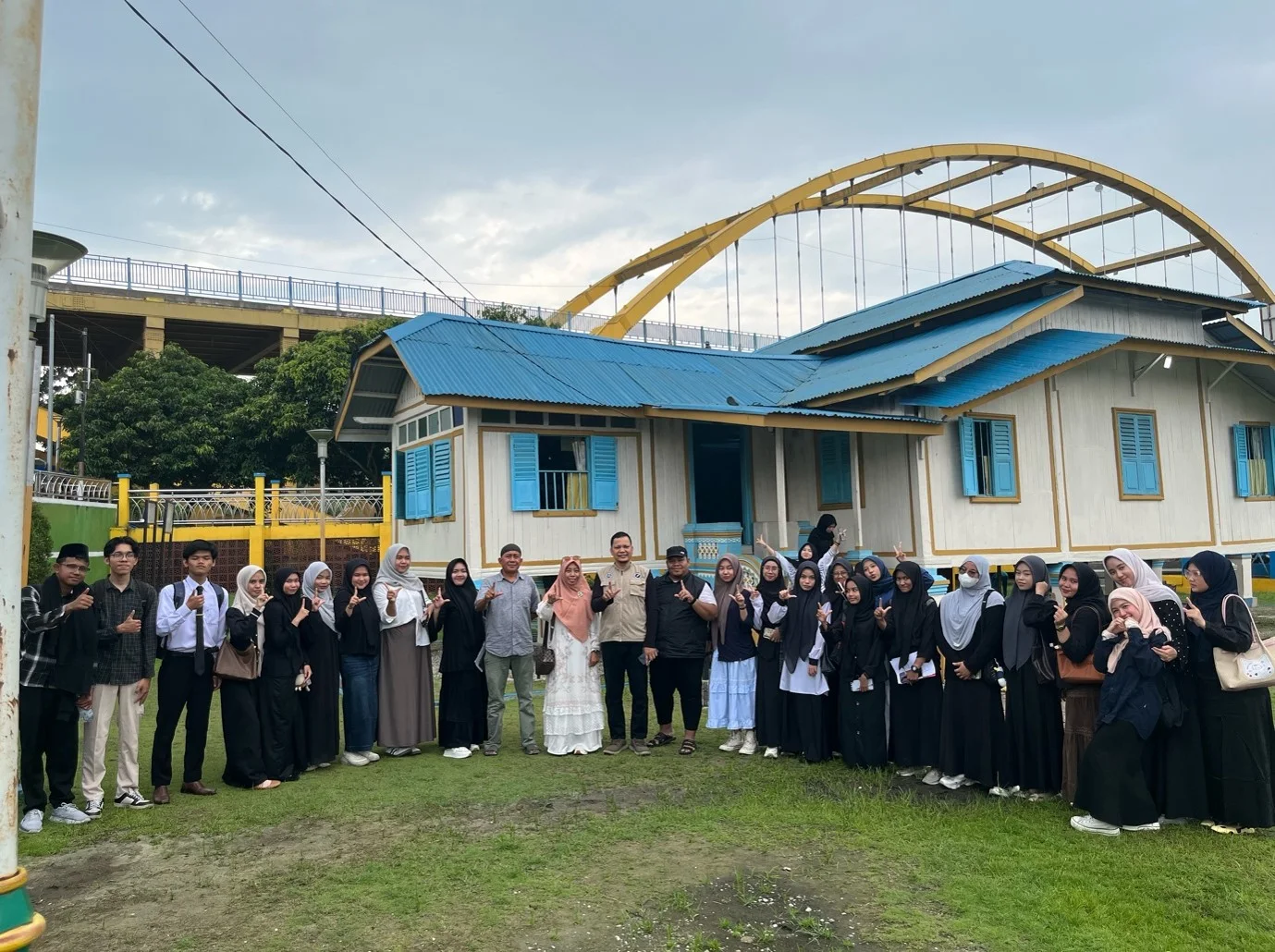
PEKANBARU, JurnalPost.com – Students from the English Education Study Program at the Faculty of Teacher Training and Education (FKIP), Islamic University of Riau (UIR), visited Rumah Tuan Kadi, a historic building representing Malay cultural heritage located in the Senapelan district of Pekanbaru.
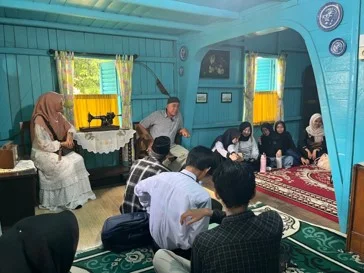
During the visit, the students were accompanied by their lecturer, Fitri Wulandari, S.Pd., M.Pd. Through insights provided by tour guide Syarifudin, the students learned about the history, traditional architecture, cultural values, and preservation efforts surrounding the historic site.
Tracing the History of Rumah Tuan Kadi
Rumah Tuan Kadi is a historic landmark that embodies the Malay cultural legacy in Pekanbaru. According to the tour guide, the house was built in 1895 and is historically linked to Tuan Haji Zakaria bin Haji Abdul Mutholib.
The building shares a historical connection with the Siak Sultanate and the development of the Senapelan area, which later became part of Pekanbaru city.
The title 'Tuan Kadi' refers to the significant role of a religious leader in Malay society. A Kadi was responsible for various Islamic legal matters, religious affairs, marriages, and the social life of the community.
The guide explained that the Tuan Kadi served as an advisor to the Sultan of Siak, illustrating the close integration of religion, custom, and governance during that era.
Additionally, students gained knowledge about the historical development of Pekanbaru, particularly the transition of Senapelan into the city of Pekanbaru. Trade activities and various agreements during the Sultanate era played a crucial role in the region's growth.
Sultan Muhammad Ali Abdul Jalil Muazzam Syah is also recognized as a key figure in the early history of Pekanbaru's development.
Unique Architecture and Malay Cultural Values
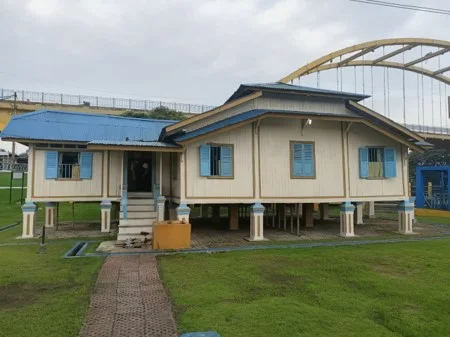
A compelling aspect of Rumah Tuan Kadi is its traditional Malay architecture, which remains well-preserved. The building features a distinctive 'Limas Pancung' roof and wooden construction that reflects the architectural identity of the Malay people.
The guide highlighted several unique features within the house, including a special room on the second floor known as the 'Bilik Pingit'.
He explained that this room was traditionally used for the 'taaruf' process, allowing a woman to observe potential suitors visiting her family to get to know one another before marriage.
Another unique feature is the water basin located near the entrance. In the past, guests used this facility to wash their feet and perform ablution before entering the house.
This tradition reflects the importance of cleanliness, religious values, and hospitality toward guests in Malay culture.
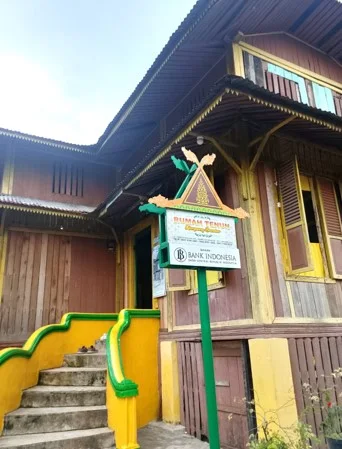
Rumah Tuan Kadi also features five steps at the entrance, which are associated with the five pillars of Islam: the Shahada, prayer, zakat, fasting, and the Hajj. These steps symbolize the close bond between Malay custom and Islamic teachings.
The guide also explained the traditional wall construction, which is arranged vertically. He noted that this design required more wood than horizontal construction, reflecting the economic status of the homeowner at the time.
Historical Traditions and Cultural Identity
During the visit, students also learned about various traditional titles used in family lineages.
The titles 'Sayyid' and 'Sayyidah' are associated with specific lineages, particularly descendants of the Prophet Muhammad SAW. 'Sayyid' is used for men, while 'Sayyidah' is used for women.
In some West Sumatran traditions, titles such as 'Sidi' and 'Siti' are also used.
These traditions highlight the importance of family lineage, cultural identity, and historical records in the lives of Malay communities and surrounding groups.
The guide clarified that Rumah Tuan Kadi should not be confused with Istana Maimun, as the two buildings have no direct historical connection.
Rumah Tuan Kadi is an authentic historical relic, while some of the decorative items and furniture inside are replicas, supported by Bank Indonesia to enhance the building's appearance.
Preservation Efforts for Historic Buildings
Preserving Rumah Tuan Kadi requires ongoing attention and collaboration. According to information provided during the visit, the building receives protection and maintenance support from cultural agencies and heritage preservation organizations.
Maintenance activities include cleaning, security, and visitor services. Maintenance staff also receive training on how to care for the building's structure, which is primarily made of wood.
If any wooden parts are damaged or decayed, staff perform repairs using specialized methods and tools.
Any damage is reported for further handling or renovation. Meanwhile, individuals who intentionally damage the historic building can be subject to sanctions.
These efforts are essential to ensure that Rumah Tuan Kadi remains preserved and accessible for future generations to visit and study.
A Message for the Younger Generation
At the end of the session, the tour guide shared an important message with the younger generation regarding their responsibility to preserve local culture.
He encouraged students to seek historical information from reliable sources, continue learning, and avoid forgetting or spreading misinformation about their cultural heritage.
He also emphasized the importance of integrating cultural values into education. Every subject can be linked to local culture so that students can understand their heritage through various fields of study.
The younger generation is also encouraged to introduce and promote Riau's culture to a wider audience.
For student teachers, this message holds special significance. Teachers can play a role in preserving local culture by connecting classroom learning materials with cultural knowledge and community traditions.
Preserving History for Future Generations
The visit to Rumah Tuan Kadi provided UIR English Education students with the opportunity to learn firsthand about the historical and cultural heritage of Pekanbaru.
Through the explanations provided by Syarifudin, students gained a deeper understanding of the relationship between Malay architecture, Islamic values, community traditions, and the history of the Siak Sultanate.
Beyond simply visiting an old building, this activity encouraged students to appreciate local history and recognize their responsibility in maintaining and preserving cultural heritage.
The existence of Rumah Tuan Kadi serves as a reminder that understanding the history of the past is a vital step in safeguarding cultural identity for future generations.






Comments 0
Write a Comment Share your response