


JurnalPost.com -- Literacy is a fundamental component in improving the quality of human resources. Literacy skills enable individuals to acquire knowledge, comprehend information, develop critical thinking patterns, and contribute effectively to society.
Amid the rapid development of information technology, literacy has become increasingly vital as the public is exposed to various information that may not be accurate or reliable. Therefore, reading and writing skills must be balanced with the ability to understand, evaluate, and utilize information wisely.
The Indonesian government has launched the National Literacy Movement (GLN) since 2016 as an effort to build a culture of literacy within families, schools, and the community. This movement serves as a platform to unify various literacy activities carried out by the government and relevant stakeholders.
According to the Ministry of Education and Culture (2017), the GLN aims to develop a literacy culture within the educational ecosystem as part of lifelong learning to improve the quality of life for the public.
Although various programs have been implemented, strengthening the culture of literacy still requires collective attention. Reading habits need to be introduced from an early age, while the ability to comprehend information must be continuously developed so that the public does not readily accept information without verification.
Therefore, the National Literacy Movement must be implemented sustainably through collaboration between families, educational institutions, the government, and the community.
The National Literacy Movement as a Step Toward Building a Knowledgeable Society
In my view, the National Literacy Movement plays a crucial role in shaping a society capable of critical thinking and openness to new knowledge.
Through reading, individuals can acquire information, understand various issues, and broaden their perspectives. Reading habits also contribute to improving students' academic capabilities, particularly in understanding theories, constructing arguments, and producing scientific writing.
The importance of this movement is also reflected in the scope of literacy established by the government. The GLN encompasses six basic literacies: reading and writing, numeracy, science, digital, financial, and cultural and civic literacy (Ministry of Education and Culture, 2017).
These six types of literacy demonstrate that society requires diverse skills to face the challenges of modern life.
I believe that literacy should not be viewed merely as reading books to fulfill academic obligations. Literacy needs to become a habit that helps individuals understand their environment, evaluate information, and make informed decisions.
Thus, the success of the GLN should be measured by changes in how the public accesses and utilizes knowledge, rather than just the number of literacy activities held.
Challenges of the National Literacy Movement in Building Reading Habits
Despite its positive goals, the National Literacy Movement still faces various challenges in its implementation.
One issue that requires attention is how to build sustainable reading habits. In my opinion, reading should not only be done when one has an assignment or is facing an exam, but should be part of daily activities.
Data from the National Library of the Republic of Indonesia shows that in 2024, the national Reading Interest Level (TGM) reached 72.44 and was in the moderate category.
In the same year, the Community Literacy Development Index (IPLM) was recorded at 73.52. This figure indicates progress in literacy development, but it must be understood based on its indicators and measurement methods.
These results do not necessarily indicate that the entire Indonesian population has strong reading habits (National Library of the Republic of Indonesia, 2024).
This condition serves as a reminder that improving literacy requires time and a continuous process.
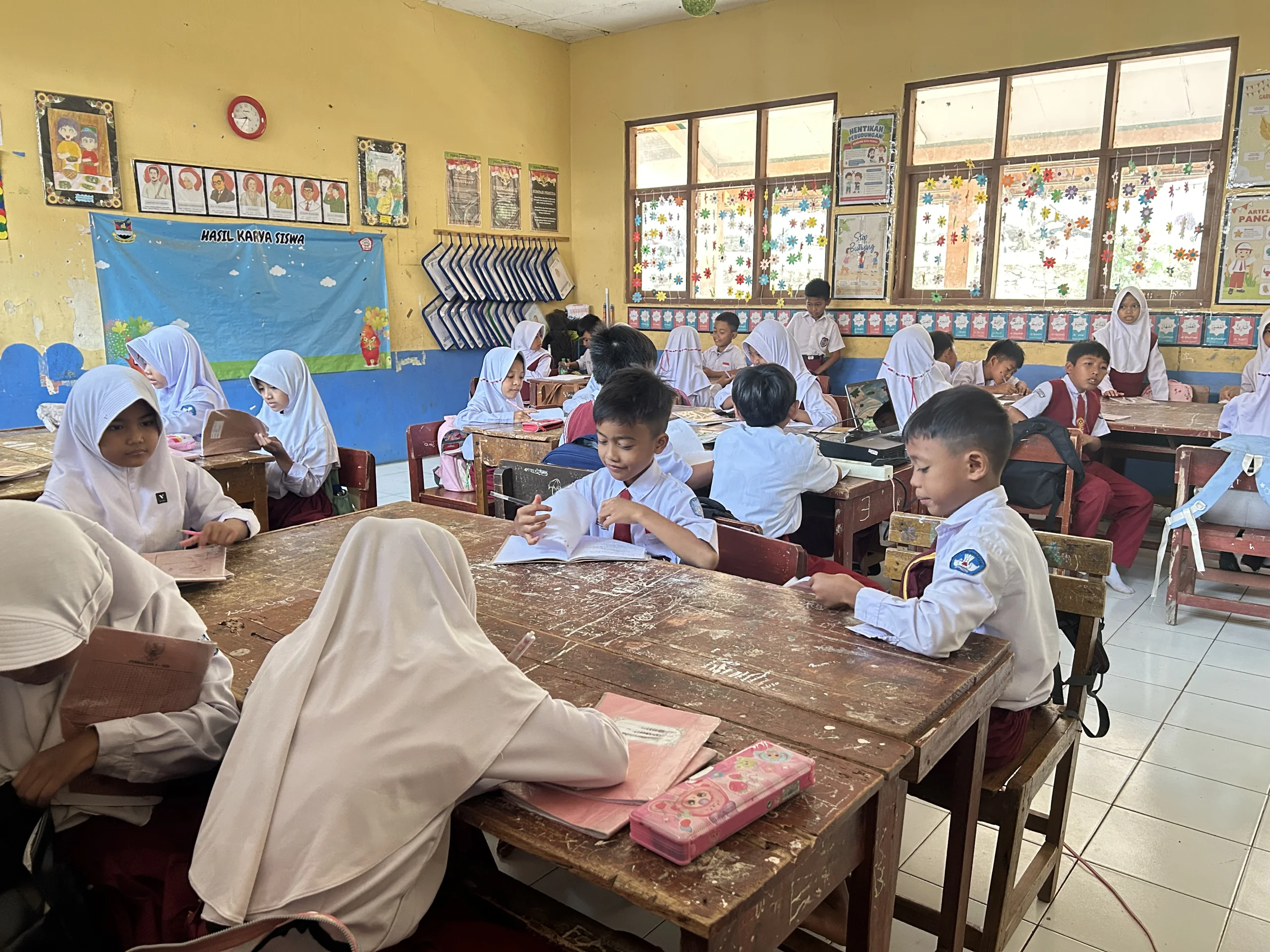
Reading programs need to be implemented in an engaging, regular manner that aligns with the needs of the community. For example, it is not enough for schools to simply ask students to read for a few minutes before lessons begin.
Such activities should be followed by discussions, written responses, or other activities that help students understand the content of what they have read.
Furthermore, the availability of reading materials must also be considered. Not everyone has the same opportunity to access quality books.
Therefore, cooperation between the government and the community is essential to provide reading materials that are easily accessible, age-appropriate, and diverse in terms of themes and presentation.
Digital Literacy and the Challenges of Technological Development
The development of digital technology presents both opportunities and challenges for the National Literacy Movement.
Currently, the public can acquire knowledge through e-books, scientific journals, articles, and various information sources available on the internet.
In my view, this ease of access should be utilized to expand learning opportunities, especially for the younger generation and students.
However, the ease of obtaining information is not always accompanied by the ability to assess its truth.
Information circulating on social media often contains errors, lacks clear sources, or is presented without adequate context. Therefore, digital literacy skills must be developed alongside reading habits.
The public needs to be accustomed to checking information sources, comparing multiple references, and distinguishing between facts and opinions.
In higher education, students must also understand the importance of using accountable information sources and citing references when completing academic assignments.
With this understanding, technology should not be considered a hindrance to reading activities.
Conversely, if utilized correctly, technology can be a supporting tool for literacy development. The main challenge is to build the habit of using technology to deepen knowledge, rather than merely seeking entertainment.
The Importance of Equitable Access to Reading Materials
In my view, the success of the National Literacy Movement depends heavily on equitable access to reading materials and literacy support facilities.
Communities with libraries, adequate book collections, and internet access certainly have greater learning opportunities compared to those still facing limited facilities.
Hasanah's research (2024) regarding the achievement of the GLN using PISA data and Indonesian statistics shows challenges in reading ability and disparities in literacy development between regions.
These findings indicate that strengthening literacy cannot be implemented through a one-size-fits-all approach across all regions.
Each program needs to consider the conditions, needs, and resources available in each respective area.
The government also needs to increase the availability of public libraries, school libraries, and community reading centers.
In addition to providing book collections, these facilities should be developed into learning spaces that are open to the public.
Group reading activities, book discussions, writing workshops, and the introduction of local literary works can be options to increase community engagement.
Equitable access must also be accompanied by the provision of reading materials relevant to the readers' lives.
Books that highlight local culture, folklore, regional history, and daily issues can help people feel more connected to reading.
In this way, literacy not only functions to broaden horizons but also contributes to preserving Indonesia's cultural diversity.
Efforts to Strengthen the National Literacy Movement
In my opinion, the National Literacy Movement needs to be strengthened through various simple activities that are carried out consistently and involve many parties.
Families can build reading habits at home. Schools can develop creative literacy activities, while community groups can revitalize libraries and reading circles.
In higher education, students can also play a role by forming book discussion groups, writing literary reviews, producing articles, and disseminating educational information through digital media.
These activities can serve as a means to improve reading, writing, and critical thinking skills, while simultaneously encouraging student involvement in the literacy movement.
In addition to activity implementation, program evaluation is also important.
Evaluation should not only focus on the number of books available or the number of activities held. Assessments also need to consider changes in reading habits, reading comprehension, and the public's ability to evaluate information.
Through such evaluations, the implementation of the National Literacy Movement can be continuously adjusted to meet the needs of the community.
Strengthening literacy also requires collaboration between the government, educational institutions, families, communities, publishers, and various other parties.
I believe that a culture of literacy cannot be built solely through government policy. Such policies must be accompanied by public participation and the awareness of every individual to continue learning.
Conclusion
Based on this discussion, I believe that the National Literacy Movement is an important initiative to improve the quality of education and build a knowledgeable society.
However, the success of this movement should not be judged solely by the number of programs implemented or the facilities provided.
A more meaningful success is the growth of reading habits, increased critical thinking skills, and the formation of public awareness to use information responsibly.
Therefore, the National Literacy Movement must be implemented consistently, paying attention to equitable access to reading materials, strengthening digital literacy, and involving various educational environments.
The government needs to ensure that literacy programs can reach communities with diverse needs. Meanwhile, families, schools, universities, and communities must create environments that support reading habits.
Ultimately, I believe that a culture of literacy will not grow just through calls to read. Such a culture must be built through habits, opportunities, and a supportive environment.
If every party plays their role according to their respective capabilities, the National Literacy Movement can be a concrete step in shaping an Indonesian society that is critical, creative, knowledgeable, and capable of facing the challenges of the times.
Bibliography
Hasanah, D. F. (2024). Kesetaraan wawasan dunia melalui literasi: Evaluasi ketercapaian Gerakan Literasi Nasional melalui data PISA dan statistik Indonesia. Journal of Education for The Language and Literature of Indonesia, 2(2), 98–110.
Ministry of Education and Culture. (2017). National Literacy Movement: Questions and Answers. Ministry of Education and Culture.
Nasrullah, R., & Asmarini, P. (2024). Policy Brief Number 4, May 2024: Improving Indonesia's Literacy through Optimizing the Role of Books. Language Development and Fostering Agency.
National Library of the Republic of Indonesia. (2024, 30 December). IPLM 2024 Records High, National Literacy Continues to Increase.
Ministry of Primary and Secondary Education. (2025, 23 December). Ministry of Primary and Secondary Education Prepares Roadmap to Strengthen the National Literacy Movement.








Comments 0
Write a Comment Share your response