

SURABAYA, JURNALPOST – Students from the Information and Library Science Study Program at the Faculty of Social and Political Sciences (FISIP), Universitas Airlangga (UNAIR), have introduced innovative merchandise products to support the promotion of eight museums in Surabaya.
The product development is part of a community service initiative titled “Merchandise-Based Information Marketing Development and Strengthening Public Relations Competencies for Museum Managers in Surabaya,” held at the Surabaya Education Museum, Jalan Genteng Kali Number 10, on Friday (6/11/2026).
This event marked the second day of a community service series by the UNAIR Department of Information and Library Science, in collaboration with the Surabaya Culture, Youth, Sports, and Tourism Office and the Surabaya Museum and Cultural Building Management Office.
While the first day focused on strengthening public relations, marketing strategies, and visitor services, the second day centered on developing museum promotional media through creative products with practical utility and economic potential.
Students enrolled in the Business Information Analysis (AIB) course participated by presenting product designs tailored to the unique characteristics and identity of each museum.
Strengthening Collaboration Between UNAIR and Museum Managers
The event began with an opening ceremony, the national anthem, and remarks from representatives of the UNAIR Department of Information and Library Science community service team, Ragil Tri Atmi, S.IIP., M.A., and the Head of the Surabaya Museum and Cultural Building Management Office, Saidatul Maknunah, S.T.
In her address, Ragil Tri Atmi expressed appreciation for the ongoing partnership between the university and Surabaya’s museum managers.
She emphasized that community service programs should not end with training sessions, noting that follow-up evaluation and mentoring are essential for sustainable results.
“Today is not the end. We will not stop our collaboration here,” said Ragil Tri Atmi.
She expressed hope that the collaboration, now in its second year, would continue to grow through joint mentoring and evaluation.
Meanwhile, Saidatul Maknunah praised the UNAIR team’s contribution to enhancing the capacity of museum managers, particularly in information marketing and visitor services.
“Hopefully, these training sessions will be applied by our colleagues in the field,” said Saidatul Maknunah.
She hopes the knowledge and skills gained during the training will be implemented in museum management, providing direct benefits to visitors and institutional development.
Seven Student Groups Present Products for Eight Museums
A key agenda item was the presentation of merchandise developed by students of the Business Information Analysis course.
Seven student groups presented product designs for eight Surabaya museums. Each group developed concepts by considering historical value, collection characteristics, and the identity of the respective museum.
The products were diverse, ranging from keychains, scarves, coffee, aromatherapy oils, to tote bags.
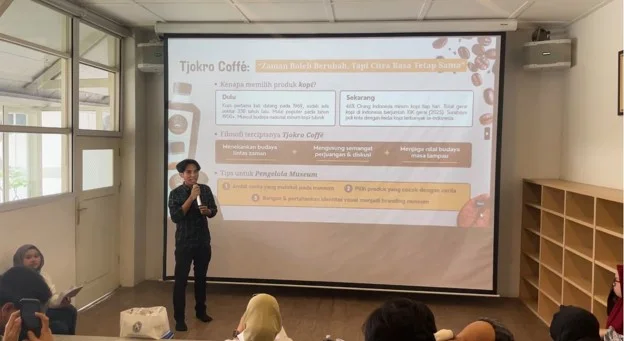
One notable innovation was a coffee product named Tjokro Coffee, inspired by the H.O.S. Tjokroaminoto Museum.
This product demonstrates how historical information and museum identity can be transformed into consumer goods that offer both representational value and practical utility.
Beyond presenting design concepts, students brought finished prototypes to showcase directly to the museum representatives.
During the presentation session, each group explained the development background, design choices, and the connection between the product and the target museum.
Museum managers provided feedback and suggestions regarding the alignment of the products with their respective institutional identities.
The discussion served as an opportunity for students to receive direct evaluation from those who might eventually utilize their product designs.
Feedback from the managers will also serve as a basis for refining the products before they are further developed as part of museum promotional strategies.
Merchandise as a Promotional Tool and Revenue Source
Developing merchandise is an alternative way for museums to expand how they introduce their collections, history, and identity to the public.
Traditionally, museum information is conveyed through exhibits, collections, educational activities, or digital publications. Through a creative product approach, the museum's message and identity can reach the public in a way that integrates into daily life.
Keychains, tote bags, and other items not only serve as souvenirs for visitors but also promote the museum to others when used outside the museum environment.
In addition to supporting promotion, product development opens opportunities for museum managers to generate additional revenue through the sale of merchandise to visitors.
The products developed by the students are also intended to be handed over to the museums as potential marketable items.
However, their implementation still requires consideration by each manager, including factors such as design suitability, visitor needs, and the potential for sustainable product development.
Promoting Innovation and Sustainable Museum Development
Through their involvement in this activity, students gained experience in applying academic knowledge to address the real-world needs of an institution.
They were challenged not only to produce creative items but also to analyze museum characteristics, design marketing concepts, and articulate the value of the products to potential users.
This experience is part of applying the Business Information Analysis curriculum outside the classroom.
For museum managers, this activity provided a new perspective on the potential of creative product development as a means of communication, promotion, and improved visitor service.
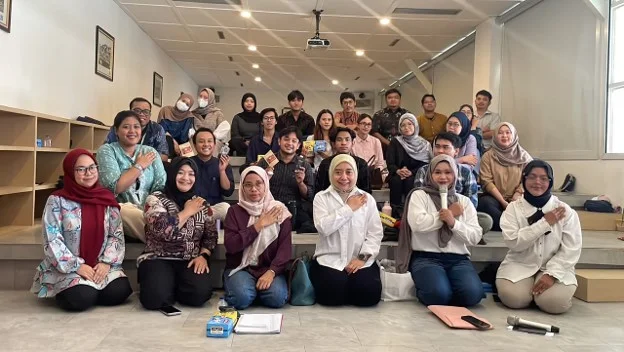
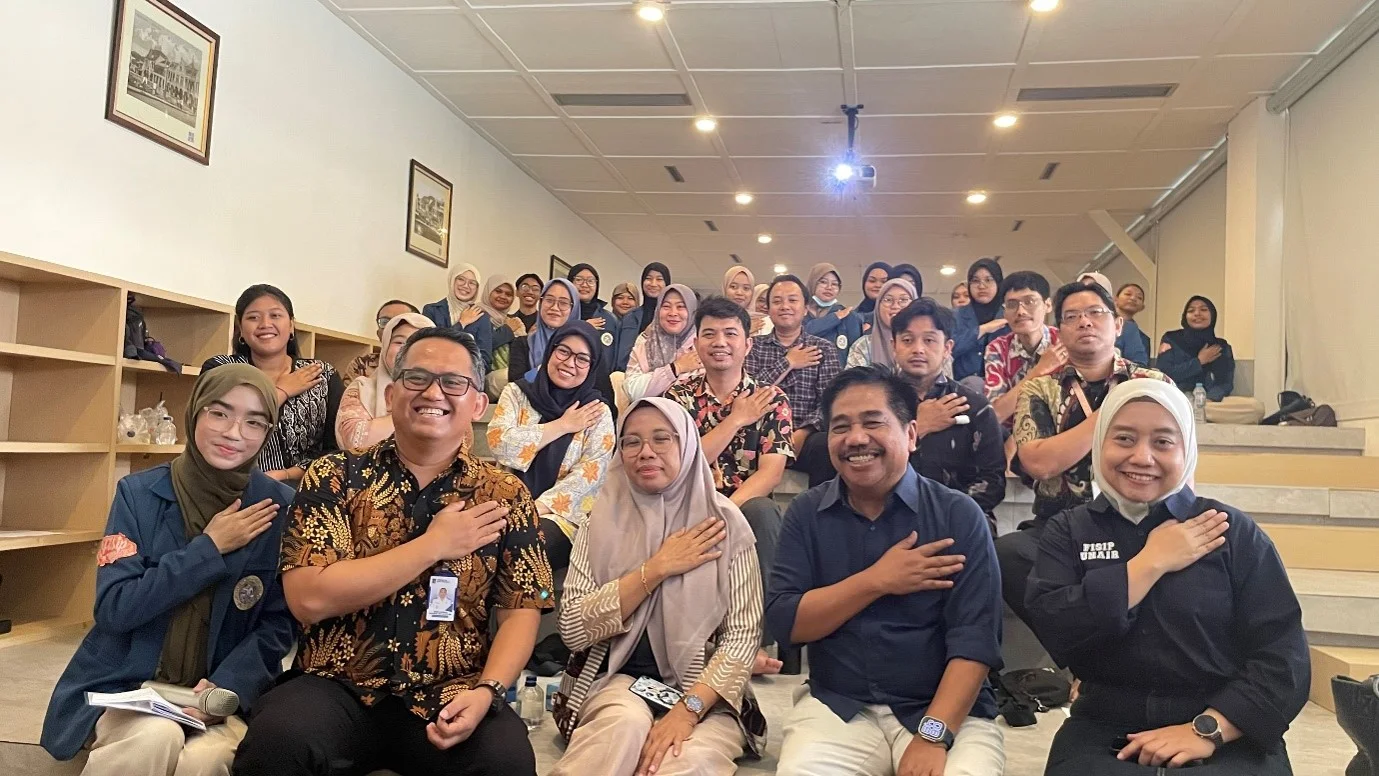
The second day concluded with a closing session and a group photo featuring the UNAIR community service team, students, and representatives of the Surabaya museum managers.
The collaboration between academia and museum management is expected to not only produce merchandisebut also foster sustainable innovation in museum management and information marketing.
Through continued evaluation and mentoring, the students' work is expected to contribute significantly to strengthening the appeal of museums as historical and educational tourism destinations in Surabaya.
Information regarding activities by the Universitas Airlangga Department of Information and Library Science can be followed on Instagram @iipunairofficial.


Comments 0
Write a Comment Share your response