

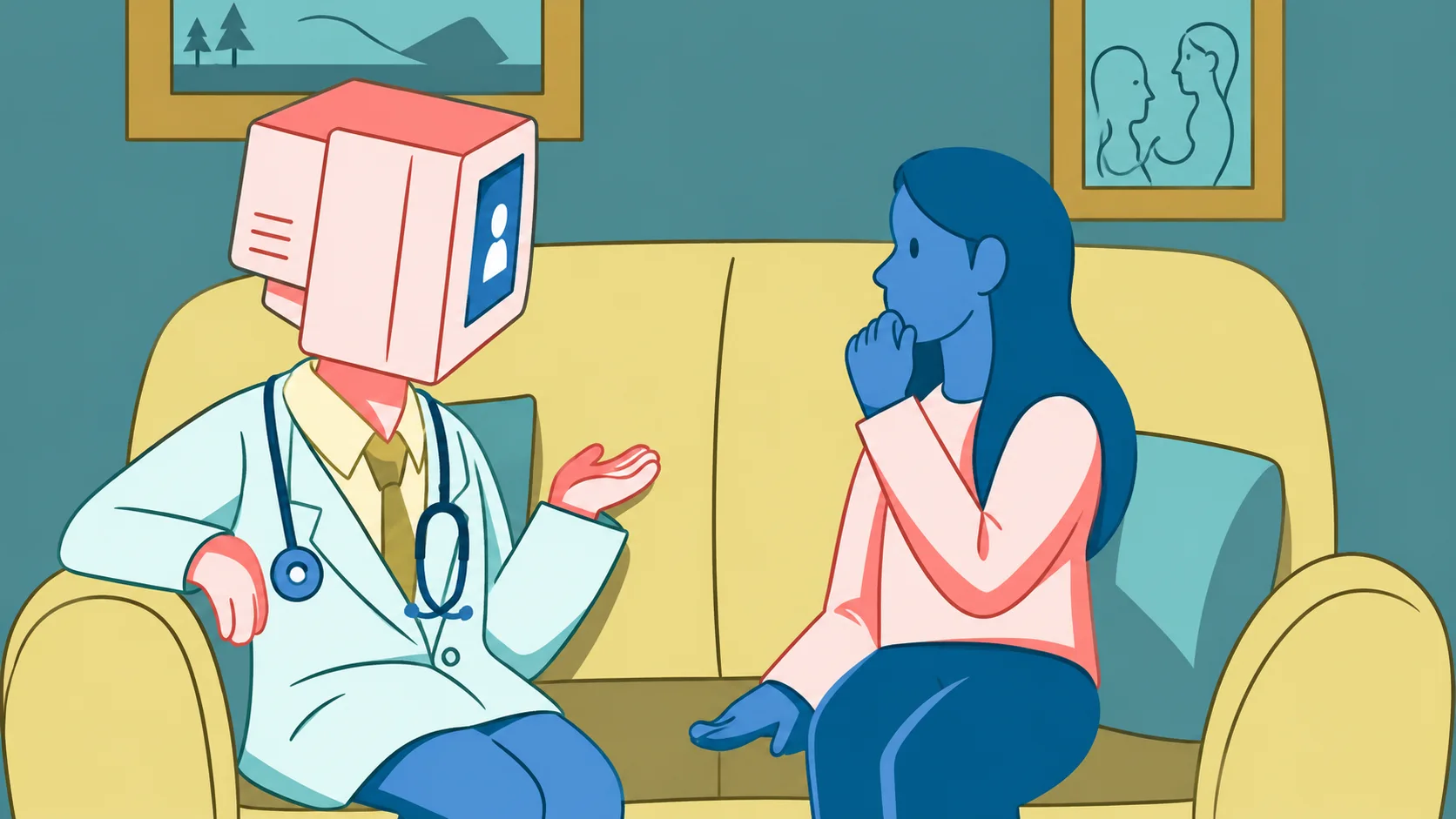
BANDUNG, JurnalPost.com – Self-diagnosis is a condition where an individual concludes they have a mental disorder or specific illness without undergoing an examination by a professional, such as a doctor, psychologist, or psychiatrist.
This issue is critical to discuss because social media makes mental health information easily accessible, yet its accuracy is not always guaranteed. Furthermore, this phenomenon reveals deeper issues than just misinformation.
It is necessary to first distinguish between symptoms and disorders. Sleep difficulties or feelings of anxiety can be experienced by almost everyone at certain times. Meanwhile, the criteria in the DSM-5-TR (Diagnostic and Statistical Manual of Mental Disorders, Fifth Edition, Text Revision) for diagnosing mental disorders generally require symptoms that persist for a certain duration, interfere with daily activities, and cannot be better explained by other medical conditions or disorders (American Psychiatric Association [APA], 2022).
The problem is that social media content does not necessarily help us distinguish between the two. In a study of the 100 most popular ADHD videos on TikTok, about half were rated as misleading by two clinical evaluators, namely a psychiatrist and a psychiatry resident (Yeung et al., 2022).
Many parties view self-diagnosis merely as a result of a lack of diligence among the younger generation. However, such an assessment tends to oversimplify the issue.
The author argues that self-diagnosis on social media arises because young people are searching for identity and a sense of belonging amidst a crisis of trust in the authority of knowledge.
Therefore, the solution is not to ban mental health content, but to build the ability to evaluate information and provide safe spaces for inquiry.
This argument is examined through two branches of philosophy, namely epistemology and existentialism, as well as from the perspective of clinical psychology.
Epistemology: Who is Worthy of Trust?
David Hume, a Scottish empiricist philosopher, held that knowledge originates from individual experience. We trust the testimony of others because experience shows that certain testimonies are reliable. However, such trust must also consider the credibility of the party providing the testimony.
Immanuel Kant, a philosopher of criticism, stated that knowledge is born from experience processed through human reason. In his essay on enlightenment, he encouraged humans to dare to use their own reason and not surrender judgment entirely to others.
From these two views, we can understand the importance of assessing the validity of information sources in relation to epistemic authority. In the context of mental health diagnosis, that authority lies with professionals who possess clinical competence.
On social media, mental health videos become part of the experience consumed every day. Creators who share their personal stories sometimes feel closer, warmer, and more honest than professionals who use clinical language.
On the other hand, access to psychological services is not always easy. Consultation costs, long queues, and social stigma against individuals seeking professional help are significant barriers.
According to Hume's perspective, trusting the testimony of others is natural. However, such trust needs to consider the credibility of the source, including their expertise and professional experience.
On social media, users can more easily evaluate creators based on emotional proximity and follower count rather than their scientific background.
From Kant's perspective, information from the videos we watch should not be accepted at face value, but processed and tested first through reason.
Thinking independently does not mean rejecting the existence of experts, but using one's ability to think to determine who is worthy of trust and why.
When that process is skipped, symptom similarity can immediately be considered a diagnosis. As a result, trust shifts from those with expertise to those who are most easily accessible. This phenomenon illustrates a shift in the authority of knowledge.
Thus, self-diagnosis is not entirely caused by individual negligence, but also by limited access to experts and weak habits of evaluating information critically.
A number of studies show findings consistent with these concerns.
Yeung et al. (2022) found that videos created by health professionals have better information quality compared to videos from individuals without a health background.
Hasan et al. (2023), through an experiment on students in the United States, found that posts normalizing anxiety can increase a person's tendency to self-diagnose anxiety disorders.
This influence arises through identification with the poster, not because of reduced stigma. This means that emotional proximity plays an important role in the process of information acceptance.
Fonagy and Allison (2014) refer to a person's willingness to accept knowledge from others as epistemic trust or epistemic trust.
We tend to trust information that is considered reliable and relevant to ourselves. Creators who feel very close to the personal experiences of their followers can fulfill that element of relevance, so trust has the potential to shift without undergoing adequate credibility testing.
Existentialism: Labels as a Shelter
Jean-Paul Sartre, an existentialist philosopher, introduced the idea that existence precedes essence.
This means that humans are not born with a fully predetermined identity. Humans form themselves through the choices and actions they take.
The freedom Sartre refers to is not just freedom of speech or action, but the freedom to determine one's own identity.
However, because every choice carries responsibility, that freedom sometimes feels heavy. To avoid that responsibility, a person may hide behind roles or labels available in their environment.
Sartre called this attitude bad faith or self-deception, which is when a person denies their freedom and responsibility in making choices.
Martin Heidegger, a German philosopher, also explained the human tendency to dissolve into Das Man or the "they" (the average person). In this condition, a person can understand and judge themselves based on views developing in society, rather than through reflection on themselves.
Existentialism views identity as a process that is continuously formed through choices and experiences, not something entirely given from the outside.
During adolescence and early adulthood, questions about identity arise more frequently. Not all individuals are able to answer these questions easily.
Amidst that confusion, diagnostic labels found through social media are sometimes used as a quick answer. Experiences that were previously difficult to understand suddenly gain a name and are felt by many others as well.
These labels can indeed provide a sense of security and belonging. However, in a reading through Sartre's perspective, when labels are used to stop questioning oneself or to avoid responsibility for choices, it can lead to self-deception.
A person no longer asks, "Who do I want to be?", but begins to limit themselves through labels that may not be accurate.
Heidegger's view strengthens this analysis. The trend of labeling on social media can make a person follow a way of understanding themselves that is currently popular.
In fact, symptom similarity does not necessarily indicate a mental disorder. Incorrect labels can actually distance a person from a deeper understanding of themselves.
Labeling is also not an entirely neutral act. Hacking (1995) calls this phenomenon a looping effect, which is when a person is placed into a category, the way that individual views and lives their life can change. That change then influences the category attached to them.
A similar idea is found in the prevalence inflation hypothesis proposed by Foulkes and Andrews (2023).
According to them, mental health awareness campaigns can help detect symptoms that were previously overlooked. However, for some people, this increased awareness also has the potential to make mild psychological distress understood as a mental disorder.
Labels can then influence self-concept and behavior, for example by encouraging someone to avoid situations that cause anxiety, so that the symptoms have the potential to worsen.
Nevertheless, Foulkes and Andrews emphasize that this idea is still a hypothesis that requires further testing.
Haslam (2016) also noted that the meaning of a number of psychological concepts related to harm and pathology tends to expand over time. This phenomenon is known as concept creep.
As a result, relatively mild psychological experiences can more easily be viewed as pathological conditions.
Late adolescence to the twenties is a relevant period in this discussion. Arnett (2000) describes it as a time of identity exploration and instability, especially in societies that provide space for individuals to try various roles.
It is not surprising that labels offering answers to the question "Who am I?" feel attractive.
In Sartre's language, labels can offer a ready-made essence for an existence that is still in process.
Clinical Psychology Perspective: From Symptom Similarity to Diagnosis
Why is symptom similarity not enough to determine a diagnosis?
Symptoms such as sleep difficulties, difficulty concentrating, or easy fatigue can appear in various conditions. Ranging from anxiety disorders, depression, ADHD, medical conditions such as thyroid disorders and anemia, to the effects of sleep deprivation and daily life pressures.
Therefore, professionals do not just rely on a list of symptoms in determining a diagnosis.
They consider the duration of symptom appearance, severity, impact on daily activities, and the possibility of other causes through interviews and clinical examinations. The process of considering various possible conditions is known as differential diagnosis (APA, 2022).
Data from the Indonesia-National Adolescent Mental Health Survey (I-NAMHS) shows the difference between mental health problems and mental disorders that meet diagnostic criteria.
About 34.9 percent of Indonesian adolescents aged 10–17 years experienced mental health problems in the 12-month period studied. However, about 5.5 percent met the criteria for one of the six mental disorders measured.
These disorders include social phobia, generalized anxiety disorder, major depression, post-traumatic stress disorder (PTSD), behavioral disorders, and ADHD (Center for Reproductive Health et al., 2022; Erskine et al., 2024).
The anxiety disorder group had the highest prevalence, at about 3.7 percent. Meanwhile, only about 2.6 percent of adolescents with mental health problems accessed further mental health services (Center for Reproductive Health et al., 2022).
This data shows that many adolescents do face psychological difficulties. However, not all difficulties meet the criteria for mental disorders measured in the survey, and access to professional help remains limited.
Nevertheless, this does not mean that a person's feelings about their condition are always wrong.
Rutter et al. (2023) found that individuals who had not received a diagnosis, but felt they should have, had symptom scores on questionnaires that approached those of individuals who had received a diagnosis, especially in cases of depression, generalized anxiety, and insomnia.
For mania and bipolar disorder, questionnaire scores in that study could not adequately distinguish between the two groups. The researchers recommended further study.
These findings suggest that self-diagnosis can be a signal of real psychological distress that deserves attention, not just a misunderstanding.
However, questionnaires are screening tools, not a substitute for clinical diagnosis. Therefore, such signals should be followed up through consultation with a professional.
Another risk is the habit of searching for health information excessively through the internet.
Starcevic and Berle (2013) discuss the phenomenon of cyberchondria, which is the excessive and repetitive searching for health information online that actually worsens a person's anxiety.
Bridging Philosophy and Clinical Psychology
There are three important lessons that can be drawn from philosophical thought in understanding the phenomenon of self-diagnosis.
First, through Hume's thought, the level of trust should be adjusted to the strength of the available evidence (Hume, 1748/2007, Part X).
In the context of mental health, symptom similarity is not yet sufficient evidence to conclude the existence of a disorder.
Second, through Kant's thought, intuition without concepts does not provide adequate understanding (Kant, 1781/1998).
The feeling that content is very consistent with personal experience can be understood as intuition. Meanwhile, diagnostic criteria and clinical examinations help provide a framework for understanding that experience more systematically.
Third, Sartre distinguishes between facticity, which is the facts inherent in a person's life situation, and transcendence, which is the ability to transcend those facts through choices and actions (Sartre, 1943/2003).
Professional diagnosis can be understood as part of the facts regarding a person's condition that need to be acknowledged honestly. However, a diagnosis does not have to become the individual's entire identity.
In this perspective, bad faith can arise when an untested fact or label is used as an excuse to stop choosing, growing, and processing.
An accurate diagnosis can open the way to treatment and recovery. Conversely, an incorrect label has the potential to hinder that process.
Epistemology and existentialism complement each other in explaining the phenomenon of self-diagnosis.
Epistemology explains how trust in sources of knowledge can shift to creators who feel close, so that mental health information is accepted without adequate critical testing.
Meanwhile, existentialism explains why diagnostic labels are so attractive to young people who are facing identity confusion.
If both perspectives are combined, self-diagnosis is not just an individual error. This phenomenon arises when the need for identity meets a source of knowledge that is easy to reach, but not always credible.
Clinical psychology then provides an additional layer of understanding regarding the importance of maintaining boundaries between symptom recognition and diagnosis establishment.
Recognizing Oneself Without Getting Trapped in Labels
Based on the study of epistemology, existentialism, and clinical psychology, the phenomenon of self-diagnosis on social media is not sufficiently answered by determining whether information is true or false.
Behind this phenomenon, there is a need for young people to be understood, accepted, and to have a place to lean on.
At the same time, there are still a number of obstacles that need to be addressed, such as professional consultation costs, service queues, and social stigma regarding mental health issues.
In the epistemological perspective, trust can shift to creators who feel close, not to the most credible sources.
In the existentialist perspective, available labels become quick answers to questions about identity. In fact, identity is formed through choices and processes that cannot be completed just by watching one video.
Clinically, symptom similarity does not necessarily indicate a mental disorder. Therefore, symptom recognition should be a reason to ask and seek help, not a final conclusion.
Banning mental health content or blaming the younger generation is not an adequate solution.
What needs to be built is the habit of testing information, checking the background of content creators, expanding access to affordable professional services, and providing safe spaces to ask questions without fear of being considered weak.
Social media content can trigger curiosity. However, confirmation regarding mental health conditions still requires assessment through primary health services or professionals, such as clinical psychologists and psychiatrists.
Recognizing oneself is a good thing. However, recognizing oneself is not the same as labeling oneself.
Thus, the feeling that content is very consistent with personal experience can be a reason to seek help, not an answer that closes the question of who we are.
Labels can be an initial door, as long as they do not become a place to stop.
About the Author
Sarvagio Radityatama Putra Bahri is a student of the Psychology Study Program at the Universitas Pendidikan Indonesia who has an interest in the study of psychology and human philosophy.
Through this article, the author examines the phenomenon of self-diagnosis among the younger generation by combining perspectives of clinical psychology, epistemology, and existentialism.
Bibliography
American Psychiatric Association. (2022). Diagnostic and statistical manual of mental disorders (5th ed., text rev.). American Psychiatric Publishing.
Arnett, J. J. (2000). Emerging adulthood: A theory of development from the late teens through the twenties. American Psychologist, 55(5), 469–480.
Center for Reproductive Health, University of Queensland, & Johns Hopkins Bloomberg School of Public Health. (2022). Indonesia – National Adolescent Mental Health Survey (I-NAMHS) report. Center for Reproductive Health.
Erskine, H. E., Maravilla, J. C., Wado, Y. D., et al. (2024). Prevalence of adolescent mental disorders in Kenya, Indonesia, and Viet Nam measured by the National Adolescent Mental Health Surveys (NAMHS): A multi-national cross-sectional study. The Lancet, 403(10437), 1671–1680.
Fonagy, P., & Allison, E. (2014). The role of mentalizing and epistemic trust in the therapeutic relationship. Psychotherapy, 51(3), 372–380.
Foulkes, L., & Andrews, J. L. (2023). Are mental health awareness efforts contributing to the rise in reported mental health problems? A call to test the prevalence inflation hypothesis. New Ideas in Psychology, 69, Article 101010.
Hacking, I. (1995). The looping effects of human kinds. In D. Sperber, D. Premack, & A. J. Premack (Eds.), Causal cognition: A multidisciplinary debate (pp. 351–394). Oxford University Press.
Hasan, F., Foster, M. M., & Cho, H. (2023). Normalizing anxiety on social media increases self-diagnosis of anxiety: The mediating effect of identification (but not stigma). Journal of Health Communication, 28(9), 563–572.
Haslam, N. (2016). Concept creep: Psychology’s expanding concepts of harm and pathology. Psychological Inquiry, 27(1), 1–17.
Hume, D. (2007). An enquiry concerning human understanding (P. Millican, Ed.). Oxford University Press. (Original work published 1748).
Kant, I. (1998). Critique of pure reason (P. Guyer & A. W. Wood, Trans.). Cambridge University Press. (Original work published 1781).
Rutter, L. A., Howard, J., Lakhan, P., Valdez, D., Bollen, J., & Lorenzo-Luaces, L. (2023). “I haven’t been diagnosed, but I should be”—Insight into self-diagnoses of common mental health disorders: Cross-sectional study. JMIR Formative Research, 7, Article e39206.
Sartre, J.-P. (2003). Being and nothingness: An essay on phenomenological ontology (H. E. Barnes, Trans.). Routledge. (Original work published 1943).
Starcevic, V., & Berle, D. (2013). Cyberchondria: Towards a better understanding of excessive health-related Internet use. Expert Review of Neurotherapeutics, 13(2), 205–213.
Yeung, A., Ng, E., & Abi-Jaoude, E. (2022). TikTok and attention-deficit/hyperactivity disorder: A cross-sectional study of social media content quality. The Canadian Journal of Psychiatry, 67(12), 899–906.










Comments 0
Write a Comment Share your response