

JurnalPost.com – In any given classroom, every child possesses different abilities and learning styles. Some students grasp teacher explanations quickly, while others require repetition or learn more effectively through images, concrete objects, games, or direct examples.
These differences are a natural part of a child's growth and development. Therefore, academic success should not be measured solely by comparing one child's abilities to those of their peers.
However, children who need more time to understand lessons are sometimes unfairly labeled as lazy, inattentive, or difficult to manage. In reality, difficulties in keeping up with the curriculum may be related to specific developmental conditions, such as intellectual disability.
Intellectual disability is a condition characterized by limitations in intellectual functioning and adaptive behavior that emerge during the developmental period. Intellectual functioning relates to the ability to understand information, learn, and solve problems. Meanwhile, adaptive skills encompass the abilities used in daily life, such as communicating, self-care, following rules, and interacting with others (American Psychiatric Association, 2022).
Despite developmental challenges, children with intellectual disabilities still possess abilities and potential that can be nurtured. Some children retain information better through repetition, others can follow simple instructions, and some demonstrate their capabilities through play-based activities.
Consequently, educators must understand each child's needs and adapt the learning process to match their specific capabilities.
Understanding Student Difficulties in the School Environment
A clear example of these learning needs can be seen in the case of an eight-year-old boy in the second grade of elementary school. To maintain confidentiality, the child's identity in this article is masked under the name Andi.
Andi has struggled to keep up with classroom activities, particularly in recognizing letters, reading, and writing. These difficulties have been apparent since his time in kindergarten.
When given writing assignments, Andi sometimes refuses and prefers to engage in play. He also struggles to enter and remain in the classroom. In some situations, Andi leaves the classroom to wander or head to other areas of the school grounds.
Nevertheless, Andi possesses several strengths that can serve as a foundation for his learning process. He is able to memorize prayers and short surahs, recognize colors, name numbers, understand simple instructions, express his needs, and ask for help.
Andi also shows better engagement when receiving individual support and participating in activities that align with his interests.
Psychological assessment results indicate limitations in intellectual and adaptive functioning. These findings demonstrate that Andi's difficulties are not merely a matter of willpower or discipline. He requires support and learning methods tailored to his specific abilities.
From this overview, there is one crucial point for educators to note: when a child does not participate in learning activities, do not immediately assume they are unwilling to learn.
Teachers need to evaluate whether the assigned tasks are appropriate for the child's ability, whether the instructions are easy to understand, and whether the learning environment is sufficiently supportive.
Practical Ways to Support Students with Intellectual Disabilities in the Classroom
Supporting children with intellectual disabilities does not always require complex teaching methods. Simple adjustments to learning activities can help children understand instructions more easily and become more engaged in the lesson.
1. Provide Short and Clear Instructions
Children can become overwhelmed when receiving too much information at once. Therefore, teachers should provide one instruction at a time using simple sentences.
For example, a teacher might say, “Pick up your book,” and then provide the next direction only after the child has completed the first task.
In addition to verbal directions, teachers can provide direct demonstrations so that the child can more easily understand the required activity. Ensure the child is given enough time to process and respond to instructions.
2. Use Concrete Objects and Visual Media
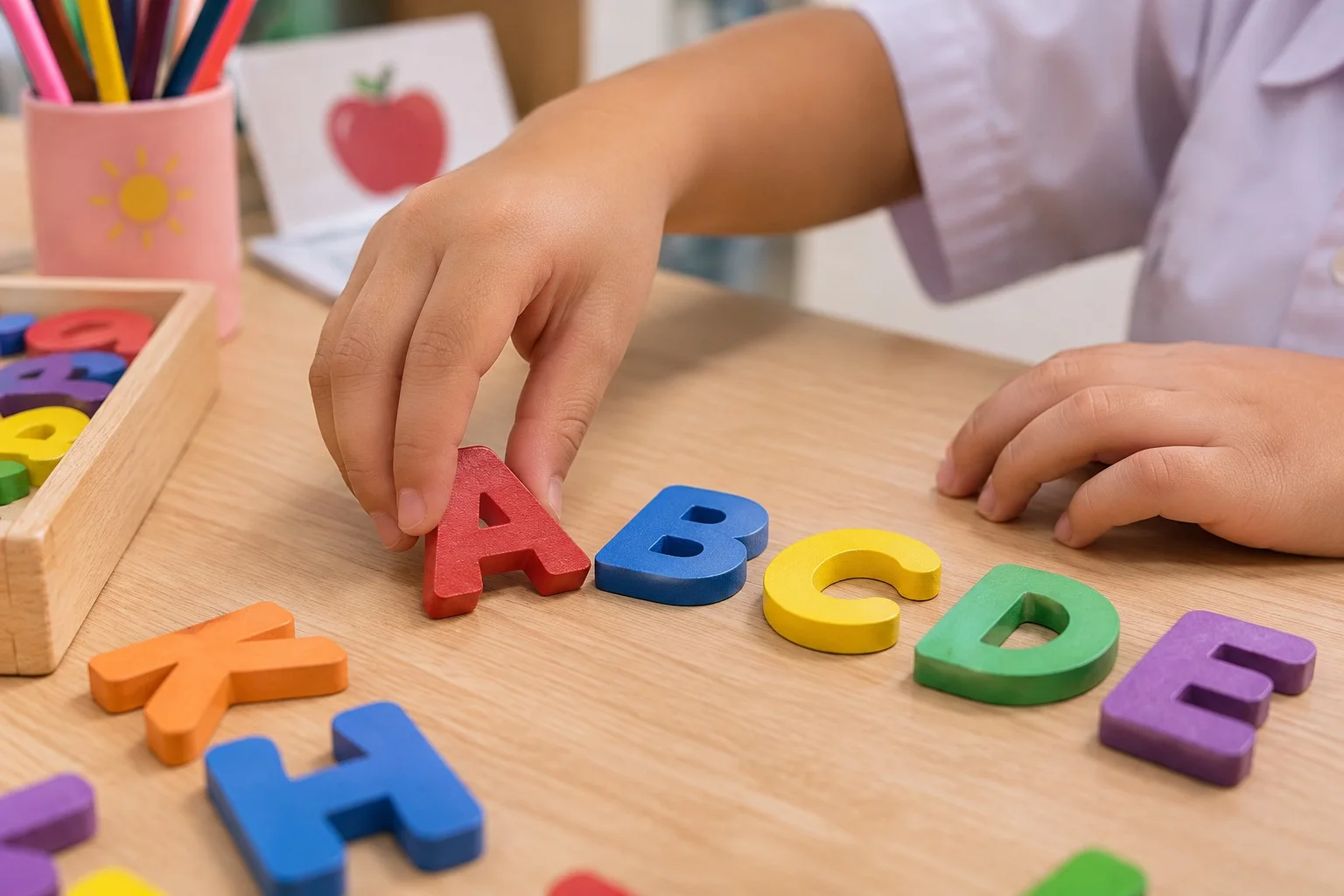
Explanations through text or speech alone may not be enough to help the child understand the material. Teachers can use real objects, pictures, cards, blocks, or simple teaching aids.
For instance, to introduce numbers, teachers can use objects that can be counted directly. To introduce colors, teachers can use colored paper cutouts.
Learning media can also be adapted to the child's interests to make the learning process more engaging.
In Andi's case, his ability to remember verbal information and recognize colors can be utilized as a starting point for learning activities. By doing so, the teacher does not focus solely on the child's difficulties but also leverages the skills he already possesses.
3. Break Tasks into Small Parts
Tasks that are too long or difficult can cause a child to lose interest and become reluctant to continue. Teachers can break tasks down into several simple steps.
If a child is not yet able to complete a full page of exercises, the teacher can start with one or two questions first. Once the child successfully completes that portion, the teacher can provide the opportunity to move on to the next stage.
Learning targets need to be adjusted to the child's ability, rather than being equated entirely with the targets of their classmates.
4. Offer Praise for Every Effort
Children need to know that their efforts are valued. Teachers can offer praise when a child is willing to enter the classroom, attempts to complete a task, or follows an activity through to completion.
Praise should be delivered specifically, for example, “Great job! You were willing to try writing,” or “Today you were able to follow the activity until the end.”
Teachers can also use simple forms of appreciation, such as stars or stickers, if the child enjoys them.
Positive reinforcement can help increase the likelihood of the child repeating the desired behavior. However, the form of appreciation must be tailored to the child's preferences and responses (Cooper et al., 2020).
5. Gradually Increase Learning Engagement
Teachers do not need to immediately demand that a child participate in all learning activities like their peers. If a child is only able to stay in the classroom for a few minutes, start with that duration.
Once the child begins to adjust, their engagement time can be increased slowly.
In Andi's case, support was directed toward building his willingness to enter and remain in the classroom gradually. Initial targets were set based on the child's ability and then increased according to his progress.
The main principle is to provide the child with the opportunity to succeed at each stage before moving on to the next.
6. Create a Safe and Inclusive Classroom Environment
Teachers must ensure that the child feels safe and accepted in the school environment. Avoid embarrassing the child, comparing them to peers, or using derogatory labels.
Provide opportunities for the child to interact, play, and engage in activities with their friends.
If a child expresses fear or discomfort, teachers need to listen and carefully investigate the situation they are experiencing.
A sense of safety and acceptance from the school environment is a vital component in helping the child feel comfortable participating in learning.
The Role of Parents in Supporting Child Development
Support for the child does not stop at school. Parents also play a crucial role in helping the child develop skills through daily activities at home.
Parents can train the child's basic skills through simple activities, such as recognizing colors, counting objects, identifying letters, drawing, or pasting. These activities can be conducted through play so that the child does not feel forced to learn.
Beyond academic skills, independence also needs to be practiced. Children can be given the opportunity to try putting on shoes, getting dressed, tidying up items, or performing self-care activities according to their abilities.
If the child encounters difficulty, parents can provide just enough assistance and gradually give the child the opportunity to try on their own.
In Andi's case, his mother has made efforts to support his learning activities through memorization, singing, repetition, and providing examples. This approach can continue to be developed by paying attention to the child's interests and abilities.
Parents also need to provide appreciation for every bit of progress, including small improvements that might seem simple.
The Importance of Cooperation between Teachers and Parents
Support for the child will be more optimal if the family and school share a common understanding of the child's needs.
Teachers and parents need to share information regarding the child's abilities, difficulties, and progress.
Teachers can communicate which activities the child is already able to follow at school, while parents can provide information regarding the child's habits and skills at home.
Through this communication, both parties can establish simple targets that can be practiced consistently.
Teachers can also collaborate with Special Education Teachers (GPK) to determine the appropriate form of assistance.
If individual support cannot be provided at all times, teachers can strive for small-group activities or provide simpler tasks tailored to the child's needs.
Every Progress Deserves Recognition
Understanding children with intellectual disabilities means seeing the child as a whole, rather than focusing solely on their limitations.
A child may need more time to recognize letters, complete tasks, or perform daily activities. However, this does not mean the child lacks the opportunity to develop.
Andi's case shows that the ability to remember, communicate, understand simple instructions, and follow activities that align with his interests can serve as assets in the learning process.
These abilities can be leveraged to help the child develop other skills gradually.
Ultimately, an education that embraces diversity is not just about providing every child the opportunity to be in the classroom, but also ensuring they receive the support to learn, feel safe, and be valued.
Because academic success is not merely about who masters the lesson the fastest, but also about how every child is given the opportunity to grow and develop according to their potential.
References
American Psychiatric Association. (2022). Diagnostic and Statistical Manual of Mental Disorders (5th ed., text rev.). DOI: 10.1176/appi.books.9780890425787.
Cooper, J. O., Heron, T. E., & Heward, W. L. (2020). Applied Behavior Analysis (3rd ed.). Pearson.










Comments 0
Write a Comment Share your response