

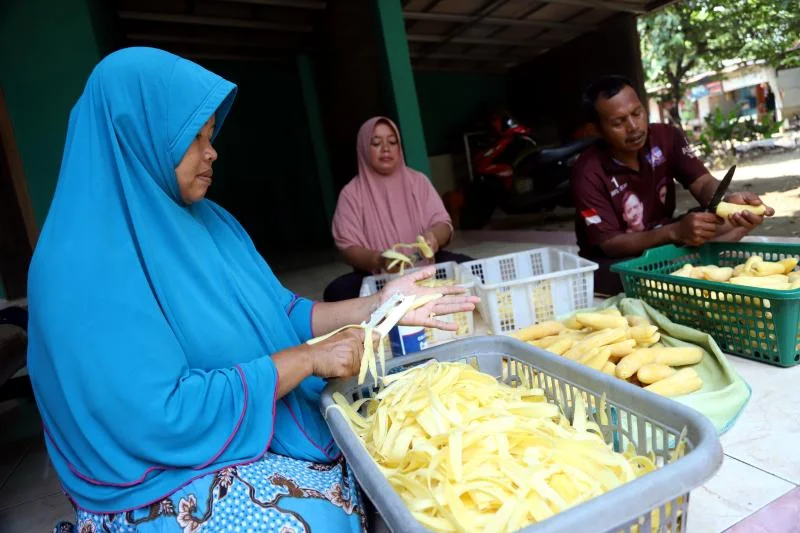
JurnalPost.com – Indonesia is a country with immense agricultural potential. Various commodities, such as rice, corn, cassava, coconut, and fruits, serve as essential resources for the lives of its people. The agricultural sector not only provides food but also serves as a primary source of livelihood for many Indonesians.
However, this vast agricultural potential does not necessarily provide optimal economic benefits if harvests are sold only as raw materials. Processing efforts are required so that agricultural commodities have a higher market value. One strategic step to achieve this is through the development of agro-industry.
Agro-industry can bridge agricultural activities with the industrial sector, allowing the commodities produced by farmers to provide greater economic benefits (Elizabeth, 2019).
Transforming Agricultural Produce into Value-Added Products
Agro-industry involves the processing of agricultural products into various goods that possess added value. This activity encompasses processing, packaging, storage, and marketing.
For example, cassava can be processed into tapioca flour, chips, and mocaf flour. Meanwhile, fruits can be processed into juice, jam, candied fruit, and various other food products.
Through these processes, agricultural products become more diverse and are no longer solely dependent on raw material sales. Processed products also have the potential for a longer shelf life, allowing them to be marketed to a wider range of consumers.
Proper processing can help utilize harvests more optimally while increasing the economic value of agricultural commodities (Furuhita et al., 2024).
The existence of agro-industry also serves as an alternative to reduce the risk of losses due to abundant harvests. When the price of fresh commodities drops, processing them into value-added products can open up new marketing opportunities.
Creating Jobs and Boosting MSME Growth
Beyond increasing product market value, agro-industry has the potential to create jobs and help improve the welfare of farmers.
Processing activities require labor at various stages, ranging from raw material supply and production to packaging, storage, and marketing.
With the development of processing industries in a region, local communities have the opportunity to engage in economic activities without having to rely entirely on jobs in the primary agricultural sector.
The development of rural agro-industry can also drive the growth of micro, small, and medium enterprises (MSMEs). Communities can develop businesses based on local potential by utilizing raw materials available in their surroundings.
For instance, cassava-producing regions can develop chip and flour businesses, while fruit-producing areas can develop beverage, candied fruit, or jam products.
Thus, the benefits of agricultural activities can be felt by more parties, not just by the producers of raw materials (Elizabeth, 2019).
Challenges in Developing Agro-Industry in Indonesia
Despite its various benefits, the development of agro-industry in Indonesia still faces a number of challenges. Some of these include limited technology, human resource capabilities, business capital, processing facilities, and marketing access.
Not all business actors have adequate equipment to produce goods with consistent quality. Such limitations can affect production efficiency and the ability of products to compete in the market.
Furthermore, some MSME actors still require information and skills in marketing products through digital media or other marketing channels.
This condition is also found among processed food MSMEs that face the need for improved access to marketing technology information (Sandini et al., 2024).
Amidst the development of digital technology, the ability to market products through social media and e-commerce platforms is becoming increasingly important. Utilizing such technology can help agro-industry players expand their consumer reach and introduce regional flagship products.
The Importance of Collaboration in Agro-Industry Development
The development of agro-industry requires support and cooperation from various parties, ranging from the government and universities to farmers and business actors.
The government can play a role through the provision of facilities, business mentoring, training, access to financing, and support for the adoption of processing technology.
Universities can also contribute through research, innovation, and the development of processing methods that align with the needs of the community and business actors.
Meanwhile, business actors need to continuously improve product quality, food safety, packaging design, and marketing strategies to meet consumer needs.
Such collaboration is expected to strengthen the relationship between the agricultural sector and the processing industry, while creating a more productive and sustainable business ecosystem.
Building a More Competitive Future for Agriculture
Agro-industry plays a crucial role in supporting Indonesia's agricultural development. By processing harvests into value-added products, the agricultural sector not only produces food but also opens business opportunities, expands employment, and has the potential to increase community income.
The development of agro-industry can also strengthen the ties between farmers, MSME actors, the processing industry, and consumers.
For these benefits to be felt sustainably, agro-industry development must be accompanied by improvements in technology, human resource skills, and market access.
Processing agricultural products also needs to be tailored to consumer needs and market potential so that the resulting products have competitiveness. This step is important to reduce the risk of agricultural waste when production is abundant or market demand is declining.
With the support and cooperation of various parties, the potential of Indonesia's agricultural produce can be utilized more optimally. Agro-industry is not merely an activity of processing harvests, but a path to strengthening the community economy and driving the progress of national agriculture.
References
Elizabeth, R. (2019). Improving the Competitiveness of Food Crops through Agro-Industry Acceleration and Agricultural Institutional Empowerment. Mimbar Agribisnis: Journal of Agribusiness-Oriented Scientific Community Thought, 5(2), 379–394.
Furuhita, F. A., Mubarokah, and Syah, M. A. (2024). Value-Added Analysis of Emping Garut Business (Case Study of Raflesia Emping Garut Agro-industry in Ngasem Village, Bojonegoro Regency). Jurnal Agrica, 17(2), 249–260.
Sandini, S., Nurliza, and Fitrianti, W. (2024). Improving Access to Marketing Technology Information for Processed Food MSMEs in Singkawang City. Jurnal Social Economic of Agriculture, 13(2), 117–130.








Comments 0
Write a Comment Share your response