

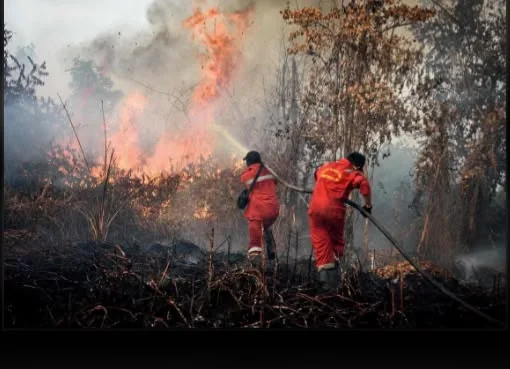
JurnalPost.com - Every time the dry season arrives and forest and land fires (karhutla) strike various regions in Indonesia, from Sumatra to Kalimantan, public attention is almost always focused on firefighting efforts.
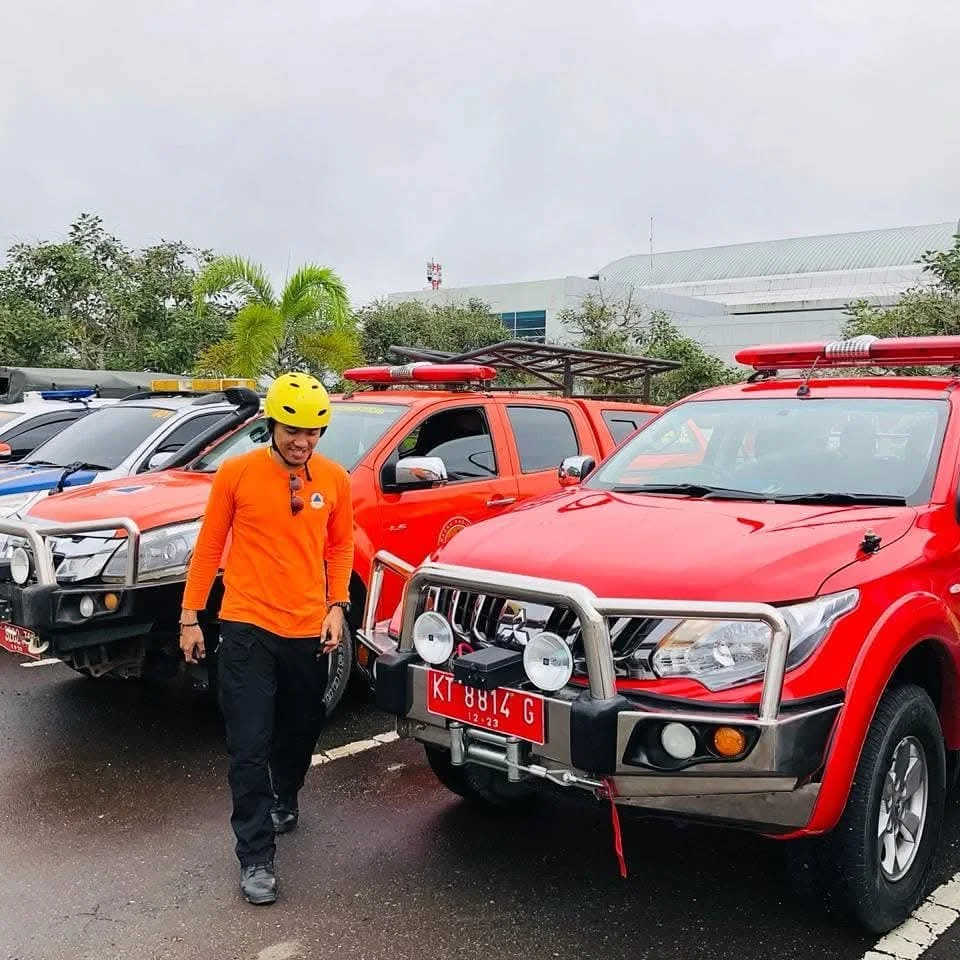
Personnel from the Regional Disaster Management Agency (BPBD), Manggala Agni, and volunteers from the Fire Concerned Community (MPA) serve as the front line in facing the flames. The public often refers to them as humanitarian heroes.
However, behind this appreciation lies a fundamental question that the government must address: have these personnel, who risk their lives, received adequate occupational health and safety protection?
This issue should not be viewed as merely technical. Combating forest fires is a high-risk job that exposes personnel to fire threats, exposure to hazardous materials, extreme temperatures, difficult terrain, and both physical and psychological stress.
Therefore, the courage and dedication of these personnel must be matched by an adequate work protection system. It is not enough for the government to simply deploy personnel when fires occur; it must also ensure that every individual has protection before entering the operational area.
Forest Fire Smoke: The Invisible Threat
One of the greatest threats to forest fire responders comes from something whose danger is not always immediately recognizable: smoke exposure.
Smoke from forest and land fires contains fine particulate matter PM2.5, carbon monoxide, and various hazardous compounds that can impair respiratory function and overall health.
Exposure to PM2.5 is a serious concern because these tiny particles can penetrate deep into the respiratory tract, reaching the pulmonary alveoli. Meanwhile, carbon monoxide can interfere with the blood's ability to transport oxygen.
The combination of these exposures increases the risk of respiratory distress, poisoning, cardiovascular issues, and life-threatening conditions.
The limited availability of respiratory protection for personnel and volunteers is an issue that requires attention. Using standard cloth or surgical masks does not provide adequate protection against the full range of hazards in fire smoke.
Furthermore, particulate filter respirators do not protect against carbon monoxide. Therefore, the selection of respiratory protection must be tailored to the specific hazards and environmental conditions of the operation.
The procurement of personal protective equipment (PPE) should not merely satisfy administrative requirements but must consider the results of hazard identification and risk assessment in the field.
The Cooling Phase Also Carries Risks
Misunderstandings regarding forest fire risks often lead to a focus solely on the active firefighting process. In reality, the cooling phase or mopping up also poses serious threats to personnel safety.
During this phase, personnel must ensure that embers do not reignite. They work on land that may still hold heat beneath the surface, particularly in peatland ecosystems.
Ground that appears safe is not necessarily stable to walk on. Personnel may suffer burns, fall through, sustain injuries from sharp objects, or experience accidents due to limited visibility.
These risks increase when personnel work for extended periods without clear rotation schedules. Exposure to high temperatures, dehydration, physical fatigue, and a lack of recovery time can diminish concentration and decision-making abilities.
In emergency situations, even the slightest lapse in vigilance can lead to serious accidents.
Thus, personnel safety must encompass all stages of the operation, from preparation and active firefighting to cooling and the final extraction of personnel from the site.
Disaster K3 Must Not Depend on Budget Availability
Challenges in implementing disaster-related OHS (K3) in the regions can stem from limited budgets, the availability of PPE, personnel competence, and safety oversight.
Local governments must realize that protecting personnel is not an optional expense that can be deferred when budgets are tight. Such protection is a vital component of disaster response readiness.
A modern OHS (K3) approach prioritizes prevention. The government should not only focus on medical treatment after personnel suffer health issues or work-related accidents.
Instead, the government must build a system capable of identifying, controlling, and monitoring risks before incidents occur.
Therefore, the presence of a safety officer safety officer in forest fire operations requires serious attention.
Safety officers must have the authority to monitor field conditions, evaluate risks, ensure the use of PPE, and recommend the temporary suspension of operations if conditions become hazardous to personnel.
Safety should not be an afterthought when pressure to complete an operation mounts. It must be an integral part of every operational decision.
Five Steps That Must Be Prioritized
Local governments and all stakeholders must take concrete steps to strengthen the OHS (K3) system in forest fire management.
First, allocate a specific budget for personal protective equipment. The government must ensure that PPE procurement matches the nature of the hazards. This equipment includes respiratory protection based on exposure types and risk assessments, eye protection, standard-compliant firefighting gear, gloves, and safety boots.
The use of respirators must also be accompanied by training, fit testing where necessary, and proper maintenance.
Second, establish a health monitoring system for personnel. Every command post and operational site needs a mechanism for monitoring personnel health.
Physical condition checks, the availability of drinking water, first aid facilities, medical support, and medical evacuation mechanisms must be part of standard operating procedures.
Third, implement a structured rotation system. Work hours, rest periods, and personnel rotations must account for smoke exposure levels, ambient temperatures, work intensity, and the physical condition of each individual.
Such arrangements are essential to reduce the risk of fatigue and maintain the decision-making capacity of personnel throughout the operation.
Fourth, conduct regular hazard identification and risk assessments. Every individual must understand safety procedures, evacuation routes, emergency communication, and the actions to take when facing hazardous conditions.
Risk assessments must also be updated to reflect changing field conditions as the operation progresses.
Fifth, strengthen health and social protection guarantees. The government must ensure the availability of periodic health check-ups, protection against work-related accident risks, and social security for all personnel and volunteers involved in forest fire management.
This protection must extend to all elements working in the field, not just those with government employee status.
Successful Firefighting Is Not Just About Extinguishing Flames
We need to change our perspective on how we measure the success of forest fire management.
Operational success is often measured by the area of land saved, the speed of suppression, or the number of hotspots controlled.
However, there is another equally important indicator: the safety of all personnel involved.
The government should not take pride in extinguishing fires while ignoring the risks of health issues, injuries, or even loss of life faced by personnel due to inadequate work protection.
Appreciation in the form of awards and gratitude is certainly important. However, the best reward for these personnel is the guarantee that they can work safely and return to their families in good health.
Ultimately, forest fire management is not just about how humans defeat fire, but also about how the state protects the people on the front lines of disaster.
Because no responder should set out to save the environment only to lose their own safety due to a negligent protection system.






Comments 0
Write a Comment Share your response