


JurnalPost.com – The song “Stop the Wedding!” by Ashe has become a hot topic on social media, particularly TikTok. By the end of October 2026, the song's audio had reportedly been used in more than 1.8 million posts featuring various stories about romantic relationships and marriage.
Some users have posted videos of weddings that ended in divorce, shared signs of unhealthy relationships or red flags, and shared painful experiences regarding failed relationships.
At a glance, this phenomenon looks like a typical social media trend. However, if examined more deeply, a major question arises that Generation Z is currently facing: are they afraid of marriage, or are they actually just afraid of choosing the wrong partner?
This question is not without reason. Behind the seemingly lighthearted trend lies anxiety about the future of marriage.
Generation Z has grown up with broad access to information. They have witnessed divorces in their surroundings, read news about domestic violence, and seen various unhealthy relationship experiences shared openly on social media.
More Than Just Calling Off a Wedding
When hearing the phrase “Stop the Wedding,” some people might immediately imagine someone calling off a wedding at the last minute. In reality, the meaning of this phenomenon is much broader.
The trend has become a space for many people, especially women, to share their courage in leaving unhealthy relationships.
The stories that emerge are not just drama before a wedding. Many users share experiences regarding infidelity, domestic violence, emotional manipulation, and divorce after living in a marriage.
Ashe's song itself relates to her personal experience in a relationship and marriage that ended in divorce. The message is not an invitation to hate marriage, but a reminder not to ignore signs of harmful relationships.
This phenomenon does not only involve women. A number of men have also shared experiences regarding verbal abuse, emotional pressure, and feelings of being trapped in a relationship.
This shows that the issue of unhealthy relationships can be experienced by anyone, regardless of gender.
Beyond emotional issues, there is also an economic dimension that is often overlooked. The costs of the reception, dowry, wedding gifts, and social pressure to hold a wedding party are specific considerations for the younger generation.
Amidst economic uncertainty, Gen Z views marriage not only as an emotional commitment but also as a long-term financial responsibility.
Divorce Rates and Youth Concerns
The younger generation's concerns about marriage did not appear out of nowhere.
Based on data from the Central Statistics Agency (BPS), there were 438,168 divorce cases in Indonesia throughout 2025, an increase of about 11 percent compared to the previous year.
Constant disputes and arguments were the dominant cause with 282,326 cases, or about 64 percent of total divorces. Meanwhile, economic issues were recorded in 105,727 cases and domestic violence in 7,138 cases.
These figures illustrate that marital breakdown does not always start from one major event. Small, recurring conflicts, poor communication, and feelings of being unappreciated can become serious issues if not resolved.
Nevertheless, the high divorce rate does not necessarily indicate that the institution of marriage is in crisis.
The increase in divorce rates can also be influenced by greater access to justice and an individual's courage to leave a harmful relationship.
For Gen Z, this information can serve as a consideration before making the decision to marry.
However, it is also important to understand that the negative stories appearing on social media do not always reflect the entire reality of married life.
Many couples live harmonious married lives without sharing their experiences with the public.
Selective, Not Anti-Marriage
The younger generation's increasingly cautious attitude toward choosing a partner is often considered a form of rejection of marriage.
In fact, there is a fundamental difference between being afraid of marriage and being afraid of choosing the wrong partner.
“Young people aren't afraid of marriage; they are afraid of marrying the wrong person,” says psychologist Zoya Amirin.
This view describes the change in the younger generation's way of thinking about long-term commitment.
Gen Z is increasingly realizing that marriage is not just a party, a social status, or an achievement at a certain age. Marriage is a major decision that can affect one's mental health, financial condition, career, and quality of life.
The younger generation is also more open to discussing mental health, personal boundaries, and emotional safety in relationships.
They want to ensure that a potential partner is someone capable of providing a sense of security, respecting differences, and building healthy communication.
This phenomenon is in line with the changing way society views marriage. More and more people are choosing to complete their education, build a career, and achieve financial stability before starting a family.
Marriage is no longer viewed solely as an age-based target, but as a decision that needs to be made based on readiness.
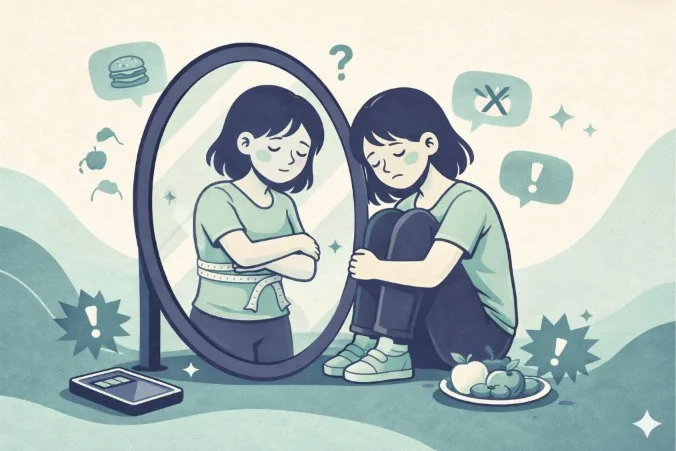
However, excessive caution can also lead someone to become trapped in fear and find it difficult to build a healthy relationship.
Don't Stop at Fear
Marriage readiness does not mean finding a perfect partner or living a relationship without conflict.
Psychologist Putri Langka emphasizes the importance of the ability to manage differences and build communication in married life.
Conflict is an unavoidable part of any relationship. What matters is how a couple faces and resolves that conflict.
The ability to speak openly, listen without judgment, admit mistakes, and apologize are essential parts of building a healthy relationship.
The younger generation also needs to distinguish between signs of a dangerous relationship and normal differences.
Not all incompatibility indicates that a relationship is toxic. However, violence, manipulation, and excessive controlling behavior are serious signs that should not be ignored.
Religious perspectives also provide insight into the importance of readiness before marriage.
The Head of the Office of Religious Affairs (KUA) in Susoh District, Roni Haldi, emphasizes that bad experiences in marriage should be a lesson, not a reason to generalize all married life.
In Islam, marriage is a form of worship aimed at building a family that is sakinah (peaceful), mawaddah (loving), and rahmah (compassionate). To achieve this goal, mental, spiritual, emotional, and financial readiness are required.
The Role of Social Media in Shaping Gen Z's Opinions
Social media plays a major role in shaping the younger generation's perspective on marriage.
Content containing conflict, traumatic experiences, and emotional stories often attracts user attention and receives high engagement.
Repeated exposure to stories of unhealthy relationships has the potential to create anxiety about marriage.
However, social media can also be a tool for education if used correctly.
Various content creators now discuss how to recognize signs of unhealthy relationships, build communication, set personal boundaries, and seek help when facing violence.
The “Stop the Wedding” phenomenon has also opened up space for discussion on issues previously considered taboo, such as infidelity, domestic violence, and dissatisfaction in relationships.
Through this openness, the public can understand that the issue of unhealthy relationships is not an experience that must be faced alone.
Marriage in the Context of Indonesian Culture
In Indonesia, marriage has strong social and cultural dimensions. Marriage does not only unite two individuals but also involves two extended families.
Pressure to marry at a certain age is still a reality for some in society. Those who are not yet married sometimes face stigma and questions about when they will start a family.
Amidst these conditions, the “Stop the Wedding” phenomenon can be understood as a form of criticism against views that place marriage as a social obligation without considering individual readiness.
Gen Z tends to question the assumption that someone must marry just because they have reached a certain age or to meet the expectations of their environment.
This change in perspective does not always mean a rejection of family values. On the contrary, it can be an impetus to build a healthier and more responsible married life.
The Importance of Pre-Marital Education
One effort that can be made to help the younger generation prepare for marriage is to strengthen pre-marital education.
Ideally, pre-marital counseling should not only focus on fulfilling administrative requirements but also provide practical skills for navigating married life.
Topics regarding effective communication, conflict management, reproductive health, family financial management, mental health, and equality in relationships need to receive attention.
The government, educational institutions, religious organizations, and community groups can play a role in expanding access to such education.
Pre-marital education also needs to be accompanied by a change in societal perspective, from viewing marriage as a social demand to a conscious decision based on readiness and commitment.
Gen Z and the Future of Marriage
Ultimately, the “Stop the Wedding” phenomenon is not just a trend showing fear of marriage.
This phenomenon serves as a mirror for various issues that actually occur in society. Marriages can fail, love alone is not always enough, and signs of unhealthy relationships are sometimes ignored.
Gen Z responds to this reality by becoming more selective, more open to discussing personal boundaries, and more courageous in rejecting potentially harmful relationships.
This attitude should not always be considered a weakness. The courage to question one's own readiness before marriage can actually be part of the process toward a more mature married life.
Of course, caution needs to be balanced with the understanding that no partner is perfect and every relationship requires effort.
In the end, the most important question is not whether Gen Z will marry or not, but how they can build a marriage that is more conscious, better prepared, and happier.
If the “Stop the Wedding” phenomenon can encourage the younger generation to understand the meaning of a healthy relationship, the trend is worth viewing as a learning momentum, not just a source of anxiety.






Comments 1
Write a Comment Share your response