


We often praise children who are undemanding—those who can look after their siblings, help with chores, understand their parents' financial struggles, and even serve as a confidant when the family faces problems. They are labeled as independent, mature, understanding, and a source of pride. However, a question is rarely asked: is the child truly learning to be an adult, or are they being forced to grow up because they lack the space to simply be a child?
Helping one's family is certainly not wrong. Care, responsibility, and solidarity are essential values to instill from an early age. However, there is a difference between a child learning to be responsible and a child forced to carry adult burdens excessively. The distinction lies in the appropriateness of the load for their age, the opportunity to choose, and the support received when the child faces difficulties.
The issue becomes more serious when a child no longer just helps but takes on the role of a family pillar. Some children must care for siblings, manage domestic chores, work to support household needs, or feel responsible for maintaining their parents' emotional stability. They try not to add to the problems and set aside their own needs because they feel the family's situation is far more important.
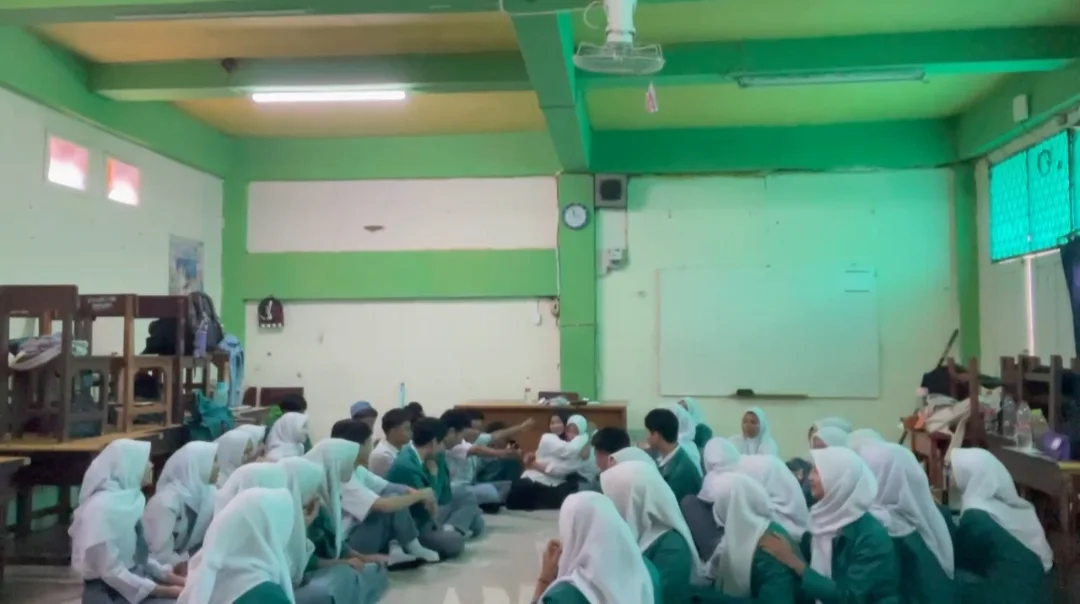
In family psychology, this dynamic is known as parentification, a condition where a child takes on responsibilities that, developmentally and relationally, should be the responsibility of an adult. It can be instrumental, such as managing the house and caring for siblings, or emotional, such as being the person to whom parents vent their problems or feeling responsible for their parents' happiness.
Of course, not every child who helps their family experiences parentification. Age-appropriate responsibilities accompanied by support can build independence and empathy. The problem arises when the responsibility becomes disproportionate, constant, or causes the child to lose the opportunity to meet their own developmental and emotional needs.
Burdens That Are Not Always Visible
We may find it easier to recognize a child who works than one who carries the burden of caregiving and emotional labor within the family. A study by the SMERU Research Institute using Susenas data 2011 noted that approximately 8.2 million children, or 9.81 percent of the child population in its analysis, were involved in household caregiving work. About 69.89 percent of them were female and 30.11 percent were male. These activities include domestic work and caring for family members. Although this is older data and not a reflection of current conditions, these findings indicate that children's contribution to caregiving is an issue that warrants attention.
The context of adolescent psychological well-being cannot be ignored. The Indonesia National Adolescent Mental Health Survey (I-NAMHS) 2022 found that 34.9 percent of adolescents aged 10–17 years, or about 15.5 million adolescents, experienced at least one mental health problem in the last 12 months. Only 2.6 percent of adolescents experiencing these problems accessed support or counseling services. The same survey showed that only 4.3 percent of primary caregivers identified that their adolescents needed help regarding emotional and behavioral issues.
This data does not prove that parentification causes mental health problems. However, these findings serve as a reminder that the emotional struggles of adolescents are not always easily recognized by the adults around them.
Tazala's phenomenological research 2025 on two high school students in Bandung found experiences of parentification in the form of domestic responsibilities, caring for siblings, and providing emotional support to the family. Meanwhile, a systematic review by Keny and Banerjee 2026 of 69 studies identified links between parentification and psychological distress, family relationship tension, identity formation, and well-being. The impact is not uniform as it is influenced by the type of responsibility, family dynamics, and socio-cultural context.
When Maturity Becomes a Demand
We often consider children who always yield as children who understand the situation. Children who do not ask for help are considered strong. Yet, behavior that appears mature does not necessarily indicate that their emotional needs are being met. A child might not speak up because they feel it is inappropriate to add to their parents' burden. They are accustomed to helping but have no space to ask for help themselves.
We also need to be careful not to immediately blame parents. Poverty, job loss, illness, divorce, and limited social support can place families in difficult situations. Therefore, parentification needs to be understood not just as a parenting issue, but as a phenomenon related to social, economic, and cultural conditions.
This is where the perspective of contemporary Guidance and Counseling becomes important. Counselors need to understand students within a broader life context, not just based on their individual behavior. An approach that is responsive to culture, family conditions, and social vulnerability helps counselors understand students' experiences without rushing to make judgments.
Guidance and Counseling Must Not Just Wait for Children to Ask for Help
Schools often find it easier to identify students who skip classes, break rules, experience a decline in achievement, or get involved in conflicts. However, there are students who potentially escape notice: they remain present, do their assignments, and act politely, but they carry heavy family responsibilities.
Therefore, Guidance and Counseling services need to move beyond a work pattern that only waits for students to come with complaints. Counselors need to develop proactive, preventive, and needs-assessment-based services. In the perspective of evidence-based and data-informed counseling, understanding of students needs to be built through assessments, counseling conversations, observations, and ethical communication with relevant parties.
Furthermore, counselors need to act as advocates for the child's developmental needs and rights. From a social justice perspective, the question does not stop at how students can become stronger in facing circumstances, but also whether the environment has provided adequate support. Strengthening children should not turn into a demand that they become increasingly capable of bearing burdens they should not have to carry alone.
Such efforts require collaboration between families, teachers, schools, the community, and social services if necessary. Counselors should not only be listeners for exhausted children but also connectors and companions who encourage the creation of an environment that better supports child development.
Ultimately, we do not need to stop appreciating children who help their families. However, let us not be so proud of having a strong child that we forget to ask why they had to become strong so quickly.
Children have the right to care for their families, but they also have the right to have space to be children. They are allowed to be tired, to ask for help, to have dreams, and to think about their own future without constantly feeling guilty.
Because a family should be a place where a child receives protection, not a place where they must always be the protector. If a child has learned to support their family, have we ensured that there is someone who also supports their emotions?
Nur Zulzila Khoiri, Student of Semester 2 Guidance and Counseling, Universitas Negeri Semarang.









Comments 0
Write a Comment Share your response