

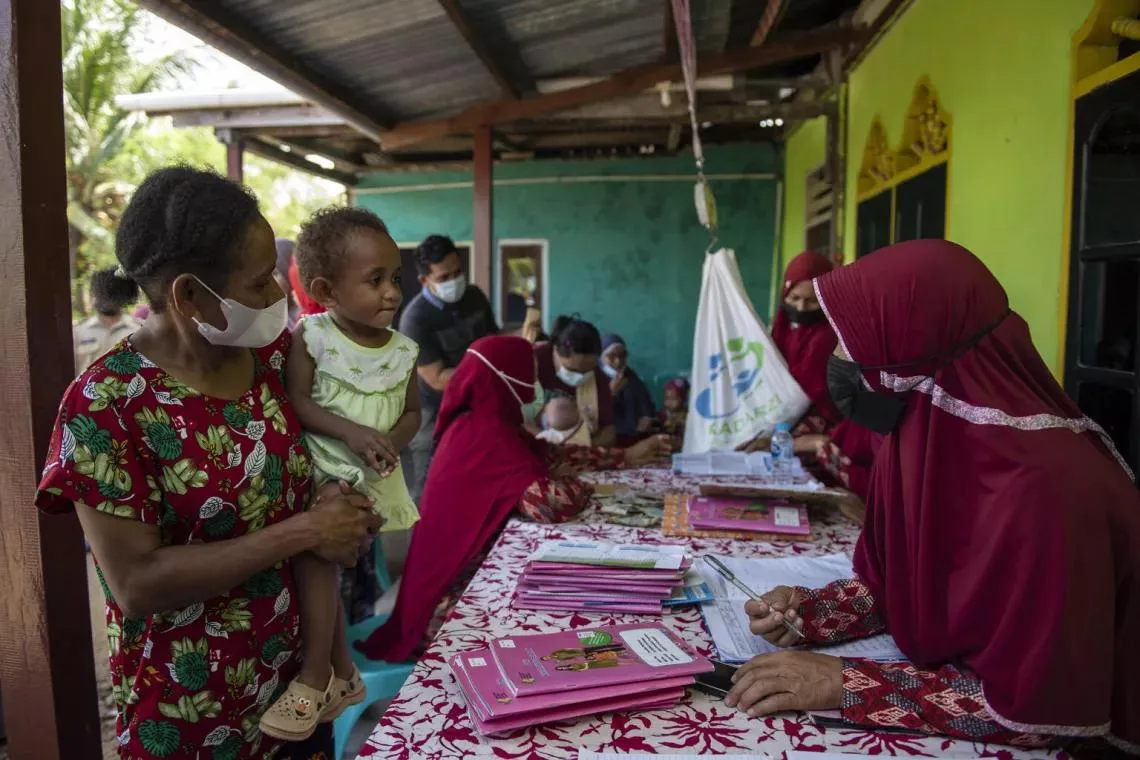
JurnalPost.com – My mother received a message in our family WhatsApp group. It contained a warning about immunization, forwarded by an older sibling she respects. Tomorrow, my mother has an appointment at the community health post (posyandu). Who will she trust: the health worker at the weighing table or a message from someone she has known her entire life?
That question may sound trivial, but for an epidemiologist, it carries significant weight. We have traditionally mapped diseases by who, where, and when. Now, there is one more question: what do people believe, and from whom does that trust originate?
The Never-Ending Conversation
The Ministry of Health routinely monitors public discourse. In the analysis for the week of 21 to 28 August 2026, negative sentiment on social media was recorded at 24.9 percent of 1,417 conversations, and 38 out of 87 verified issues were categorized as red flag (BKPK Ministry of Health, 2026).
The report does not specifically discuss hoaxes. Nevertheless, it demonstrates that the digital space is now treated as a terrain that must be constantly monitored, much like a case curve.
WhatsApp, TikTok, and Facebook are where family health decisions are often shaped, long before a patient reaches a healthcare facility.
It Is Not About Intelligence
I often hear people blame low literacy. That is partially true, but it is an oversimplification.
The WHO explains that the conditions in which people are born, grow, live, work, and age, as well as their access to power, money, and resources, significantly influence health inequities (WHO, 2026).
Trust in health information is formed within those conditions. Education, experience with healthcare services, traditional beliefs, group norms, and the attitudes of community leaders all work together.
The issue of vaccine halal status is the clearest example. When a major measles outbreak hit Papua in 2018, the Indonesian Ulema Council reported that the measles-rubella vaccine used in the mass immunization contained porcine elements (Tarigan, 2025).
I am not concluding that this single piece of news caused the outbreak. The causes of a measles outbreak are always layered. However, this example shows that health messaging in Indonesia runs parallel to religious values and the authority of figures, not merely medical data.
Why Friends Are Trusted More Than Doctors
This is my opinion, and it is what is most often missed in health campaigns. People do not weigh information solely on whether it is true or false. They weigh who is delivering it.
Relatives and influencers are present every day, speaking the same language, and never making us feel ignorant.
Doctors often meet patients for only a few minutes, use foreign terminology, and come from institutions that sometimes feel distant.
Trust is about proximity before it is about expertise. Incorrect but familiar information often defeats correct but cold information.
The Price Paid by the Population
The impact is real, even if the cause is never singular. In August 2025, a measles vaccination campaign was held in Sumenep, East Java, following an outbreak that killed 17 people.
According to BPS data cited by the AP news agency, only 72 percent of Indonesian toddlers received the measles vaccine in the previous year, and in several provinces, the figure was below 50 percent (Tarigan, 2025).
The WHO noted that MR first-dose coverage in Papua was only 46.2 percent in 2024 (WHO Indonesia, 2026).
On the other hand, the latest data shows progress. DTP3 coverage rose from 78 percent in 2024 to 82 percent in 2025, and the number of children who had not received any doses dropped from 748 thousand to 657 thousand (UNICEF Indonesia, 2026).
So, we are not in a state of collapse, but there is still a gap wide enough for measles to persist.
I need to be honest about the limits of the evidence. That coverage gap could be caused by difficult access, uneven services, or hesitation due to hoaxes, and the data above does not separate the three.
The same applies to delays in seeking treatment, self-medication, and evidence-free therapies. This pattern is often seen in the field, but I have yet to find national data that isolates the role of misinformation, and it should be researched.
A Social Epidemiology Perspective
Disease risk is not randomly distributed. It follows social networks. Families, religious study groups, school groups, and online communities that trust one another tend to share the same beliefs, including hesitation toward immunization.
As a result, unvaccinated children tend to cluster rather than being evenly distributed.
Measles requires coverage of around 95 percent to prevent an outbreak, so even one vulnerable cluster can become a starting point for transmission.
Information, in this sense, helps determine who is protected and who is not.
What Needs to Be Done
First, digital health literacy must be taught through places that residents trust, such as community health posts, religious study groups, and schools, rather than just through screen-based campaigns.
Second, risk communication needs to use everyday language, acknowledge uncertainty, and address specific concerns, such as those regarding halal status.
The BKPK's own evaluation recommends proactive narratives, information transparency, and the amplification of high-quality content as part of a communication strategy.
Third, religious leaders, community health volunteers, and health workers must be treated as partners. The WHO emphasizes the importance of a whole-of-government and whole-of-society approach to closing immunization gaps (WHO Indonesia, 2026).
Fourth, the response to misinformation must be rapid, because a clarification that arrives three days later has usually already lost.
Hoaxes do not win because the Indonesian public is not intelligent. They win because they are often present first, closer, and more familiar. The task of public health is to catch up on all three.
References
Health Development Policy Agency, Ministry of Health RI. (2026, 1 September). Analysis of major public health issues for the period of 21–28 August 2026.
Tarigan, E. (2025, 25 August). After 17 die in measles outbreak, Indonesia launches vaccination campaign. Associated Press/PBS NewsHour.
UNICEF Indonesia. (2026, 20 July). More children receive lifesaving vaccines as Indonesia advances immunization coverage and works to close remaining gaps.
World Health Organization. (2026). Social determinants of health.
WHO Indonesia. (2026, 5 June). No child left behind: Japan and WHO join forces to close Indonesia's immunization gaps.






Comments 0
Write a Comment Share your response