

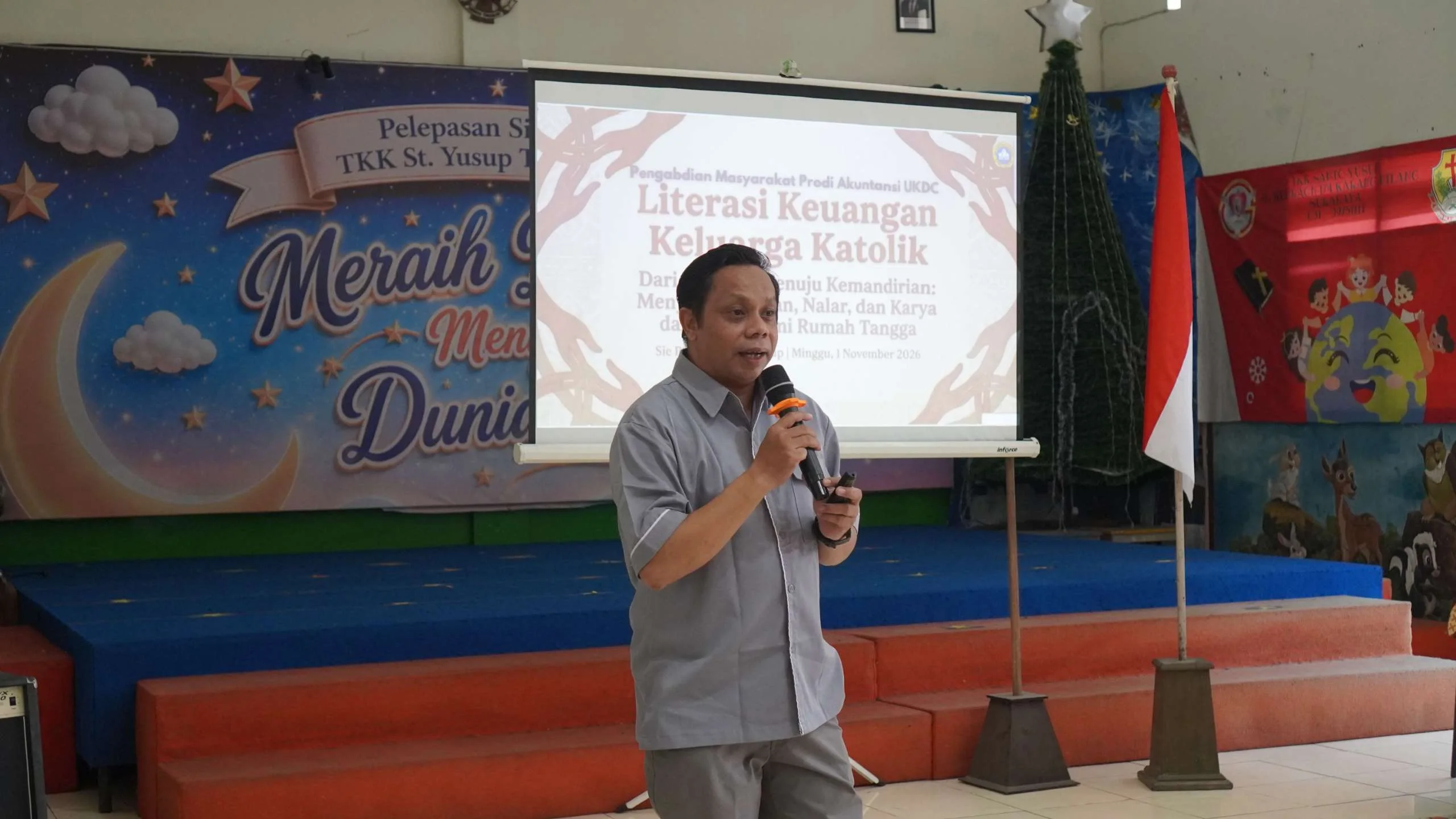
SURABAYA, JurnalPost.com — The Social and Economic Development Section (PSE) of St. Yusup Parish, Karang Pilang, Surabaya, in collaboration with Darma Cendika Catholic University (UKDC), held a family financial literacy education event on Sunday (1/11/2026).
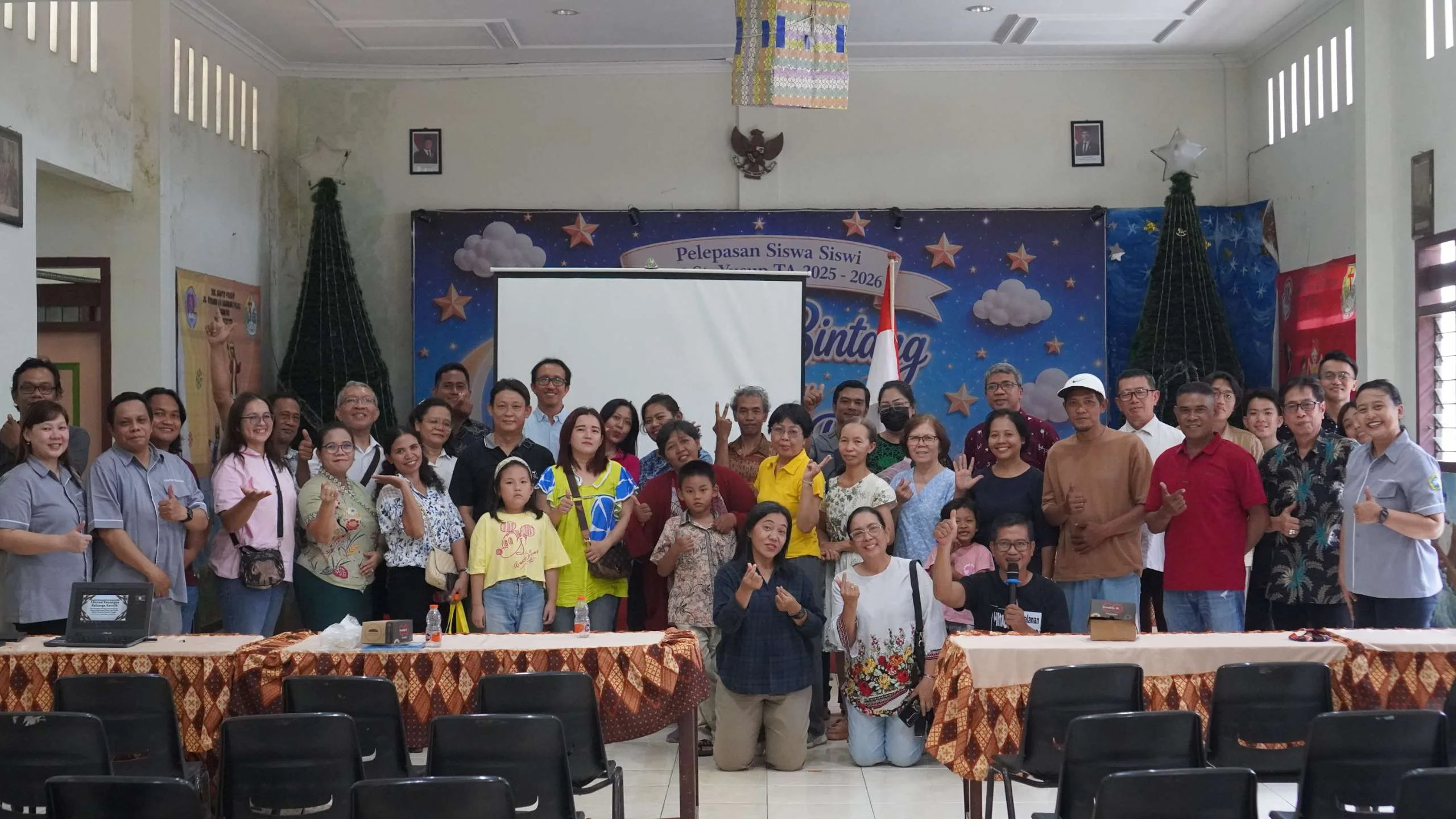
The event, which took place from 09.30 to 11.30 WIB at the St. Yusup Kindergarten Hall, was attended by parents of students receiving educational assistance (Karpas Bapendik) and local micro, small, and medium enterprise (MSME) owners within the parish.
This program is a follow-up to the first-year action plan of the partnership between St. Yusup Parish and UKDC, aimed at transforming the community's economy from a state of dependency on aid toward sustainable independence.
The event began with an opening prayer and remarks from Father Leonardus Satrio, representing the St. Yusup Parish Priest, Andre, representing the Parish PSE Team, and Victor Imanuel W. Nalle, representing the leadership of UKDC.
During the briefing, the organizers emphasized the importance of establishing sound household financial management amidst various economic challenges.
Social assistance and educational scholarships provided by the church are intended to serve as a stepping stone for families to achieve economic independence, rather than becoming a source of long-term dependency.
Participants were also encouraged to control consumptive habits and build honest, open communication between spouses regarding family finances, including debt issues.
Learning the Four-Envelope Method for Family Financial Management
During the presentation session, speakers from UKDC introduced the Four-Envelope Method as a practical approach to managing household cash flow.
The method divides a family's monthly income into four expenditure categories:
50 percent for basic household needs and children's education costs.
20 percent for meeting obligations, such as electricity bills, water bills, and debt installments.
10 percent for an emergency fund, set aside from the start to anticipate urgent needs.
20 percent for productive working capital and business development.
This allocation was introduced as a financial management guide that can be adjusted according to the income, obligations, and specific circumstances of each family.
Through this method, participants are expected to be able to manage their income in a planned manner without neglecting basic needs or preparations for emergencies.
“Controlling consumptive urges cannot be solved by prayer alone; it requires a real change in mindset and habits. Our economic independence is not for hoarding wealth, but so that the family becomes a peaceful community, empowered to love others, and radiates God's love in daily life,” the message conveyed during the event stated.
Increasing Vigilance Against Illegal Online Loans and Fraudulent Investments
The discussion became more interactive as the speakers highlighted various financial threats that could harm the community, ranging from illegal online loans (pinjol), predatory lending practices disguised as daily cooperatives, to fraudulent investments exploiting the name of artificial intelligence technology.
In one of the case studies presented, participants were introduced to an illegal investment scheme offering returns of up to 540 percent within 60 days.
Such unreasonable profit offers are a red flag that the public needs to be wary of, especially when accompanied by mechanisms for recruiting new members and a lack of clarity regarding business activities.
Participants were also reminded of the risks of Ponzi schemes, the misuse of personal data through illegal loan applications, and the practice of providing loans with burdensome daily interest rates.
For families already trapped in illegal online loans, the speakers provided several steps for handling the situation, including:
Controlling expenses and reducing non-urgent needs.
Avoiding taking out new loans to pay off previous ones.
Reporting threats, intimidation, or collection terror to the authorities.
Seeking consultation and guidance through the Pastoral Team or the St. Yusup Parish PSE Section.
This guidance is expected to help families find rational solutions without being hindered by shame or fear when disclosing financial problems.
Strategies for Developing MSMEs Without Increasing Debt Burden
The Q&A session, which began at 10.40 WIB, gave MSME owners the opportunity to discuss various issues in running their daily businesses.
One of the discussions that caught the participants' attention was the strategy for starting a business with limited capital.
The speakers introduced the pre-order (PO) system with a down payment of 50 percent from consumers as an alternative for financing raw material purchases.
In addition, participants were introduced to the consignment system, or leaving products for sale at local shops, school canteens, or the parish cooperative.
Both approaches can help reduce initial capital requirements, although business owners still need to account for production costs and sales risks.
In managing profits, the speakers emphasized the importance of applying the two-wallet principle, which involves separating business finances from household finances.
This separation aims to ensure that business capital is not mixed with family consumption expenses, allowing business growth to be monitored more accurately.
MSME owners were also advised to take a maximum of 50 percent of net profit as personal income, while the rest is reinvested to strengthen business capital. This amount can be adjusted according to the needs and financial condition of the business.
Utilizing the Community as a Marketing Network
In addition to capital and profit management, this educational activity also discussed community-based marketing strategies or empowered selling.
MSME owners were encouraged to utilize various simple marketing channels, such as WhatsApp statuses, parish community groups, and the surrounding community network.
The use of attractive product photos, clear pricing information, and easy-to-understand ordering formats were some of the aspects introduced to the participants.
The speakers also emphasized that product marketing should rely on the quality of goods, service, and suitability to consumer needs, rather than merely hoping for help or pity.
Through this approach, the parish environment is expected to develop into an economic ecosystem that supports one another and opens up business development opportunities for the congregation.
A Shared Commitment to Building Family Economic Independence
Towards the end of the event, the speakers conveyed that efforts to build household economic resilience require a balance between prayer, reason, and concrete work.
Participants were urged to sign a Family Independence Commitment Sheet as a form of seriousness in controlling consumptive behavior, avoiding illegal online loans and fraudulent investments, and applying financial and business management with discipline.
The event then concluded with a group photo session at 11.30 WIB.
Through this collaboration, St. Yusup Parish Karang Pilang Surabaya and Darma Cendika Catholic University are committed to continuing family economic guidance as part of sustainable community empowerment.
The program is expected to not only increase public understanding of financial literacy but also build independent families with economic resilience, capable of embodying the values of Christ's love in daily life.


Comments 0
Write a Comment Share your response