

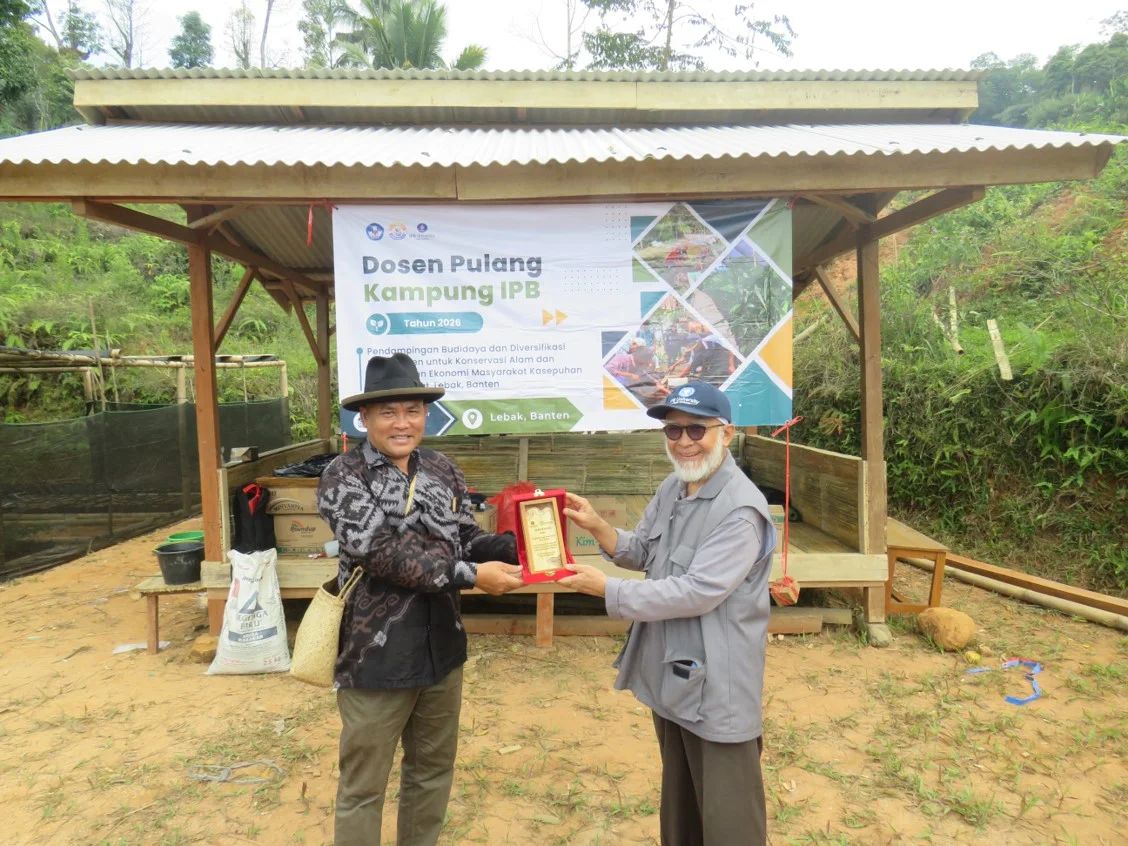
LEBAK, JurnalPost.com – IPB University, in collaboration with the Kasepuhan Citorek Barat community in Lebak Regency, Banten, is developing efforts to regenerate sugar palm plants through community-based nursery activities.
The activities, carried out through the Dosen Pulang Kampung (Lecturers Returning to the Village) Program 2026, are part of a community empowerment initiative that integrates the use of local resources, capacity building, and environmental conservation.
The Kasepuhan Citorek Barat community maintains traditions of natural resource management that are closely linked to the sustainability of forest and land ecosystems.
This local wisdom is reflected in traditional agricultural practices and forest area management based on customary functions and zoning. This potential serves as a vital asset in developing conservation approaches that involve the community as the primary stakeholders.
One local resource with significant development potential is the sugar palm (Arenga pinnata). This plant offers various economic benefits through the utilization of its sap, fruit (kolang-kaling), fiber (ijuk), and craft materials.
Additionally, sugar palms provide ecological functions, such as their strong root systems which help maintain soil stability and support water management.
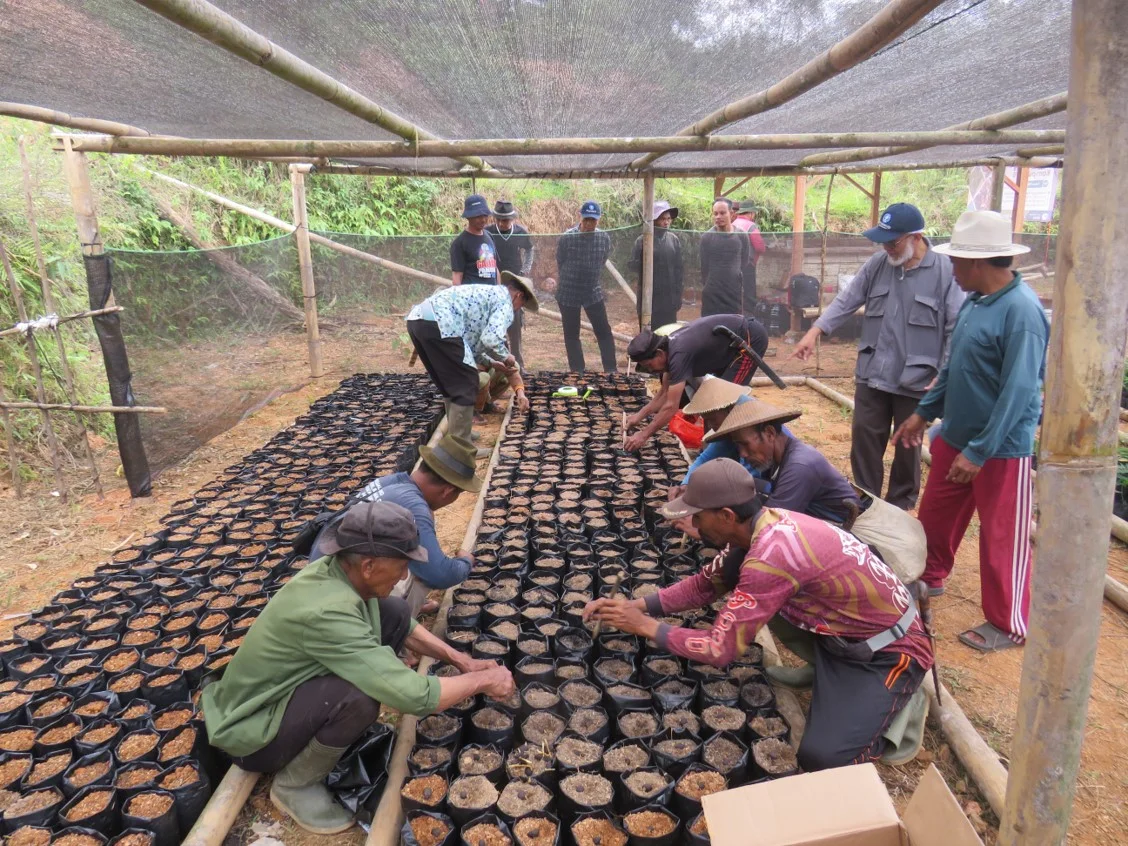
Recognizing this potential, an IPB University team led by Prof. Dr. Ir. Ervizal Amzu, MS., is providing guidance on sugar palm cultivation and nursery management alongside the community.
The team includes Dr. Ir. Agus Hikmat, M.Sc.F.Trop., Ir. Siswoyo, M.Si., Ir. Edhi Sandra, M.Si., and Primadhika Al Manar, S.Hut., M.Si.
Developing Community-Based Sugar Palm Nurseries
The series of activities began on 26 August 2026 with the preparation of planting media and the nursery site. These stages included filling polybags and organizing the seedling maintenance area.
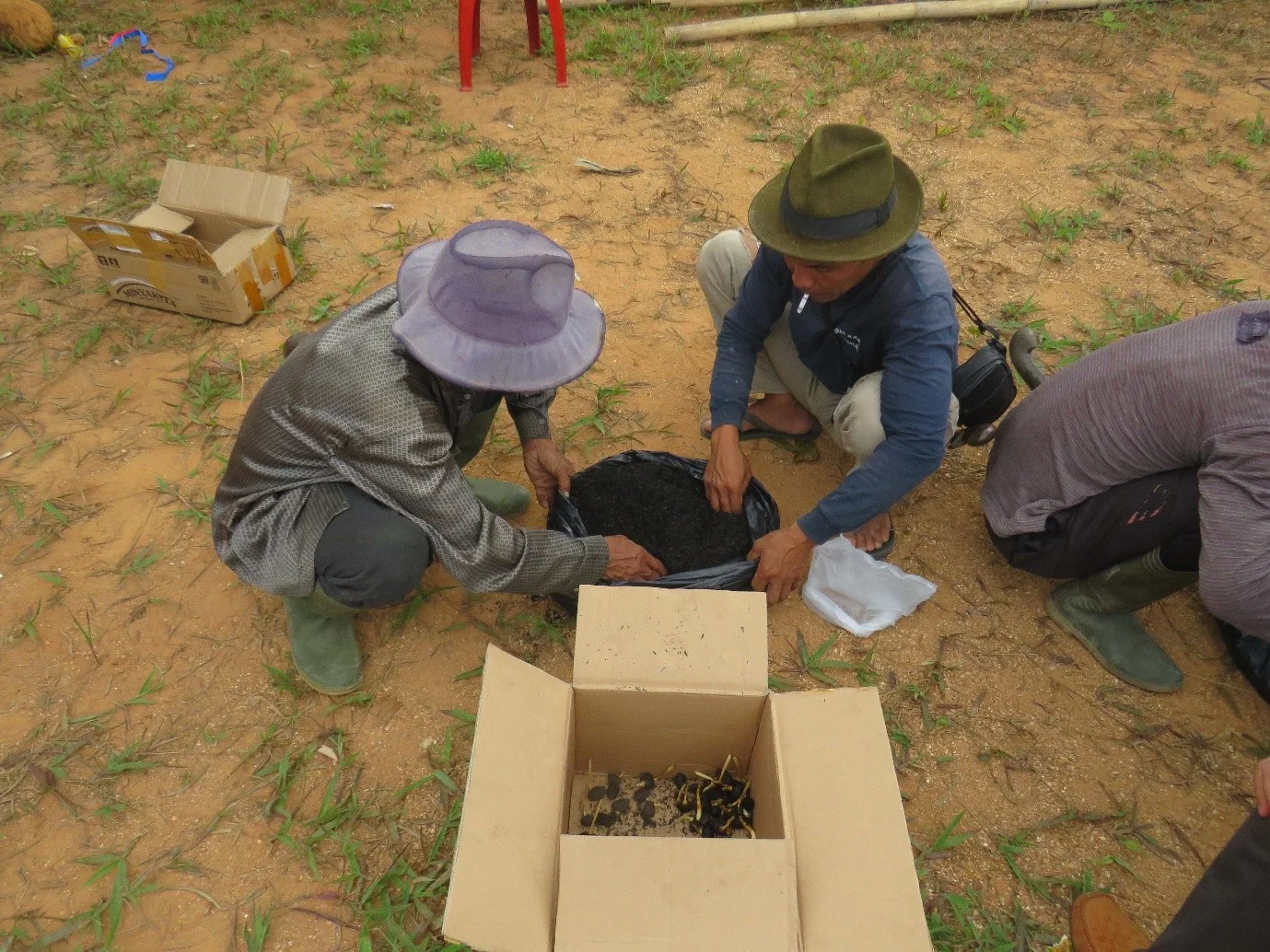
Subsequently, on 29 August 2026, the IPB University team and the community practiced nursery techniques by sowing seeds using cardboard media and transplanting germinated seeds into polybags.
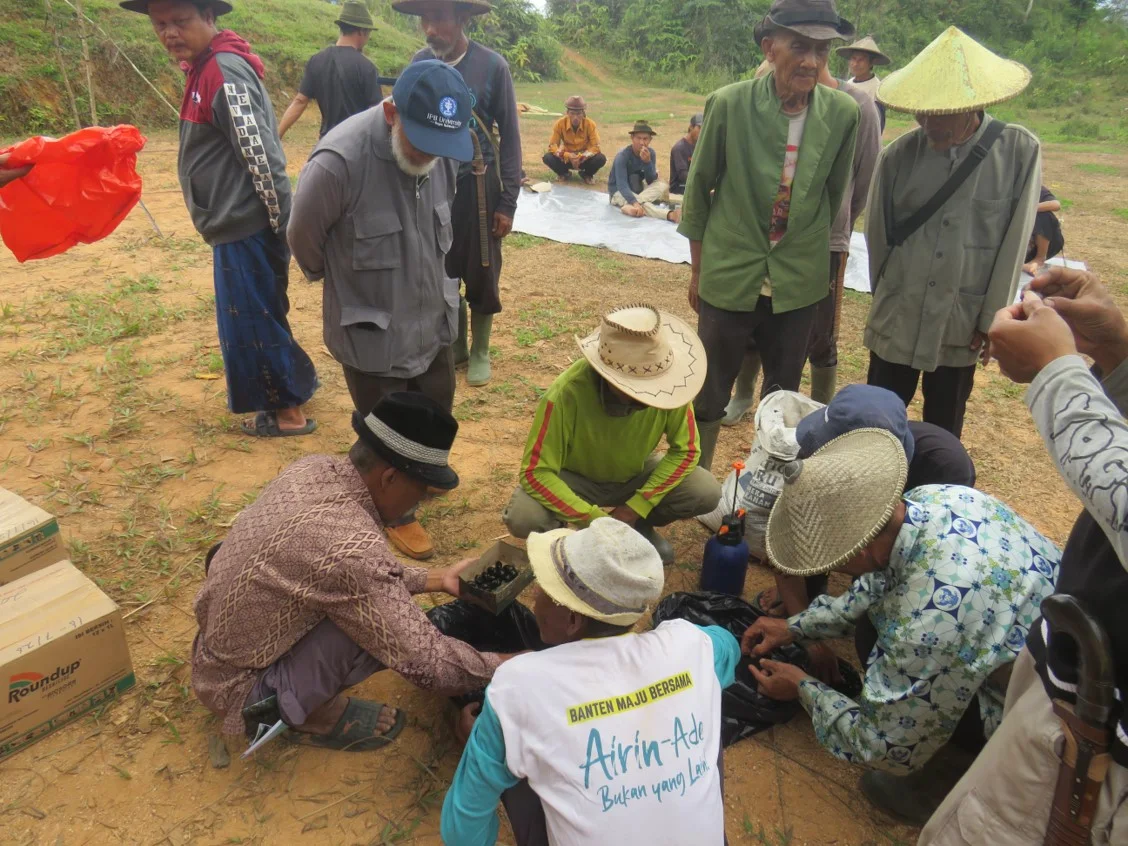
The community's involvement in all these stages is a crucial part of the empowerment approach being implemented.
The community not only gains knowledge about nursery techniques but also participates directly in preparing planting media, sowing seeds, and planting them into polybags.
This approach is expected to strengthen the community's ability to manage nurseries independently and sustainably.
Developing community-based nurseries is also significant for supporting the sustainability of sugar palm resources. The availability of seedlings is a prerequisite for plant regeneration, especially to reduce reliance on naturally occurring saplings, which are limited in number.
Through planned nursery activities, the community is expected to have an alternative for propagating sugar palm plants according to their needs and local environmental conditions.
Integrating Economic Potential and Environmental Conservation
From a conservation perspective, sugar palm development has the potential to be an approach that aligns the community's economic interests with environmental protection efforts.
Utilizing plants that offer both economic value and ecological functions can support the development of more sustainable land management systems.
This approach is also in line with efforts to preserve the local wisdom of the Kasepuhan community in managing natural resources.
Community-based sugar palm development is expected to strengthen the role of indigenous communities in maintaining environmental sustainability while optimizing the economic potential of available resources in their region.
The availability of independently managed seedlings is also a first step toward supporting the sustainable use of sugar palms for future generations.
Building a Foundation for Sustainable Sugar Palm Regeneration
The presence of the nursery site in Citorek Barat Village is expected to serve as a learning center and a space for developing community skills in sugar palm propagation.
The next stages include maintenance and monitoring of seedling development, including observations of survival rates, growth conditions, watering, and planting media management.
This monitoring is a vital part of supporting the success of the nursery and strengthening the community's capacity to manage the site sustainably.
Through the Dosen Pulang Kampung Program 2026, IPB University strives to strengthen collaboration between higher education institutions and indigenous communities in developing innovations that meet local needs.
This synergy is expected to form the foundation for sugar palm development that not only provides economic benefits but also contributes to plant regeneration, environmental conservation, and sustainable natural resource management in Kasepuhan Citorek Barat.



Comments 0
Write a Comment Share your response