


Bringing national films to the international market was once no simple matter. A work had to cross expensive and time-consuming layers: prestigious festival selection, negotiations with foreign distributors, competing for cinema screens in target countries, and securing broadcast rights deals with overseas television stations. Few production houses from developing nations could afford to bear such costs and risks.
Global streaming services have drastically overhauled this distribution landscape. Through a single integrated digital infrastructure, local films or series can now reach audiences in dozens of countries within days. This leap in distribution is no longer a theoretical projection, but a reality already experienced by a number of Indonesian audiovisual works.
The original series Cigarette Girl (Gadis Kretek), produced by BASE Entertainment, serves as a key milestone. Shortly after its release, the series broke into the Netflix Global Top 10 list and entered the top ten in six countries, including holding the top spot in Indonesia for two consecutive weeks and reaching audiences in Malaysia, Chile, Romania, Mexico, and Venezuela. A year later, the action film The Shadow Strays by Timo Tjahjanto achieved even broader reach: in just six days since its release, the film broke into the Netflix Global Top 10 non-English films and entered the top ten in 85 countries.
These achievements deserve appreciation as proof that the storytelling and production quality of Indonesian filmmakers can compete on the world stage. However, behind the euphoria of global ranking figures, there is a political-economic question that is far more urgent to ask: when a local work succeeds as a global spectacle, who is actually reaping the greatest economic value from that success?
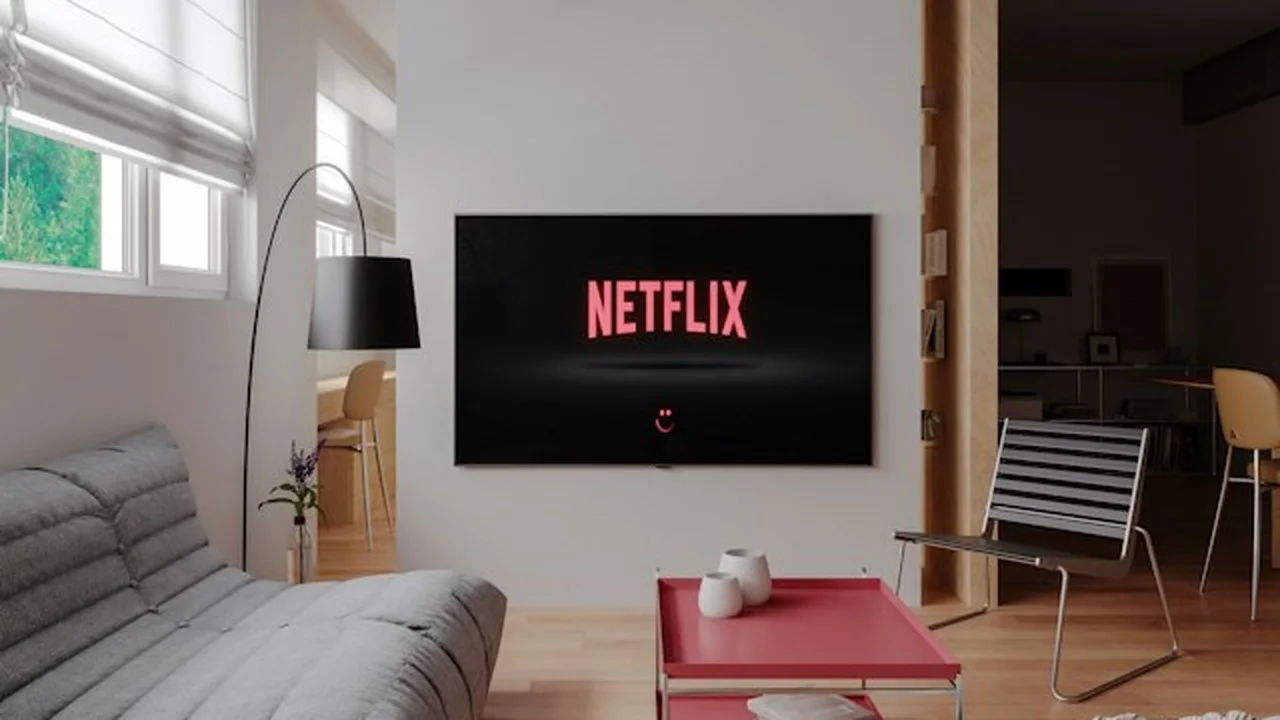
The Global Gateway That Changed the Map
To answer this fairly, we must not fall into an anti-Netflix or anti-foreign platform stance. The presence of global streaming platforms actually provides concrete benefits that are hard to deny for the national creative industry. Digital platforms cut through the geographical barriers that for decades limited the export of films from developing countries, accelerated cross-border distribution, and connected local creators with international audiences that were previously almost impossible to reach independently.
Beyond market reach, global platforms also increase the visibility of local works on the world stage and provide funding support for certain production projects. For many production houses, the presence of global investors means an opportunity to raise artistic standards, experiment with more ambitious genres, and reduce commercial risk pressures in the domestic market.
However, this is precisely where the paradox lies, which we can editorially call The Netflix Dilemma. The platform that opens the door to the global market is, at the same time, potentially the most dominant actor in determining how local works are entered, distributed, promoted, and generate economic value in the world market.
Thus, when the title of this article highlights the risk of local film exports that "only benefit global platforms," it does not mean that local filmmakers do not receive any profit at all. The real problem is the inequality in the distribution of economic value (value capture) and control over market access. The success of a film being watched in dozens of countries does not automatically mean the industry in the country of origin receives a proportional share of economic value, intellectual property rights (IPR), data access, and bargaining power.
Reading the Paradox Through Platform Imperialism
The experience of the South Korean television drama industry provides the clearest picture of how this value capture inequality works. In an academic study in the International Journal of Communication (2023), Korea University researchers Ji Hoon Park, Kristin April Kim, and Yongsuk Lee applied the concept of platform imperialism to dissect how Netflix changed the ecology of the Korean drama industry.
It is important to note that the relationship between local producers and global platforms is not uniform. Not all films or series that air on Netflix automatically belong to Netflix. In practice, there are fundamental differences between content licensed only for specific regions and periods, content resulting from co-production partnerships (partnership), content financed by Netflix, and content with full original status.
According to the study by Park, Kim, and Lee, Netflix entered the Korean drama industry through several different patterns. In partnership schemes with major studios like Studio Dragon and JTBC Studio, Netflix invests about 50 to 70 percent of the production budget. Meanwhile, in certain original content financing schemes, Netflix pays about 110 percent of the total production budget to the Korean production house.
At a glance, the 110 percent scheme seems very profitable because it provides certainty of funding and upfront margins without the burden of market risk. However, as noted by the Korea University researchers and also highlighted by Al Jazeera, in exchange for full financing in such original schemes, Netflix takes over all IPR and exclusive global broadcast rights for the work in question.
The consequences are felt when a work explodes beyond expectations. Domestic production houses and television stations do not enjoy long-term economic value growth—whether from subsequent licensing, sequels, or other commercial derivatives—commensurate with the global popularity of their work. Furthermore, as the study warns, the dominance of global platform capital drives up production costs and talent fees beyond the capacity of domestic broadcasters, which in turn narrows the bargaining position of local producers.
From this point, the structural problem of The Netflix Dilemma appears much broader than just the amount of production fees. It concerns crucial questions about who holds control over distribution channels, who has a direct relationship with consumers, how distribution rights and IPR are managed, how economic benefits are shared when a work is a major success, and how strong the bargaining position of local producers is at the negotiating table. In addition, global platforms have a very strong position in accessing, processing, and utilizing audience behavior data, so an important question also arises regarding how much access local producers have to the viewer data that is actually formed from the consumption of their own works.
Korean Wave: Accelerator, Not Sole Creator
Although South Korea is often used as the primary example in discussing The Netflix Dilemma, we need to be careful not to fall into the shallow conclusion that the success of the Korean Wave was born solely thanks to Netflix. The historical facts of its industry are far more complex.
The Hallyu wave, which includes K-dramas, films, K-pop, fashion, and culinary arts, succeeded in penetrating the world market because it was supported by a domestic foundation built consistently over decades. There is a mature entertainment industry ecosystem, long-term investment, competitive creative companies, technological innovation, strict production quality standards, cultural export strategies, and support from the South Korean government's policies.
Netflix indeed plays an important role as a distribution accelerator that speeds up the reach of the Korean Wave to global audiences. However, the resilience and bargaining power of the Korean creative industry still rely on its ability to build products, manage IPR, and strengthen its own domestic ecosystem. It is precisely because of that foundation that we see how sensitive the debate in South Korea is when the dominance of global platforms begins to erode control over IPR and weaken their local television stations.
Digital Services Trade and Shifting Global Competition
If drawn further into the contemporary global trade landscape, this phenomenon shows that film and audiovisual content can no longer be seen merely as cultural products. In the digital economy era, audiovisual content is an important commodity in cross-border digital services trade.
Information technology has overhauled the entire value chain of cultural products: from production, distribution, marketing, consumption, and monetization to IPR management. The entire chain now moves beyond national borders through digital infrastructure managed by a handful of transnational corporations.
The implications for the global competition map are fundamental. World trade competition today no longer takes place only between countries or between producers in export markets, but also concerns the asymmetric relationship between local content producers and transnational platforms that control digital distribution infrastructure. Countries that are only superior in creative production, but weak in IPR mastery, contract negotiation, and digital trade governance, risk remaining in a lopsided bargaining position in the distribution of global value capture .
Strategic Stakes for Indonesia
For Indonesia, the lessons from The Netflix Dilemma are no longer a future discourse, but a challenge for today. The potential for exporting our cultural products and creative economy is vast, not limited to films and series, but also extending to music, animation, games, culinary arts, fashion, and the content creator ecosystem.
Therefore, the strategic question for the Indonesian industry and policymakers must not stop at "how do we get our work on Netflix?". A much more decisive question is: how can the national industry secure greater value capture, IPR, market information access, and bargaining power when Indonesian works penetrate global platforms?
In terms of domestic regulation, Indonesia actually already has an initial foothold through Government Regulation (PP) Number 24 of 2022 on the Implementation of the Creative Economy Law. This regulation opens up space for intellectual property-based financing, allowing intellectual property for works such as films and music that have been registered or certified to be used as collateral objects in IP-based financing schemes. However, the existence of this rule does not automatically solve problems in the field. The biggest challenge, as also highlighted by the National Law Development Agency (BPHN), is how such IPR-based financing schemes can truly run optimally and be able to raise the bargaining position of local creative industry players so they are not always dependent on full financing from foreign platforms.
At the cross-border level, the urgency of improving digital copyright governance has also strengthened in 2026. In the Global Dialogue on Cross-Border Copyright Royalty Governance in the Digital Era forum in Bali in October 2026, as reported by the Directorate General of Intellectual Property (DJKI), the Director of International Trade at the Indonesian Ministry of Foreign Affairs, Ditya Agung Nurdianto, emphasized that the management of cross-border royalties and copyrights is no longer just a technical issue, but an important part of the international diplomacy agenda. In the same forum, a representative of the World Intellectual Property Organization (WIPO), Michel Allain, highlighted the fundamental inequality in the era of streaming and artificial intelligence: the consumption value chain has moved globally, while its rights management system often still works locally.
This statement touches directly on the core of Indonesia's problem. Our creative works are increasingly easy to cross national borders in seconds, so the system of rights protection, recording of rights holders, and royalty flows must also be able to follow these cross-jurisdictional movements transparently and in a connected manner.
Three Steps to Maintain Bargaining Power
Answering The Netflix Dilemma is certainly not as simple as the slogan "Indonesia must create its own Netflix." Building independence in the midst of the global streaming market requires realistic strategic steps on three fronts simultaneously.
First, encourage contract transparency and licensing structures. Associations of producers, creators, and industry legal advisors need to strengthen legal literacy and contract transparency with global platforms—especially regarding the clarity of IPR ownership, distribution territory limits, licensing duration, the scope of work utilization for the international market, and economic benefit-sharing mechanisms. This approach does not mean forcing one standard scheme for all collaborations, but ensuring creators understand the long-term asset value they are negotiating.
Second, optimize IPR-based financing as mandated by PP Number 24 of 2022. IPR must truly be treated as an economic asset that has a clear valuation in the eyes of financial institutions and domestic investors. When domestic capital access for production houses becomes stronger, the bargaining position of local creators before global platforms will increase naturally because they are no longer negotiating from a position of capital desperation.
Third, strengthen the governance of cross-border digital services trade. The government, through the synergy of the DJKI, relevant ministries, and international economic diplomacy, needs to continue to push for the three foundations highlighted in the global dialogue with WIPO: transparency, accountability, and interoperability of cross-country rights and royalty management systems. With internationally connected governance, every viewing of an Indonesian work in the global market can be tracked more fairly and provide certainty of rewards for rights holders domestically.
In the digital trade era, winning the world's attention does not necessarily mean winning the trade. Local films that succeed in reaching viewers' screens in dozens of countries are indeed a proud victory. However, a much greater victory is when the national industry does not stop at being a content supplier for global platforms, but is able to maintain ownership, IPR, economic value, and its bargaining power throughout the digital trade chain.







Comments 0
Write a Comment Share your response