

MALANG, JurnalPost.com – A research team from the Department of Biology, Faculty of Mathematics and Natural Sciences (FMIPA) at the State University of Malang (UM), has successfully identified 4,126 sequence variants of bacteria in a study on the gut microbiota diversity of rice field frogs (Fejervarya limnocharis) in the Malang Raya agricultural region.
The study, which utilized a metagenomic approach and bioinformatics analysis, aimed to map the diversity of microorganisms living in the digestive tracts of rice field frogs while examining differences in bacterial community structures between organic farms and conventional farms that use synthetic chemicals.
The research was led by Bagus Priambodo, M.Si., M.Sc., Ph.D., alongside researchers Prof. Dr. Fatchur Rohman, M.Si., Farid Akhsani, S.Si., M.Si., Fauzi Akhbar Anugrah, M.Si., Ph.D., Listyo Yudha Irawan, M.Pd., M.Sc., Takeshi Igawa, Ph.D., and Fikri Mahib Wahyudi.
The results provide insight into the richness of microorganisms living in symbiosis with amphibians, while opening opportunities for further studies regarding the potential of gut bacteria as a source of natural antibacterial compounds.
Uncovering Microbial Diversity in Rice Field Frog Guts
To date, research on the antibacterial potential of amphibians has largely focused on compounds produced through skin secretions. However, other parts of the body, including the digestive tract, also serve as habitats for various microorganisms that may possess important biological functions.
Based on this understanding, the FMIPA UM research team chose the rice field frog as the subject of their study. This species is known for its wide distribution and ability to adapt to various environmental conditions, including rice paddies and agricultural lands.
Rice field frogs also have a close relationship with their ecosystem. Changes in environmental conditions, including the use of agricultural chemicals, are suspected to influence the composition of microorganisms living within them.
To identify this bacterial diversity, the researchers used metagenomic amplicon sequencing targeting the 16S rRNA gene. This technique allows for the identification and mapping of bacterial communities based on genetic material found in the samples.
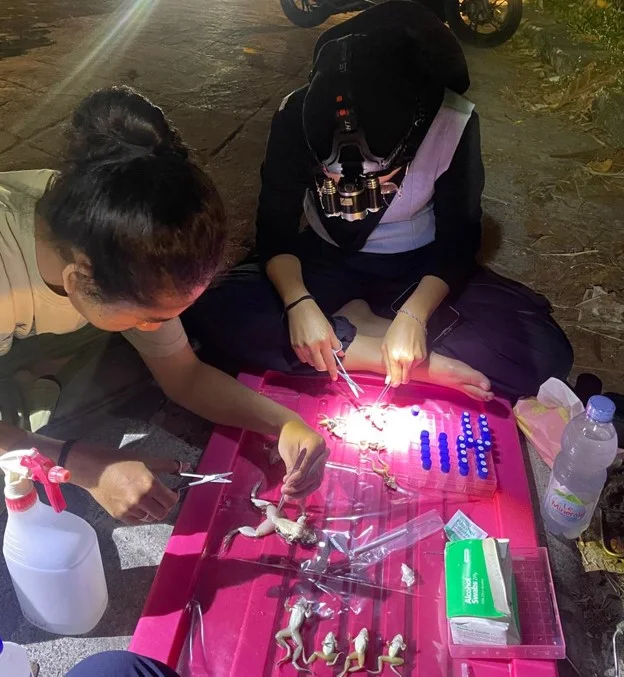
Through this analysis, the team successfully obtained 4,126 Amplicon Sequence Variants (ASV), which are DNA sequence variants used to describe the diversity of microorganisms within a community.
These findings indicate that the digestive tract of the rice field frog harbors a diverse bacterial community that remains open for further exploration.
The presence of these bacterial communities is significant because certain microorganisms have the potential to produce secondary metabolites that possess biological activity, including antibacterial properties.
However, identifying bacterial diversity is only the initial stage. Further research is still needed to confirm which types of microorganisms have the ability to produce antibacterial compounds and to test their effectiveness and safety.
Higher Bacterial Diversity in Organic Farming Areas
In addition to revealing microbial biodiversity, this study also compared the gut bacterial communities of rice field frogs found in agricultural areas with different management systems.
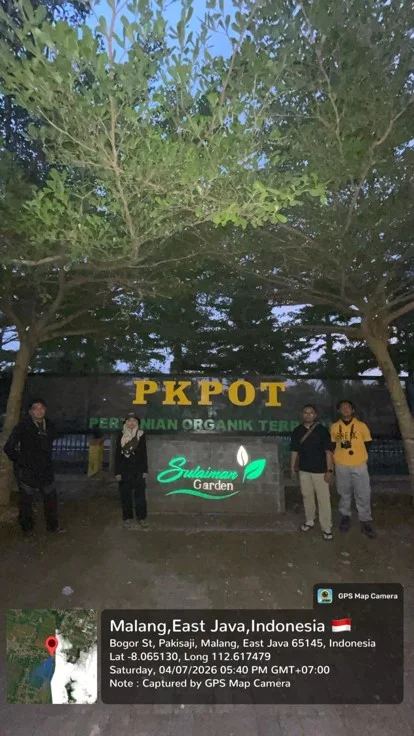
Samples were collected from several agricultural areas in Malang Raya. The Pakisaji and Kedungkandang regions represented organic farming environments, while Tunggulwulung and Merjosari served as observation sites for inorganic or conventional farming.
The analysis results showed differences in the diversity of bacterial communities between the two environmental groups.
In frog samples from organic farming areas, researchers found 2,362 unique taxa. Meanwhile, samples from conventional farming areas showed 1,117 unique taxa.
This difference indicates that the bacterial communities in frogs living in organic farming areas have higher taxonomic richness compared to the group observed in conventional fields.
These findings serve as an important clue for understanding the relationship between land management practices and the condition of microbial communities in the animals living within them.
The use of pesticides and synthetic chemicals in agricultural activities can be a source of environmental stress that affects non-target organisms, including microorganisms associated with wildlife.
However, differences in bacterial communities can also be influenced by other environmental factors, such as habitat characteristics, food availability, soil conditions, and water quality.
Therefore, further research is needed to explain in greater depth the relationship between pesticide exposure and changes in the gut microbiota of rice field frogs.
Supporting Biodiversity Conservation
The research conducted by the FMIPA State University of Malang team is also linked to the sustainable development agenda, specifically the Sustainable Development Goals (SDGs) Goal 15 regarding Life on Land.
One of the targets of this goal is to reduce the degradation of natural habitats, halt the loss of biodiversity, and protect threatened species.
In this context, the study of rice field frog gut microbiota provides an additional perspective on the importance of maintaining the quality of agricultural environments.
Biodiversity does not only include plants and animals that are easily observed, but also communities of microorganisms that play roles in various biological processes.
Microorganisms living in symbiosis with animals can contribute to digestion, metabolism, and immune defense functions. Changes in the composition of these communities have the potential to affect the biological balance of the host organism.
Therefore, understanding the relationship between agricultural activities and animal microbiota is an important part of ecosystem health studies.
The results of this study are expected to serve as a scientific reference in encouraging agricultural practices that pay more attention to environmental sustainability and the protection of wildlife habitats.
Opening Opportunities for Developing Natural Antibacterial Agents
Amidst growing concerns regarding antibiotic resistance, the exploration of new sources of antibacterial compounds is a field of research that continues to be developed.
The diversity of microorganisms in the digestive tracts of amphibians offers opportunities to discover bacteria with biological characteristics that have not been widely studied.
Through the mapping results obtained, the research team has a foundational basis for determining which bacterial groups are interesting to study further.
Subsequent research stages can be directed toward the isolation of microorganisms, testing for antibacterial activity, and the characterization of active compounds that have the potential to be developed as pharmaceutical research materials.
This research received funding support through the Competitive KBK scheme from the Institute for Research and Community Service (LPPM) of the State University of Malang.
This support is part of an effort to develop basic research that not only produces new knowledge but also opens opportunities for the sustainable utilization of Indonesia's biodiversity.
By identifying thousands of bacterial variants in the gut of rice field frogs, the FMIPA UM team demonstrates that agricultural ecosystems hold a wealth of microorganisms that are important to continue researching.
These findings are expected to serve as a stepping stone for the development of natural-based antibacterial research, while strengthening the scientific basis for more environmentally friendly agricultural land management.









Comments 0
Write a Comment Share your response