

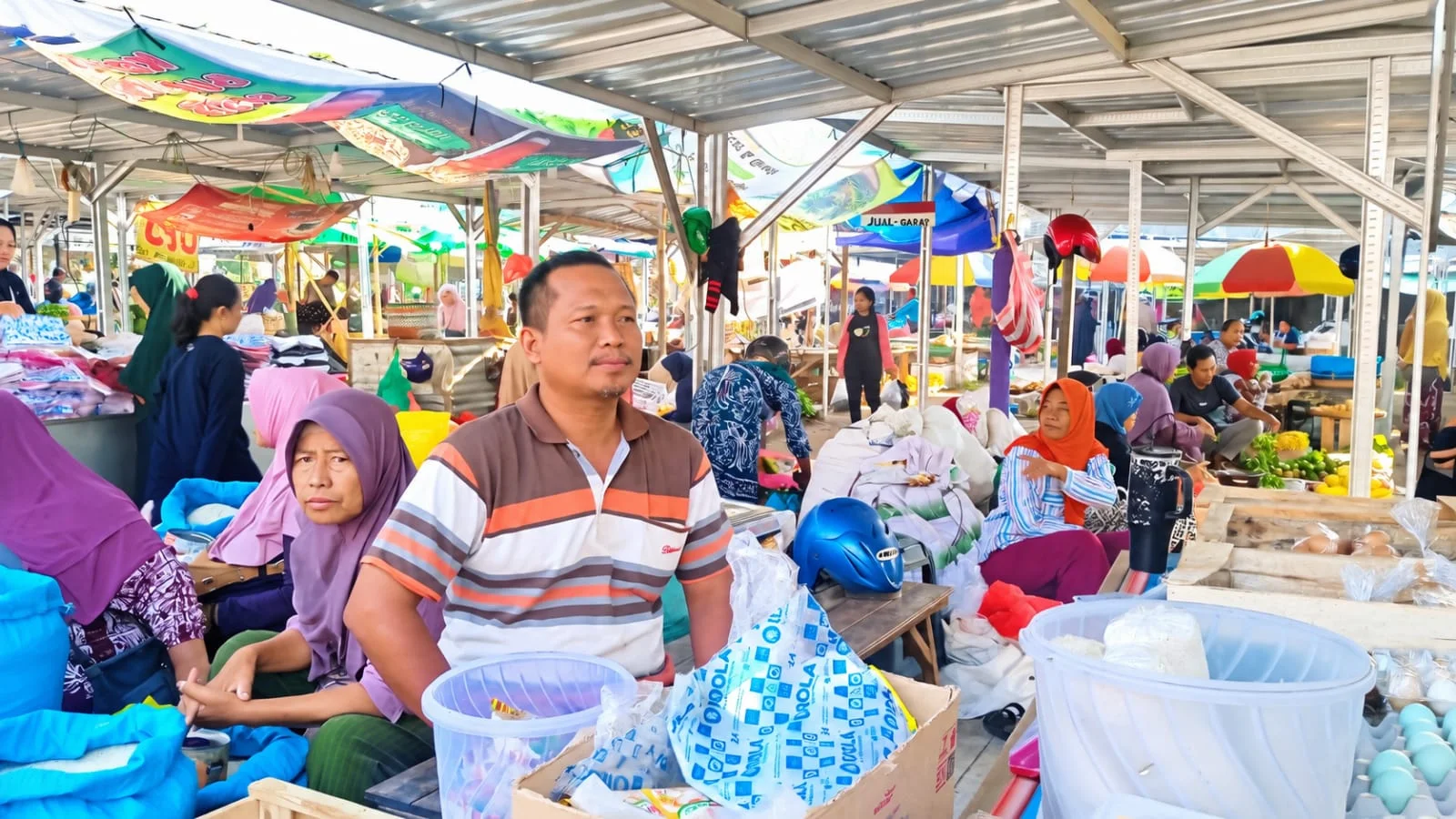
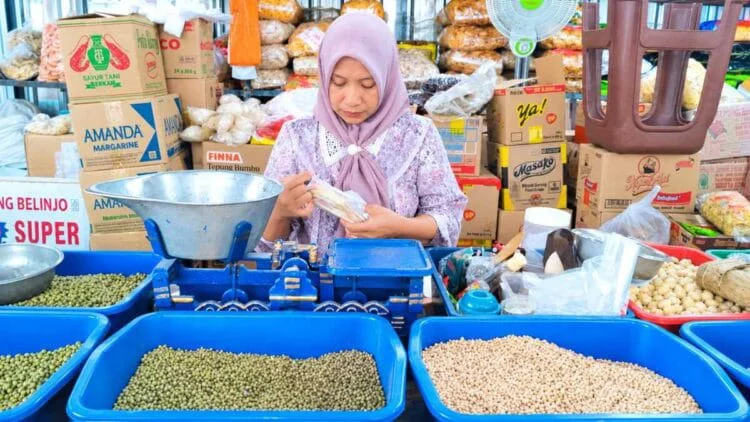
BOJONEGORO, JurnalPost.com – Amid the bustling trade at Banjarejo Market in Bojonegoro Regency, East Java, a soybean vendor named Narti continues to dedicate herself to her business to support her family. Through daily sales, she is able to generate significant turnover while maintaining a loyal customer base from various backgrounds.
For Narti, selling soybeans is more than just seeking profit. The business has become a vital source of family income, driven by her diligence and commitment to maintaining the quality of her goods.
Every day, she serves customers at the market, ranging from tofu and tempeh producers to local residents purchasing soybeans for household consumption.
The consistent demand for soybeans is one of the reasons Narti remains optimistic about running her trade.
"Thank God, this soybean business has become our family's source of income. Every day, customers come by, from tofu and tempeh makers to people buying for their own needs. When the market is busy, sales increase, and the turnover is quite substantial," Narti said.
Soybean Demand Sustains the Business
Soybeans are a staple commodity that plays a crucial role in the local economy, especially for those involved in tofu and tempeh production.
The continuous need for raw materials ensures that the soybean trade has a dedicated market, including within traditional market environments.
This is exactly what Narti has experienced while running her business at Banjarejo Market.
Some of her customers are business owners who require soybeans as raw materials for production, while others are local residents shopping for daily needs.
According to Narti, trade activity tends to rise when the market is busy. However, sales volume is ultimately influenced by customer needs and market conditions.
Because of this, Narti strives to maintain her stock levels to ensure customer demands are met.
Maintaining Quality and Customer Trust
Running a soybean business requires patience. Beyond keeping sufficient stock, vendors must pay attention to the quality of the soybeans and set prices that align with market conditions.
Narti acknowledges that business competition is a challenge every vendor must face.
To retain her customers, she focuses on maintaining product quality while providing excellent service to buyers.
Customer trust is a vital component of her business's sustainability, especially since many of her buyers are regulars who require a steady supply of soybeans.
For tofu and tempeh producers, the availability of soybeans is a primary necessity for their production processes to continue.
The positive relationship between vendors and customers is a key factor in sustaining trade activity in traditional markets.
On the other hand, fluctuations in commodity prices must also be monitored. Rising purchase costs can affect capital requirements and the final price for customers.
Therefore, the ability to manage inventory and business finances is essential for keeping trade operations running smoothly.
Utilizing BRI Accounts to Manage Sales Revenue
Amid her busy schedule, Narti also utilizes banking services to help manage her finances.
As a customer of PT Bank Rakyat Indonesia (Persero) Tbk, or BRI, she uses a bank account to store the proceeds from her soybean sales.
According to Narti, having a bank account provides convenience, as business earnings do not always have to be kept in cash.
"Sales money can be stored in the account, making it safer and eliminating the need to carry large amounts of cash. Since I am a market vendor, I handle transactions every day," she explained.
For traditional market vendors, financial management is a critical aspect of ensuring the business can continue to operate.
Not all sales revenue can be considered profit. A portion of the funds must be reallocated to purchase more soybean stock and cover operational expenses.
With proper management, vendors can prepare the capital needed for restocking without compromising their family's needs.
Narti believes that banking services provide significant benefits in managing business finances, especially when transaction frequency is high.
Hoping for Business Growth and Education for Her Children
Beyond maintaining her current business, Narti hopes that her soybean trade will continue to grow.
She wants to increase her customer base so that her family's income can continue to rise.
To her, the business is meaningful because it serves as both a livelihood and a way to prepare for her family's future, including her children's education.
"My hope is that my business grows, my customer base expands, and the earnings continue to help meet our family's needs and pay for my children's schooling. I hope BRI continues to provide accessible services for small vendors like us," she concluded.
Narti's story demonstrates that traditional markets remain an important economic space for micro and small business owners.
Daily trade activities not only help meet community needs but also serve as a source of income for vendors' families.
Through diligence, customer service, and sound financial management, Narti continues to strive to maintain her soybean business at Banjarejo Market.
Her journey illustrates that traditional trade businesses still have opportunities to thrive, especially when supported by the ability to maintain customer trust and utilize financial services as needed.







Comments 0
Write a Comment Share your response