

Education requires the collaboration of families, schools, and the community so that learning truly becomes a part of daily life.
The curriculum is often imagined as a document that only exists within the school: organized into learning outcomes, subjects, schedules, and evaluation tools. In reality, the educational process does not stop when the school bell rings. Children continue to learn at home, interact with their surroundings, absorb values from society, and form understandings through the media they use every day. Therefore, a curriculum loses part of its meaning if its implementation is left solely to the school.
This idea emerged during a curriculum workshop featuring Eda Maaliah, a lecturer at the Madiun State Polytechnic and a student in the 3 Educational Technology Program at the State University of Surabaya (Unesa). This meeting invited participants to view the curriculum more broadly: not merely as a classroom lesson plan, but as an educational process that requires the involvement of families and the community.
Amidst social change and technological development, the important question is not just what children should learn, but how their surrounding environment can help provide meaningful learning experiences. From this perspective, the family is not just a supplement to the school. The family is the primary educational space that shapes a child's habits, attitudes, curiosity, and courage to learn.
From the lecture hall to the family home
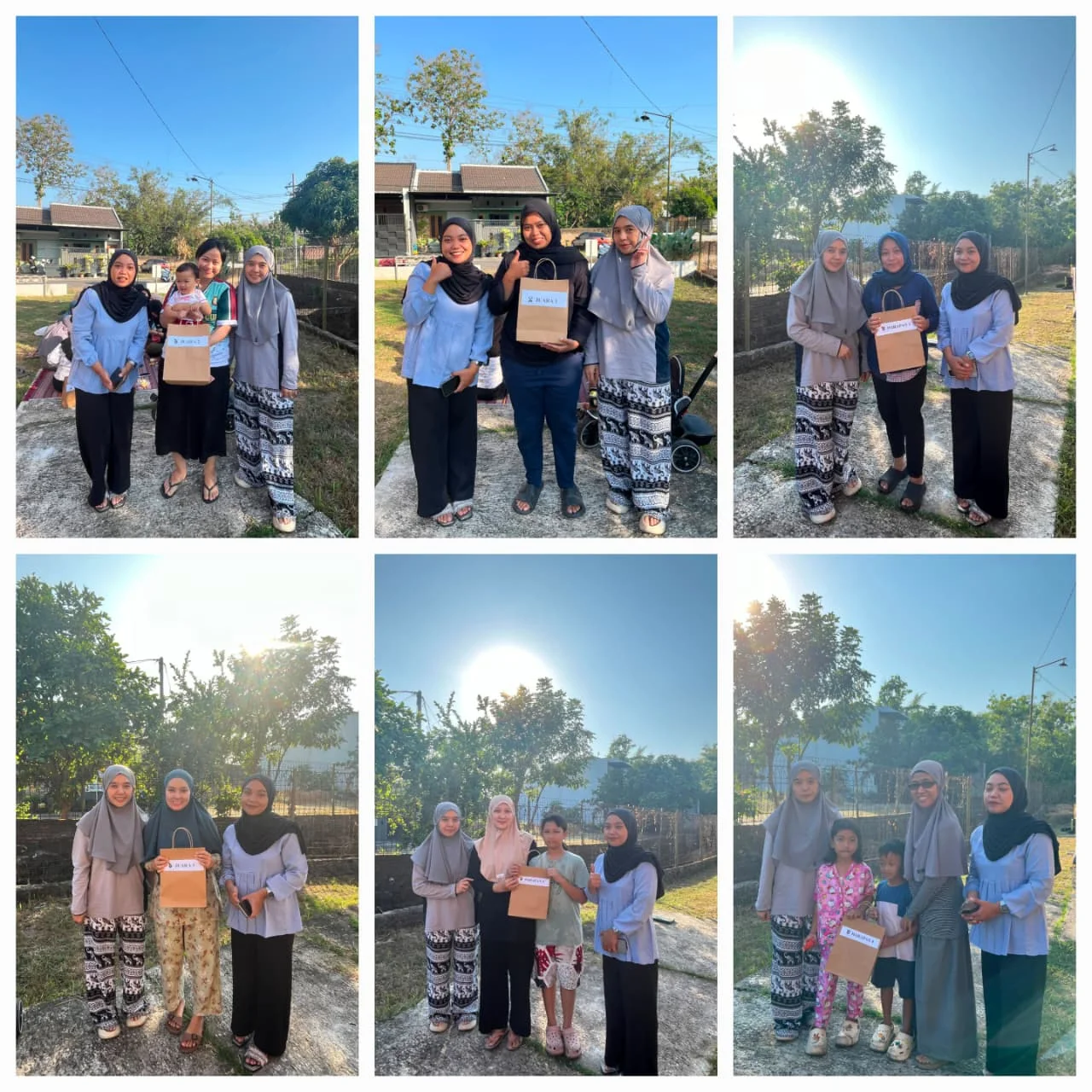
One concrete example of family involvement was presented through a workshop program led by speaker Eda Maaliah. The program, titled “English Workshop for Parents as a Strategy for Supporting Children's Learning in Facing Global Competence,” targeted residents of a housing complex in Wungu District, Madiun Regency.
This program stemmed from issues close to family life. When English began to be introduced in elementary school curricula through phased policy implementation, some parents felt insecure. They worried about mispronouncing words, not mastering grammar, or being unable to answer their children's questions. As a result, learning support is often considered a task that can only be performed by those fluent in English.
In fact, supporting a child's learning is not the same as taking over the teacher's role. Parents do not need to master all the material or provide perfect explanations. A more fundamental role is to build a supportive atmosphere, provide opportunities to practice, offer encouragement, and grow alongside the child in the learning process.
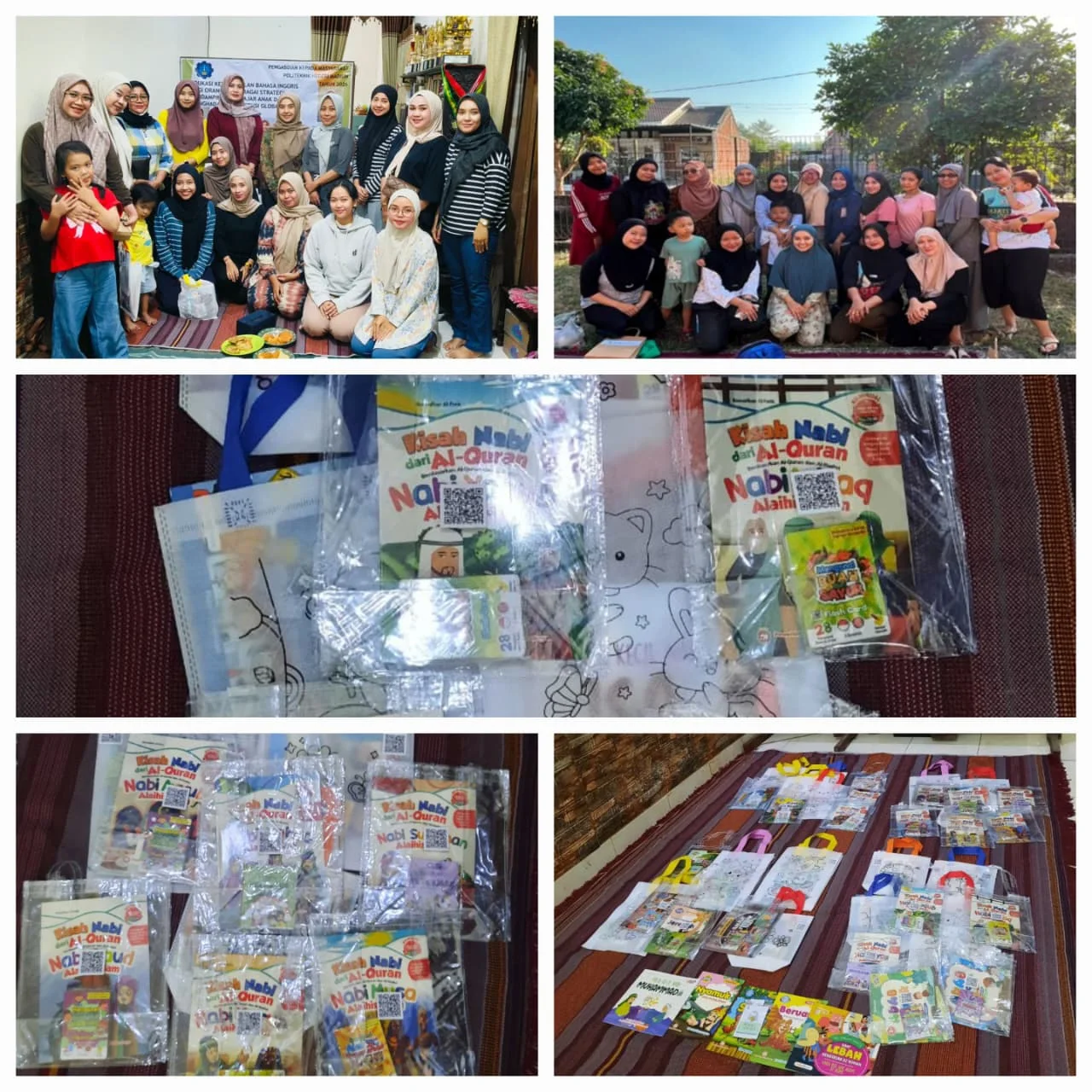
On that basis, the activity was designed to shift the parents' perspective. English language support was introduced through simple activities that can be done at home, without requiring high language proficiency. Flashcards were used to introduce vocabulary; household items were labeled in English; and bilingual storybooks equipped with QR codes and digital audio helped children hear pronunciation while following the story.
The program also featured a “Reflection and Creation” activity. Parents and children were encouraged to document short learning practices in the form of videos lasting one to three minutes. This approach provided space for families to try, evaluate, and develop learning methods that suit the child's needs.
Parents do not have to be perfect teachers. They need to be present as partners who make children feel safe to try and keep learning.
Learning a little, but doing it together
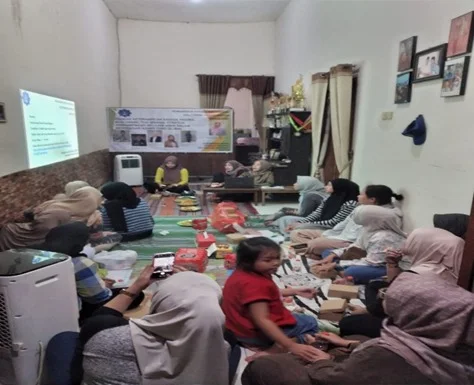
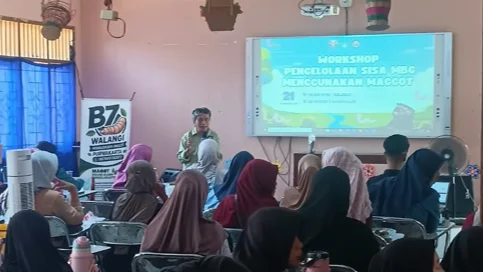
The face-to-face workshop was held in a housing complex in Wungu District, Madiun Regency. The activity was attended by an average of 20 parents, mostly young mothers with children ranging from early childhood education (PAUD) to junior high school. The material was organized into three main topics: correcting the assumption that a tutor must be fluent first, practicing with flashcards and labeling household items, and utilizing digital audio and QR codes in storybooks.
At the end of the session, participants received support kits consisting of flashcard sets, QR-coded bilingual storybooks, and coloring and writing supplies. These tools were intended as a spark so that activities would not stop at the face-to-face meeting. Participants were then invited to practice for 10–15 minutes every day and upload video documentation, with rewards given for the best work. reward.
This activity design conveys a simple message: learning does not always require special rooms, expensive equipment, or long hours. Short activities performed consistently can become meaningful learning experiences when children receive attention and support from their closest ones. This is where the curriculum meets daily life.
However, the success of family support should not be measured solely by a child's ability to memorize vocabulary or produce a video. Equally important is the growth of the courage to try, the habit of communication, curiosity, and a positive learning relationship between parent and child. These aspects require a process and ongoing support.
The Three Centers of Education and shared responsibility
A broader perspective was provided by Dr. H. Lamijan Hadi Susarno, M.Pd., a lecturer in the Educational Technology Study Program, Faculty of Education, State University of Surabaya. He introduced the concept of the Three Centers of Education, which places the family, school, and community as interconnected environments that shape student development.
In his presentation, the role of the community can be seen through several elements, including religious environments, youth and scouting organizations, and mass media. Thus, the implementation of education cannot rely solely on the relationship between teacher and student. A child's values, knowledge, habits, and behavior are also influenced by the wider social environment.
This idea serves as a reminder that the written curriculum needs to be translated into real experiences in various environments. Schools can design learning and provide academic support. Families strengthen the habits and values learned. Meanwhile, the community provides space for interaction, role models, social activities, and learning resources that enrich the child's experience.
He also invited participants to view education as a process that includes guidance, training, learning, and education in a broader sense. These four processes occur under the influence of family, school, community, and peers. This framework shows that a child's development is not shaped by one institution in isolation, but by the ongoing relationships between these environments.
In the context of curriculum design and development, this thinking can be read alongside various references used in curriculum studies, including the works of Ralph W. Tyler, Oemar Hamalik, Nana Syaodih Sukmadinata, and Murray Print, as well as Prof. Dr. Bachtiar Bachri, M.Pd. These theoretical references provide a foundation for understanding that the curriculum needs to be designed in a directed manner, but must also consider the context of implementation and the real needs of students.
Connecting ideas with practice
Prof. Dr. Bachtiar Syaiful Bachri, M.Pd. also stated that the curriculum is the identity of a nation and an instrument of transformation. If you want to see the character of a nation, look at its curriculum.
The activity brought everyone to a single core thought: the curriculum is not just a matter of documents, subjects, or school learning activities. The curriculum gains meaning when educational goals are translated into experiences that children can live out, whether at home, at school, or in the community.
The example of English language support for parents shows how curriculum ideas can be present in family practice. Meanwhile, the concept of the Three Centers of Education reminds us that such practices need to be connected to the roles of schools and the social environment. Both emphasize the importance of continuity: what children learn in school gets space to be practiced at home and strengthened through community life.
The challenge is to build communication and clear division of roles. Schools need to open partnership spaces with families, rather than just conveying academic demands. Parents need realistic and easy-to-apply guidance. Communities, social organizations, religious institutions, youth groups, and the media also need to provide an environment that supports a child's growth and development.
Ultimately, the quality of a curriculum is not determined only by the completeness of documents or the amount of material delivered. Its measure is also seen in the extent to which learning shapes knowledge, skills, character, and the child's ability to face change. To achieve that goal, education cannot operate in isolation.
The curriculum can indeed be designed in academic spaces and translated into school policies. However, its success is determined by collective work that takes place far beyond the classroom door. When families, schools, and the community strengthen one another, education is no longer the business of a single institution, but a shared responsibility.






Comments 0
Write a Comment Share your response