

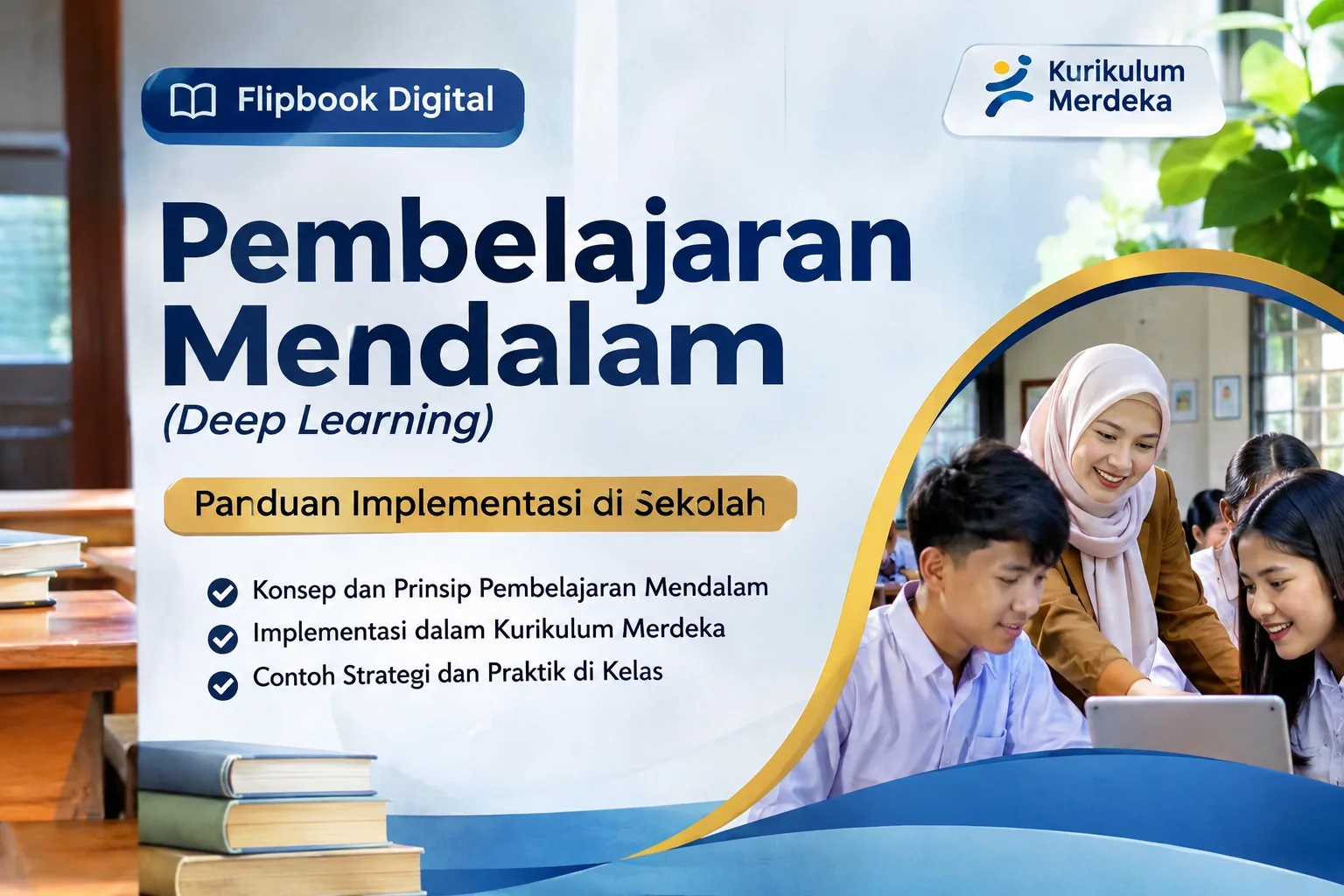
JAKARTA, JurnalPost.com – A total of 82.4 percent of teachers in Indonesia have expressed an urgent need for learning media in the form of digital flipbooks designed based on Deep Learning (Deep Learning). This high figure indicates that teachers require learning media that is more practical, easily accessible, and relevant to support the implementation of the Merdeka Curriculum in educational units.
These findings stem from a needs analysis study involving 30 teachers from various provinces across Indonesia. Respondents hailed from Aceh, Sumatra, Java, Kalimantan, Sulawesi, West Nusa Tenggara, Maluku, and Papua, providing a comprehensive overview of teacher needs across regions with diverse characteristics.
The study results show that all indicators regarding the need for flipbook media received approval ratings above 80 percent. Not a single respondent expressed disagreement with the development of such media.
This high level of consensus is the most prominent finding of the study, highlighting a genuine need for digital learning media that teachers can utilize independently.
Understanding of Deep Learning Remains Uneven
The study was prompted by the reality that the implementation of Deep Learning in schools still faces various challenges. Although this approach is being introduced as a reinforcement for the Merdeka Curriculum, teachers' understanding of the concept is not yet uniform.
Research data shows that only 16.7 percent of respondents claimed to understand the Deep Learning concept well and felt prepared to apply it in the learning process.
A total of 46.7 percent of respondents stated they only partially understood the concept, while 33.3 percent admitted to having only heard the term. Furthermore, 3.3 percent of teachers have no knowledge of the Deep Learning concept at all.
These findings demonstrate that the majority of teachers still require guidance, learning resources, and media that can help them grasp the concept in a simpler and more applicable way.
This condition poses a significant challenge, given that the success of the Merdeka Curriculum implementation is heavily influenced by teacher readiness in applying student-centered learning approaches.
Majority of Teachers Have Not Implemented Deep Learning
These findings are reinforced by a poll of 150 economics teachers across various regions. Of the 141 teachers who have implemented the Merdeka Curriculum, only 21.3 percent have used the Deep Learning approach in their teaching activities.
Conversely, 72.7 percent of teachers admitted they have not implemented it despite running the Merdeka Curriculum.
This data shows that curriculum implementation has not been fully accompanied by the adoption of the learning approach that serves as one of its core development focuses. This indicates a gap between educational policy and teacher readiness in the field.
Teachers also identified several obstacles causing the adaptation process to be slow. A total of 60 percent of respondents admitted to having limited time for independent study.
Meanwhile, 50 percent stated there is still a lack of learning media that supports understanding of the Deep Learning concept.
Additionally, 40 percent of teachers cited limited school facilities and infrastructure as a primary obstacle. 33.3 percent of respondents also felt there is a lack of implementation guides that are easy to understand and can be directly applied in the classroom.
According to the research team, these obstacles show that teachers need learning media that is concise, flexible, and can be studied independently without relying on face-to-face training, which is often limited.
Digital Flipbooks Have High Adoption Potential
The study also found that digital flipbook media has significant potential for adoption by teachers in Indonesia.
A total of 83.3 percent of respondents admitted they had never used a flipbook in learning activities. Nevertheless, they expressed a high interest in utilizing such media if it were available with content tailored to their needs.
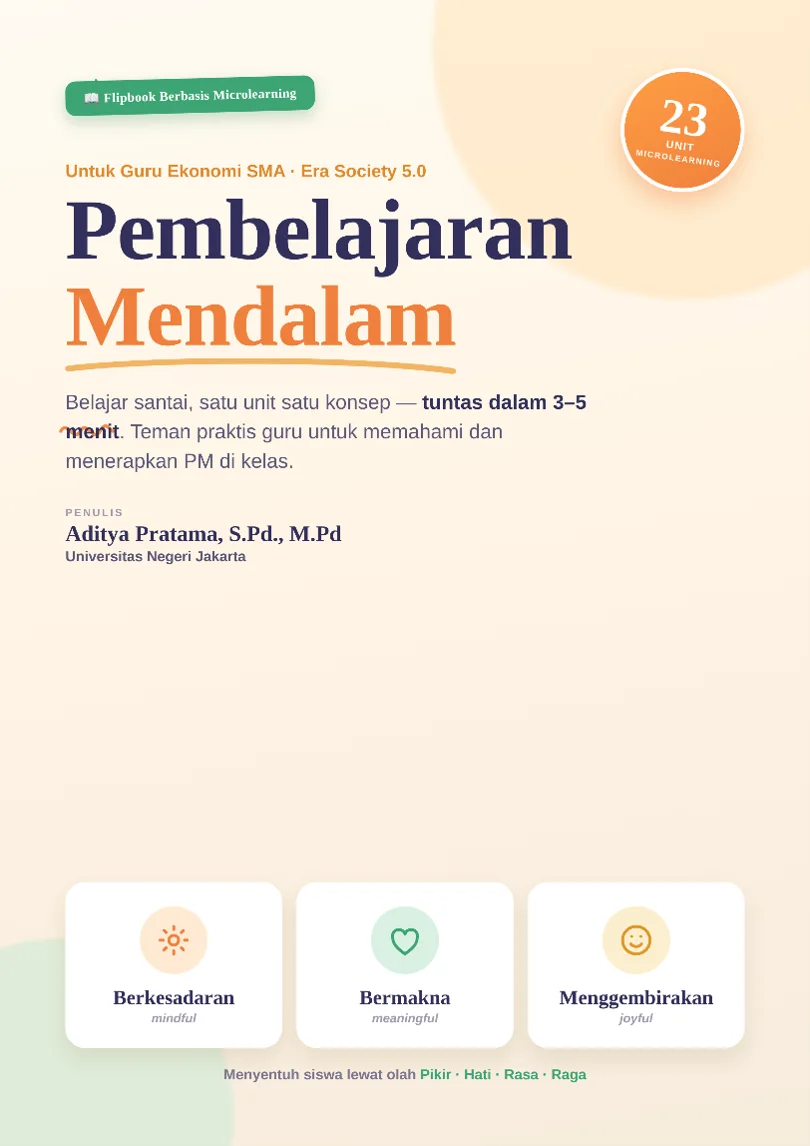
Currently, teachers still rely on conventional or simple digital learning media. Student Worksheets (LKPD) are the most widely used media, at 80 percent.
The next positions are held by printed textbooks at 73.3 percent and presentation slides at 66.7 percent. Meanwhile, the use of flipbooks or e-books has only reached about 10 percent.
The low utilization rate of flipbooks is considered to be caused not by a lack of teacher interest in technology, but by the limited availability of media designed to meet the needs of the Merdeka Curriculum and Deep Learning implementation.
Teachers Want Flexible and Easy-to-Understand Flipbooks
The study also explored the characteristics of flipbooks that teachers desire. A total of 84 percent of respondents want media that can be accessed both online and offline, ensuring it remains usable in areas with limited internet connectivity.
Furthermore, 83.3 percent of respondents expect flipbooks to be equipped with practical, engaging, and easy-to-understand implementation guides.
The same percentage also desires material presented in the form of infographics, visual illustrations, diagrams, or application examples to make the learning process more effective.
The need for offline access reflects the real conditions of education in Indonesia. To date, the distribution of internet infrastructure has not fully reached all regions, making learning media that can be used without an internet connection an essential requirement for many teachers.
Practical Content is a Priority
In terms of material, teachers expect flipbooks to not only explain theoretical concepts but also provide implementation guides that can be applied directly in schools.
A total of 83.3 percent of respondents want discussions on the main components of the Merdeka Curriculum, such as Learning Outcomes (CP), Learning Objectives Flow (ATP), and Teaching Modules.
Furthermore, 76.7 percent of teachers expect explanations regarding the principles of Deep Learning, which emphasize mindful, meaningful, and enjoyable learning.
Additionally, more than half of the respondents, at 56.7 percent, want examples of innovative learning strategies that can be applied according to student characteristics and school needs.
The research team believes that presenting material in the form of microlearning or short lessons with simple language will help teachers learn concepts gradually without having to allocate long study hours.
Majority of Respondents are Contract Teachers
The respondent profile also provides an interesting picture of the condition of teachers in Indonesia. A total of 70 percent of respondents are contract teachers or non-permanent teachers, while 73.3 percent teach in private schools.
The majority of respondents have between 11 and 20 years of teaching experience.
According to the research team, these characteristics reinforce the urgency of providing self-study media that is easily accessible.
Contract teachers generally have more limited opportunities to attend formal training organized by the government due to quota, cost, or location constraints.
Digital media such as flipbooks are considered a more efficient alternative because they allow teachers to learn flexibly according to their available time without leaving their teaching duties.
Strategic Solutions to Support Educational Transformation
Based on the overall findings, the research team concluded that there is still a gap between teacher needs and the availability of learning media that supports the implementation of Deep Learning.
The development of digital flipbooks based on microlearning is viewed as a strategic solution to address these challenges.
This media is considered capable of helping teachers understand Merdeka Curriculum concepts gradually, increasing independent learning, overcoming time constraints, and providing broader access for teachers in various regions.
The research team also believes that the development of such digital learning media is in line with the human resource development agenda in the Asta Cita and supports educational transformation toward the era of Society 5.0 which emphasizes the wise use of technology while prioritizing human values in the learning process.



Comments 0
Write a Comment Share your response