

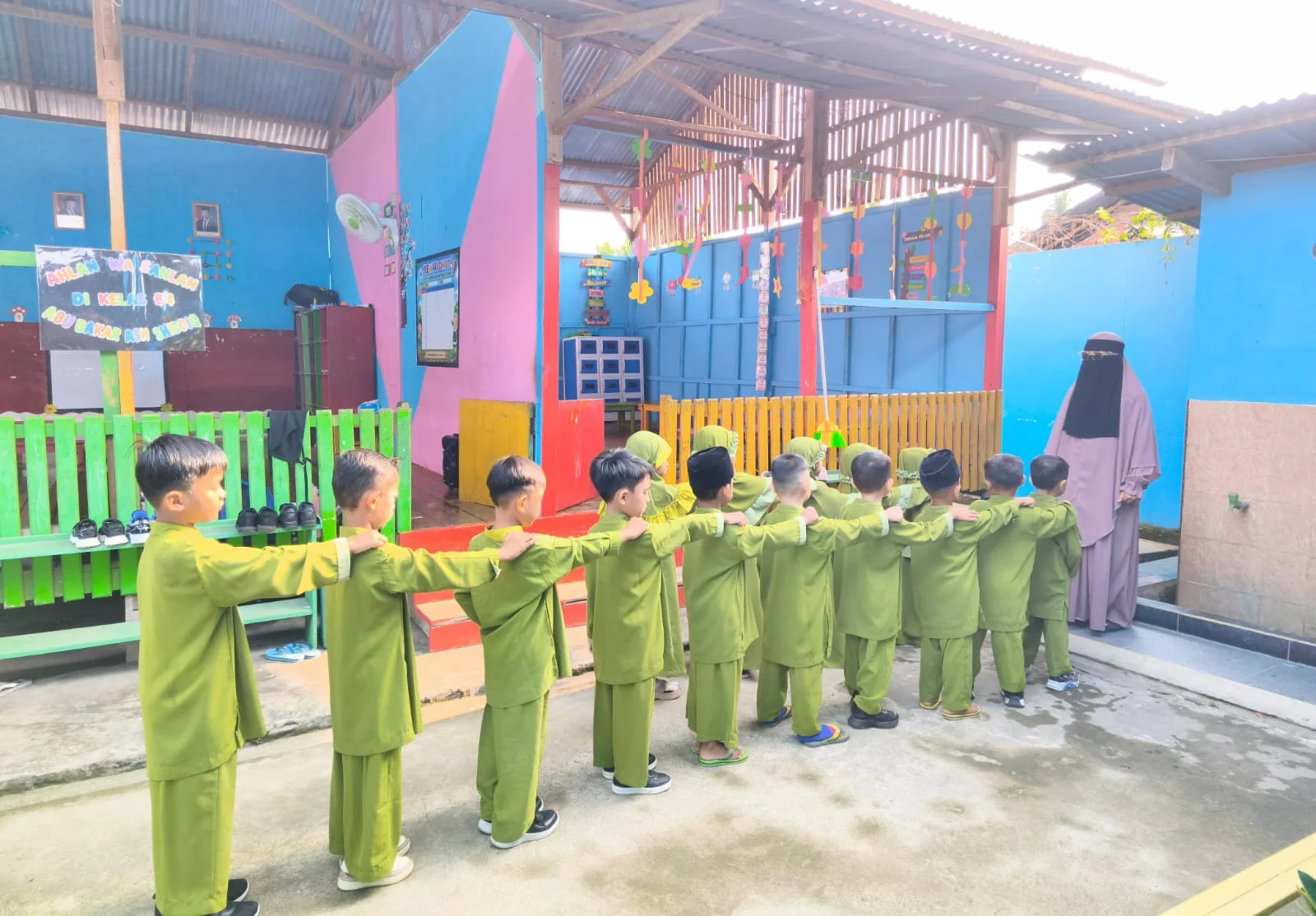
JurnalPost.com - Education is often viewed as successful when a child can read quickly, calculate fluently, or master various subjects from an early age. Academic achievement is a primary benchmark for both parents and educational institutions. However, behind these accomplishments lies a fundamental aspect that must not be overlooked: the cultivation of adab (etiquette) and akhlak (moral character).
Intellectual intelligence certainly plays an important role in life. However, extensive knowledge does not always go hand-in-hand with the ability to maintain proper conduct and speech. Many people are adept at expressing opinions but struggle to respect the views of others. Others may understand various teachings of virtue but have yet to apply them in their daily lives.
This phenomenon serves as a reminder that education should not stop at the mastery of knowledge. More importantly, education has a responsibility to shape individuals of character who possess moral awareness and the ability to use their knowledge wisely.
In the perspective of Islamic education, knowledge and adab are two complementary elements. Knowledge provides understanding, while adab guides a person in applying that knowledge. Both must be instilled in tandem so that the educational process produces individuals who are not only intelligent but also possess noble character.
These values have long been a vital part of the pesantren (Islamic boarding school) educational tradition. Students are not only directed to understand religious texts or deepen their knowledge of faith, but are also accustomed to respecting teachers, maintaining polite speech, valuing others, and taking responsibility for their actions.
Interestingly, the values of the pesantren tradition are not only relevant for those studying in boarding schools. These principles can also be applied in early childhood education as a foundation for character building from the very beginning of life.
Adab Education Must Be Instilled from Early Childhood
Childhood is a critical period for the formation of habits and behavior. At this stage, children learn primarily through observation, direct experience, and interaction with those around them.
The words and actions of parents and teachers serve as examples that influence how a child behaves. Therefore, teaching adab is not enough through mere advice or explanations of good and bad behavior.
Children need to see how these values are applied in daily life.
When parents make it a habit to speak politely, children gain a tangible example of how to respect others. Similarly, when teachers demonstrate patience, fairness, and respect for their students, children learn the meaning of moral character through direct experience.
In Islamic teachings, the importance of character building is reflected in the advice of Luqman, as recorded in the Qur'an, Surah Luqman, verses 17–19.
This advice covers various aspects of life, ranging from performing acts of worship and inviting others to do good, to practicing patience and avoiding arrogance in social interactions.
Allah SWT states in Surah Luqman, verse 18:
وَلَا تُصَعِّرْ خَدَّكَ لِلنَّاسِ وَلَا تَمْشِ فِي الْأَرْضِ مَرَحًاۖ إِنَّ اللَّهَ لَا يُحِبُّ كُلَّ مُخْتَالٍ فَخُورٍ
“And do not turn your cheek [in contempt] toward people and do not walk through the earth exultantly. Indeed, Allah does not like everyone self-deluded and boastful.”
This verse teaches that educating a child involves not only the ability to understand concepts but also how to treat others.
Humility, politeness, and the ability to respect others are values that need to be introduced as soon as a child begins to navigate their social environment.
In early childhood education practice, these values can be instilled through simple habits, such as saying greetings, listening when others speak, asking permission before borrowing items, and acknowledging mistakes while offering apologies.
Although these habits may seem simple, they serve as the foundation for a child's character development in later stages of life.
The Pesantren Tradition and the Importance of Honoring Knowledge
Pesantren possess an educational tradition that places adab as a crucial part of the pursuit of knowledge. Education does not occur solely through classroom learning but also through the habituation of behavior in daily life.
A student is guided to respect teachers, maintain relationships with peers, follow rules, and treat knowledge with full responsibility.
This perspective aligns with the thoughts of Sheikh Burhanuddin Az-Zarnuji in the book Ta'limul Muta'allim Thariq at-Ta'allum, which serves as a key reference in the Islamic educational tradition.
The book outlines various principles for seeking knowledge, including the importance of purifying one's intentions, choosing the right teacher, being diligent in study, and respecting both knowledge and those who teach it.
In the chapter Ta'zhim al-'Ilmi wa Ahlihi, Az-Zarnuji gives special attention to the reverence for knowledge and scholars.
This value demonstrates that academic success is not determined solely by the ability to grasp lessons, but is also linked to one's attitude and sincerity throughout the educational process.
This principle can inspire Early Childhood Education (PAUD) institutions and kindergartens to build a learning culture that prioritizes politeness, discipline, and responsibility.
Its application must, of course, be adjusted to the child's age and developmental stage. Teaching adab in a PAUD environment does not mean replicating the entire pesantren lifestyle.
Instead, the positive values contained in that tradition can be translated into simple and enjoyable activities.
For example, children can be encouraged to take care of books and learning supplies, wait for their turn to speak, listen to the teacher's explanations, and return toys after use.
Through these activities, children do not merely follow rules; they begin to understand the importance of respecting others and taking responsibility for their surroundings.
When Knowledge Is Not Balanced with Character
The advancement of knowledge opens up increasingly broad opportunities for humans to learn and understand various issues. However, the progress of knowledge must also be balanced with the ability to control oneself and maintain proper behavior.
A person may possess excellent thinking skills but still requires guidance in using their knowledge responsibly.
In the world of education, this condition is why character building should not be treated as a mere supplement.
Education that is overly oriented toward academic achievement risks neglecting the development of students' attitudes, empathy, and social responsibility.
Nevertheless, the importance of adab does not mean that academic ability should be sidelined. Both must be developed in a balanced manner.
Children still need the opportunity to learn to read, write, count, and explore various subjects. At the same time, they require guidance to understand honesty, politeness, care, and respect for others.
In Islamic teachings, the Prophet Muhammad SAW placed great emphasis on character building. One hadith narrated in Musnad Ahmad states:
إِنَّمَا بُعِثْتُ لِأُتَمِّمَ مَكَارِمَ الْأَخْلَاقِ
“I was sent only to perfect noble character.”
This message underscores the position of character in the life of a Muslim.
In the context of education, a child's success should not be measured solely by the amount of material they have mastered. Positive behavioral changes are also a vital part of their development.
A child who begins to speak honestly, respect teachers, share with friends, and take responsibility for their actions is demonstrating a process of character formation that deserves to be valued.
Applying Pesantren Educational Values in PAUD
Instilling adab in early childhood requires an approach that is close to their daily lives.
At this developmental stage, children may not be able to grasp long explanations about moral or ethical concepts. However, they can learn through examples, games, and activities performed repeatedly.
Teachers play a crucial role in creating a learning environment that supports character formation.
Activities such as praying before learning, greeting others, saying thank you, and asking for permission can become part of the daily school routine.
Children can also be guided to respect differences, avoid teasing friends, share supplies, and help others according to their abilities.
Beyond human relationships, adab education can include care for the environment and living creatures.
Tidying up toys, disposing of trash in its place, maintaining classroom cleanliness, and showing kindness to animals are examples of simple activities that hold character education value.
However, such habituation will be more meaningful if accompanied by the modeling of adults.
A teacher who teaches politeness needs to demonstrate good ways of speaking. Likewise, when teaching responsibility, a teacher can provide an example through disciplined and consistent adherence to rules.
Thus, adab education does not just appear as learning material but becomes part of the school culture.
Family and School Collaboration in Shaping Children's Character
Character formation cannot be fully burdened upon educational institutions. The family is the first environment where a child learns habits, values, and patterns of social interaction.
Therefore, cooperation between parents and teachers is a key factor in instilling adab education in a sustainable manner.
Habits introduced at school should be reinforced at home. Conversely, good values taught within the family need to be supported through a positive learning environment.
For example, when a child is accustomed to tidying up toys at school, parents can apply similar habits at home. When a child learns to apologize to a friend, the family also needs to show that acknowledging mistakes is a virtuous act.
Alignment in education between home and school helps children understand that adab is not just a rule that applies in certain places, but a part of daily life.
This process requires patience. Not all children can immediately apply the behavior being taught. They need time, guidance, and opportunities to continue learning.
Therefore, adab education should not be built through excessive demands, but through an approach that is full of affection, consistent, and appropriate to the child's developmental needs.
Building a Generation of Knowledge and Character
Meaningful education does not only aim to produce a generation with high intellectual ability, but also individuals capable of using their knowledge to provide benefit.
The pesantren educational tradition teaches that the process of seeking knowledge is closely related to respect, modeling, discipline, and the formation of character.
These values remain relevant for application in modern education, including at the early childhood level.
Through simple habituation, children can learn that intelligence must be accompanied by humility, knowledge must be used responsibly, and success should not cause one to lose respect for others.
Ultimately, early childhood education is not just about preparing them to enter the next level of schooling. Education is also a process of building a personality foundation that will influence how a child lives their life.
Children need to grow with good thinking skills, but also possess social sensitivity, care, and moral awareness.
Because the value of knowledge lies not only in how much information has been gathered, but also in how that knowledge shapes a person's attitudes and actions.
Do not let education succeed in producing a generation rich in knowledge but lacking the adab to use it.
References
The Holy Qur'an, Surah Luqman, verses 17–19.
Ahmad bin Hanbal, Al-Musnad, narration regarding the perfection of noble character.
Az-Zarnuji, Burhanuddin, Ta'limul Muta'allim Thariq at-Ta'allum.







Comments 0
Write a Comment Share your response