

BONDOWOSO, JurnalPost.com — The availability of digital technology does not fully guarantee that the public can easily access government information. Issues regarding digital literacy, limited human resources, and inter-agency coordination remain significant challenges in implementing public information transparency within local governments.
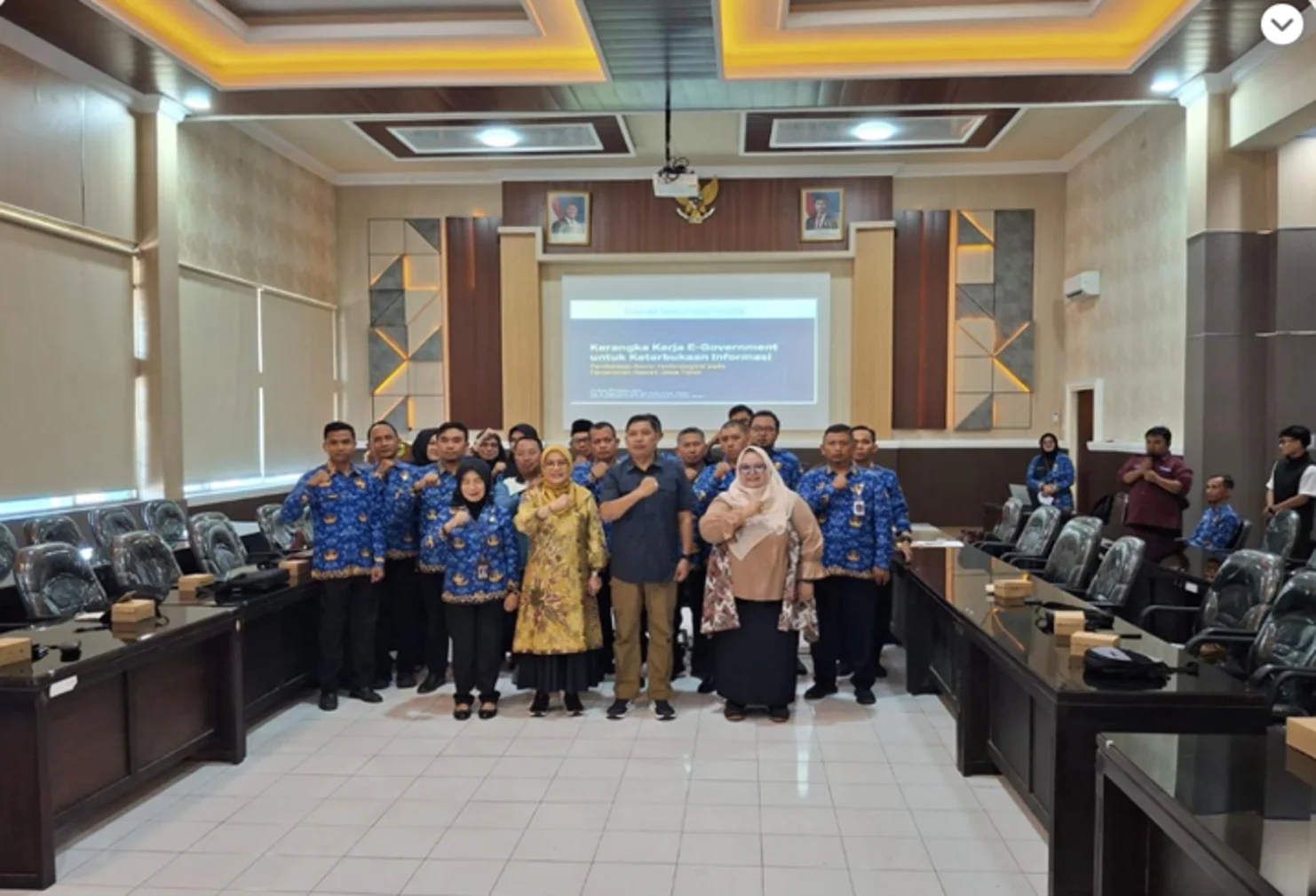
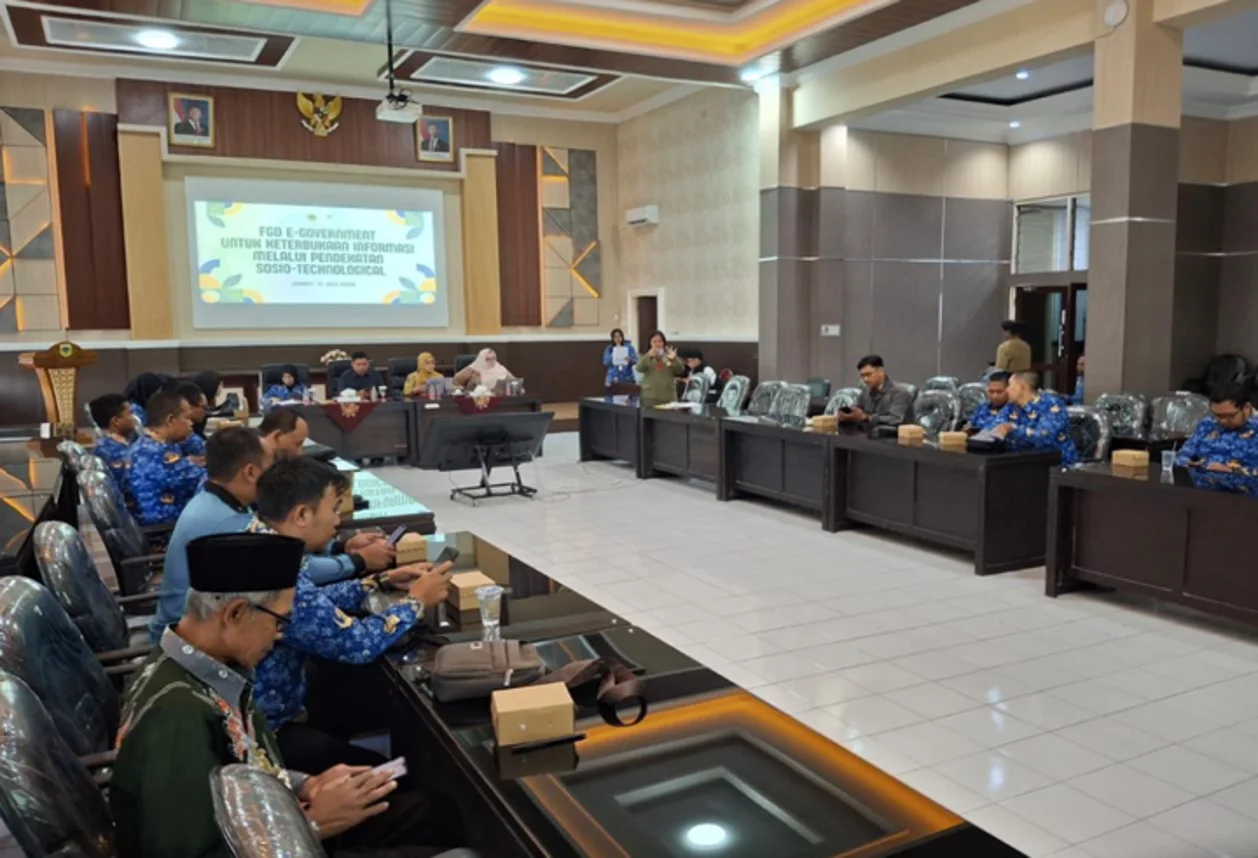
This situation drew the attention of a research team from the Universitas Pembangunan Nasional (UPN) "Veteran" East Java during a study conducted with the Bondowoso Regency Government, East Java, on Friday (17/7/2026).
This activity is part of a research project titled "E-Government Framework for Information Transparency through a Socio-Technological Approach in the Local Government of East Java Province."
Bondowoso Regency was selected as a research site alongside Nganjuk and Sidoarjo Regencies. The study aims to identify challenges in implementing digital governance while formulating strategies to improve the quality of public information services.
The research program is led by Prof. Dr. Diana Hertati, M.Si. from the Public Administration Study Program at UPN "Veteran" East Java, alongside Asif Faroqi, S.Kom., M.Kom. and Indira Arundinasari, S.AP., M.AP.
In addition to the faculty members, the research is supported by three students—Muhammad Asyam Thoriq Taufiqurahman, Jesica Erin Ariani, and Najma Choirun Nisa—who participated in the field data collection process.
The selection of Bondowoso as a research site was based on the Electronic-Based Government System (SPBE) evaluation conducted by the Ministry of Administrative and Bureaucratic Reform (PANRB) in 2022.
In that evaluation, the SPBE index for Bondowoso Regency was recorded as being below 2.5, receiving a "sufficient" rating.
Through interviews, observations, and focus group discussions or focus group discussions (FGD), the research team explored various issues regarding information transparency with regional government officials, government website administrators, and community representatives.
Adequate Digital Infrastructure, Limited Information Utilization
The research results indicate that the challenges of public information transparency in Bondowoso are not solely related to the availability of technological infrastructure.
In general, the infrastructure supporting e-government is considered available and sufficiently adequate. However, its utilization has not been optimal due to constraints in human resources, digital literacy, and information management.
Some members of the public are not accustomed to using the digital information channels provided by the government. Limited technological understanding and low interest in government information are factors influencing this situation.
In several villages, the dissemination of public information still relies on conventional media, such as banners and notice boards.
Meanwhile, from the local government side, a shortage of dedicated operators remains a hurdle in managing information services.
Staff handling digital services often have other job responsibilities, preventing them from maximizing the information service process.
This issue is exacerbated when the information systems used lack automated notification features. Consequently, public information requests are prone to delayed responses.
The research team also found that the Community Information Groups (KIM), which were previously drivers of information dissemination at the local level, have not fully realized their function in community empowerment.
The activities of several KIMs tend to be limited to publication and documentation, while guidance to enhance their role in information literacy is considered in need of strengthening.
Harini, a representative from the Bondowoso Regency Communication and Informatics Office, emphasized that the development of technological infrastructure must be balanced with increasing the capacity of officials and the understanding of the public.
"The technology is available, but information transparency is not achieved just by building a portal. Citizens need to know their right to information, and officials need support to be brave and agile in opening up data," said Harini.
Inter-Agency Coordination Needs Strengthening
Beyond digital literacy issues, this research highlights the importance of coordination between regional agencies to realize integrated public information services.
Various agencies have different responsibilities in supporting the implementation of digital governance.
The Regional Development Planning Agency (Bappeda), for instance, plays a role in program planning and budgeting. The Communication and Informatics Office (Diskominfo) handles server management and government digital applications.
Meanwhile, the Community and Village Empowerment Office plays a role in bridging communication with village governments, while the Regional Financial Management Agency (BPKD) relates to funding aspects.
Although each agency has performed its duties according to its authority, the research results show that coordination still needs to be improved so that public information services can be more integrated.
Service integration is considered important to make it easier for the public to obtain information without facing complicated procedures or switching between service channels.
Therefore, the research team recommends a socio-technological approach (socio-technological approach) that positions technology development and human capacity building as two interrelated aspects.
This approach emphasizes that the success of government digital transformation is not measured solely by the number of applications or portals available, but also by the ability of officials to manage them and the ease with which the public can use them.
Revitalization of KIM and Strengthening PPID Capacity
Based on field findings, the UPN "Veteran" East Java team formulated several recommendations to strengthen public information transparency in Bondowoso Regency.
One of the main recommendations is the revitalization of Community Information Groups as agents of information literacy at the village level.
Through this strengthening, KIM is expected to act not only as a manager of activity documentation but also as a bridge between the government and the community in disseminating public information.
Additionally, the team recommends the integration of cross-platform information channels so that the public can obtain services more easily and efficiently.
Increasing the competence of Information and Documentation Management Officers (PPID) in every regional agency is also considered important.
Periodic training is necessary to strengthen the officials' understanding of information management, service procedures, and the obligation of information transparency in accordance with applicable regulations.
Other recommendations include the preparation of information service guidelines that are simple and easy for the public to understand.
The research team also encourages the provision of face-to-face assistance services at the sub-district level, especially for residents who are not accustomed to using digital-based government services.
This step is expected to reduce the gap in information access between citizens who already have digital skills and groups that still require direct assistance.
Research Results Compiled into a Policy Brief
As a follow-up to the research activities, all findings and recommendations have been summarized in a policy brief or a summary of policy recommendations.
The document is titled "Developing a Comprehensive Framework to Improve the Quality of Information Transparency in E-Government in Bondowoso Regency through a Socio-Technological Approach and Development of the Bondowoso Regency PPID Website."
The preparation of the policy brief aims to provide research-based input to the Bondowoso Regency Government in designing strategies to improve public information transparency.
This document is expected to serve as a reference in drafting a roadmap for the development of public information services for the next three years.
The goals to be achieved include increasing public digital literacy, strengthening public participation, and improving transparency and the quality of information services in every regional agency.
Through this research, UPN "Veteran" East Java strives to provide academic contributions that can be utilized directly in the formulation of local government policies.
Strengthening public information transparency ultimately requires not only technological support but also institutional commitment, competent officials, and a public that understands its right to obtain information.
By combining technological and social aspects, the Bondowoso Regency Government is expected to build a public information service system that is more accessible, responsive, transparent, and inclusive for all levels of society.








Comments 0
Write a Comment Share your response