

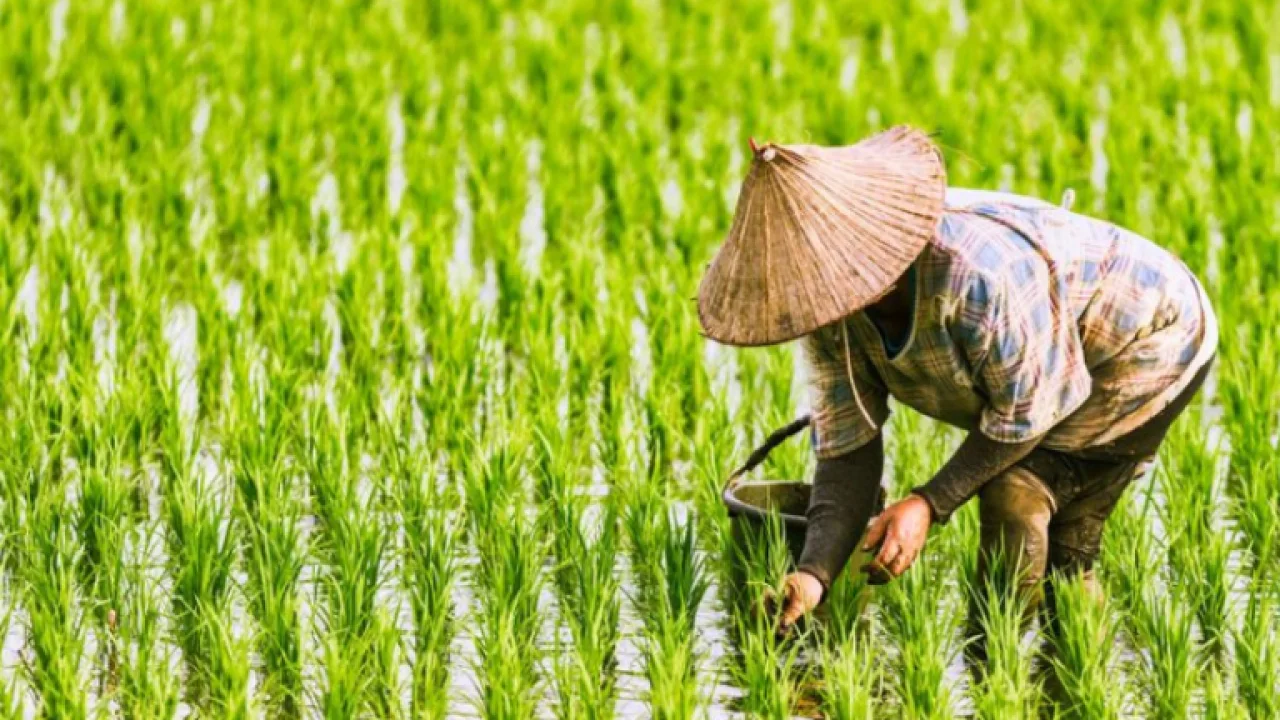
JurnalPost.com - Imagine a female farm worker who wants to attend a prenatal check-up but must weigh the loss of wages if she misses work. At the same time, she receives no clear information on when fields are sprayed with pesticides or when it is safe to re-enter them. Must she choose between safeguarding her health and maintaining her income?
This illustration demonstrates that reproductive health cannot always be maintained through personal knowledge alone. Work arrangements, access to services, costs, and bargaining power all determine whether an individual can protect themselves.
Therefore, discussions about agribusiness should not stop at productivity, market prices, and profits. The health of the people producing our food must also be a priority. This is where negotiation and advocacy come into play: shifting the needs of female farmers from individual struggles to a shared responsibility.
Reproductive Health is Also an Agribusiness Concern
The World Health Organization (WHO), in its publication on investing in reproductive health from 2023, asserts that reproductive health and rights are linked to the right to health, gender equality, and socioeconomic development. Consequently, the needs of female farmers for information and health services should not be viewed as private matters separate from their working lives.
This relationship becomes even clearer when examining the position of women in food systems. The global FAO report titled The Status of Women in Agrifood Systems shows that women still face barriers in accessing land, financing, and training. Their employment conditions also tend to be less secure compared to those of men.
These findings remind us that simply telling women to "take better care of their health" is insufficient. We must also ask whether these women have the time to seek medical care, the ability to pay for transportation, and the space to voice objections to hazardous work.
From an agribusiness perspective, the cost of health protection should be included in business calculations. If cost-cutting measures force workers to bear the burden of medical expenses and lost income, is the business truly efficient? Profits should not be calculated by ignoring the costs shifted onto workers' families.
Understanding Risks Without Fear-Mongering
One issue requiring attention is pesticide exposure. NIOSH, the U.S. occupational safety and health research agency, explains that several pesticides have been linked in human studies to hormonal imbalances, reduced fertility, and pregnancy complications. Pesticides can also be carried into the home via clothing and footwear. However, these findings do not mean that every use of pesticides will inevitably cause reproductive harm.
Research by Saloshni Naidoo and colleagues on female farm workers in South Africa found a correlation between pesticide spraying in early pregnancy and reported miscarriages. Because this research was observational, the results do not prove a causal relationship. These findings serve as a basis for strengthening prevention, not for blaming women or concluding the cause of a miscarriage without medical examination.
Beyond pesticides, heat stress also warrants attention. Research by Shanmugam Rekha and colleagues, published in the journal BJOG in 2024, followed 800 pregnant women performing moderate to heavy physical labor in India. The study found a link between high occupational heat exposure and adverse pregnancy outcomes. While these findings from India cannot be directly used to determine the level of risk for Indonesian farmers, they are worthy of consideration in prevention efforts.
Protection must also include male workers. NIOSH explains that excessive heat can affect the reproductive health of both women and men, while pregnancy increases vulnerability to heat stress. Adequate drinking water, opportunities for rest, and shaded areas are essential components of prevention.
The message is not to keep women away from agriculture. What needs to be improved are working conditions so that women can continue to participate without sacrificing their health.
From Complaints to Advocacy Agenda
Advocacy in this context means fighting for changes in decision-making, work arrangements, and resource allocation so that the health needs of female farmers are genuinely addressed. Education is an important step, but it is inadequate if not accompanied by the facilities and opportunities to implement it.
Indonesia already has a relevant policy foundation. Minister of Health Regulation Number 2 of 2025 on the Implementation of Reproductive Health Efforts includes protection against workplace exposure risks as part of preventive measures. Article 21 covers protection against physical, chemical, biological, ergonomic, and psychosocial hazards. This provision can serve as a basis for advocating for agricultural work practices that better protect reproductive health.
The first step is to listen to the experiences of female farmers. Are clean water and private toilets available? Do workers know the spraying schedule? Can they seek medical check-ups without fear of losing their jobs?
Farmer groups can aggregate these needs for collective discussion. Landless women and daily laborers must also be involved, not just farm owners. Information brought to the forum should focus on working conditions and shared needs, rather than personal health histories disclosed without consent.
Furthermore, demands should be directed toward those who can make decisions. Business managers can be engaged to discuss task arrangements and facilities. Cooperatives can discuss joint procurement. Extension workers can assist in improving cultivation practices, while community health centers (puskesmas) can be invited to design education and access to services according to their capacity. Village governments can facilitate meetings and discuss support within their authority.
In this way, advocacy does not stop at the call for "female farmers must be healthy," but moves toward more concrete questions: what must change, who is responsible, and when will the changes be implemented?
Negotiations that Protect Health and Income
In agribusiness, negotiation is not only needed to determine harvest prices. It can also be used to agree on task distribution, working hours, protection costs, and access to health services.
For example, workers need safe working conditions and stable income. Business managers need work completed on schedule. These two interests can serve as a starting point for developing better arrangements.
NIOSH suggests that pregnant workers discuss the possibility of avoiding tasks involving pesticide exposure during pregnancy and breastfeeding. In agricultural practice, this recommendation can be a basis for discussing task adjustments while considering the advice of health professionals.
However, task adjustment should not become an excuse to exclude women from work. Therefore, income protection must also be championed. One proposal that can be negotiated is temporary reassignment to lower-risk tasks without wage cuts. For farmers working on their own land, options could include family task sharing or cooperation among group members. Replacement workers must also receive appropriate protection.
Agreements should be clearly written. They can include the announcement of spraying schedules, the provision of sanitation facilities, opportunities for health check-ups, designated responsibilities, and funding sources. The process for lodging complaints should also be agreed upon so that workers do not have to face issues alone.
What is being negotiated is not whether health is worth protecting, but how that protection is implemented in reality and who is responsible.
Funding does not have to be borne by farm laborers alone. Cooperatives can propose the joint procurement of equipment. Partner companies or agricultural buyers can be engaged to discuss support for safe working conditions within partnership agreements. Contribution amounts should be calculated transparently, rather than merely promised.
Reducing Hazards, Improving Access to Services
Protection should begin by reducing hazards in the production process. The Center for Plant Pest Organism Forecasting explains that integrated pest management combines various control methods, including healthy crop cultivation, routine monitoring, and the use of natural enemies. Chemical pesticides are not an automatic choice but are used when necessary based on infestation conditions and control considerations.
Assistance with integrated pest management is therefore a worthy agenda for farmer group advocacy. The goal is not just to share information, but to help farmers have control options that can be applied in their operations.
When pesticides are used, label instructions must be followed, including appropriate protection and the re-entry interval before entering the field. NIOSH reminds us that workers need to wait at least as long as the time specified on the product label. This means that re-entry times should not be generalized for all pesticides.
Regarding services, farmer groups can explore cooperation with community health centers (puskesmas) and Occupational Health Posts (Pos UKK). In its explanation of female worker health, the Ministry of Health identifies Pos UKK as an approach to reach informal workers, including those in the agricultural and plantation sectors.
Such cooperation can be directed toward education, consultation, and referrals according to needs and local service capacity. Implementation must respect the choices and privacy of workers. Female farmers should not have to disclose their personal health information in front of a group to receive assistance.
The success of advocacy should then be measured by verifiable changes. Is the spraying schedule actually announced? Are facilities usable? Do workers have the opportunity to rest and get health check-ups? A joint evaluation after one planting season can be a starting point for improving agreements.
Ultimately, sustainable agribusiness needs to protect both people and their produce. Female farmers are not just labor to be accounted for during planting and harvest seasons. They are stakeholders who must be heard when decisions regarding working conditions are made.
Agricultural success should be measured not only by the volume of the harvest but also by how well the health of the people who produce it is protected.
REFERENCES
Center for Plant Pest Organism Forecasting. Integrated Pest Management (IPM). Ministry of Agriculture of the Republic of Indonesia.
Food and Agriculture Organization of the United Nations. (2023). The status of women in agrifood systems. FAO.
Ministry of Health of the Republic of Indonesia. (2018). Ministry of Health strengthens efforts for female worker health.
Ministry of Health of the Republic of Indonesia. (2025). Minister of Health Regulation of the Republic of Indonesia Number 2 of 2025 on the Implementation of Reproductive Health Efforts.
Naidoo, S., London, L., Burdorf, A., Naidoo, R., & Kromhout, H. (2011). Spontaneous miscarriages and infant deaths among female farmers in rural South Africa. Scandinavian Journal of Work, Environment & Health, 37(3), 227-236.
National Institute for Occupational Safety and Health. (2023). About pesticides and reproductive health. Centers for Disease Control and Prevention.
National Institute for Occupational Safety and Health. (2024). About heat exposure and reproductive health. Centers for Disease Control and Prevention.
Rekha, S., Nalini, S. J., Bhuvana, S., Kanmani, S., Hirst, J. E., & Venugopal, V. (2024). Heat stress and adverse pregnancy outcome: Prospective cohort study. BJOG: An International Journal of Obstetrics & Gynaecology, 131(5), 612-622.
World Health Organization. (2023). Investing in sexual and reproductive health and rights: Essential elements of universal health coverage.

Comments 0
Write a Comment Share your response