

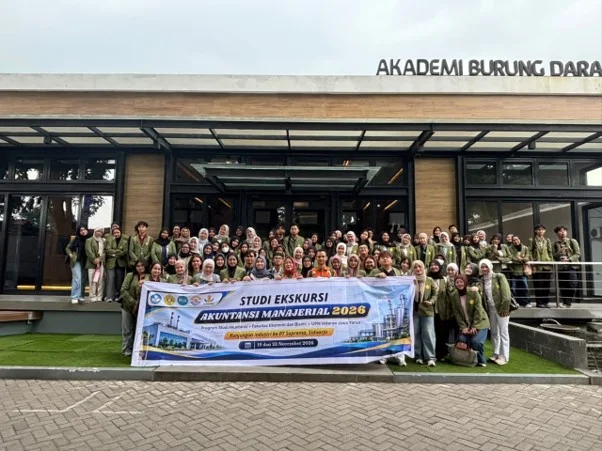
SIDOARJO, JurnalPost.com – The Accounting Study Program at the Faculty of Economics and Business, Universitas Pembangunan Nasional (UPN) “Veteran” East Java, organized a Managerial Accounting Excursion 2026 through an industrial visit to PT Surya Pratista Hutama (PT Suprama) in Sidoarjo, East Java. The activity was scheduled for 19 and 23 November 2026 as part of an effort to introduce students to the direct application of managerial accounting in the industrial world.
Through this activity, students had the opportunity to explore a manufacturing environment while understanding the connection between the theories learned in class and business management practices.
This excursion serves as a form ofexperiential learningaimed at broadening students' perspectives on production processes, cost control, budgeting, and managerial decision-making.
The activity is also expected to provide insight into the importance of accounting information in supporting operational efficiency and business sustainability.
Understanding the Application of Managerial Accounting in Manufacturing
PT Surya Pratista Hutama, or PT Suprama, is a company operating in the food industry, specifically in noodle production. As a manufacturing firm, PT Suprama manages various operational activities related to raw material handling, production processes, inventory, and product distribution.
These characteristics make the company a highly relevant learning site for accounting students to understand the application of managerial accounting concepts in an industrial setting.
One key focus of this excursion was production cost management. In a manufacturing company, production costs generally consist of three main components: direct raw materials, direct labor, and factory overhead.
These three components play a crucial role in calculating the cost of goods manufactured, which management uses as a basis for setting selling prices, evaluating efficiency, and making business decisions.
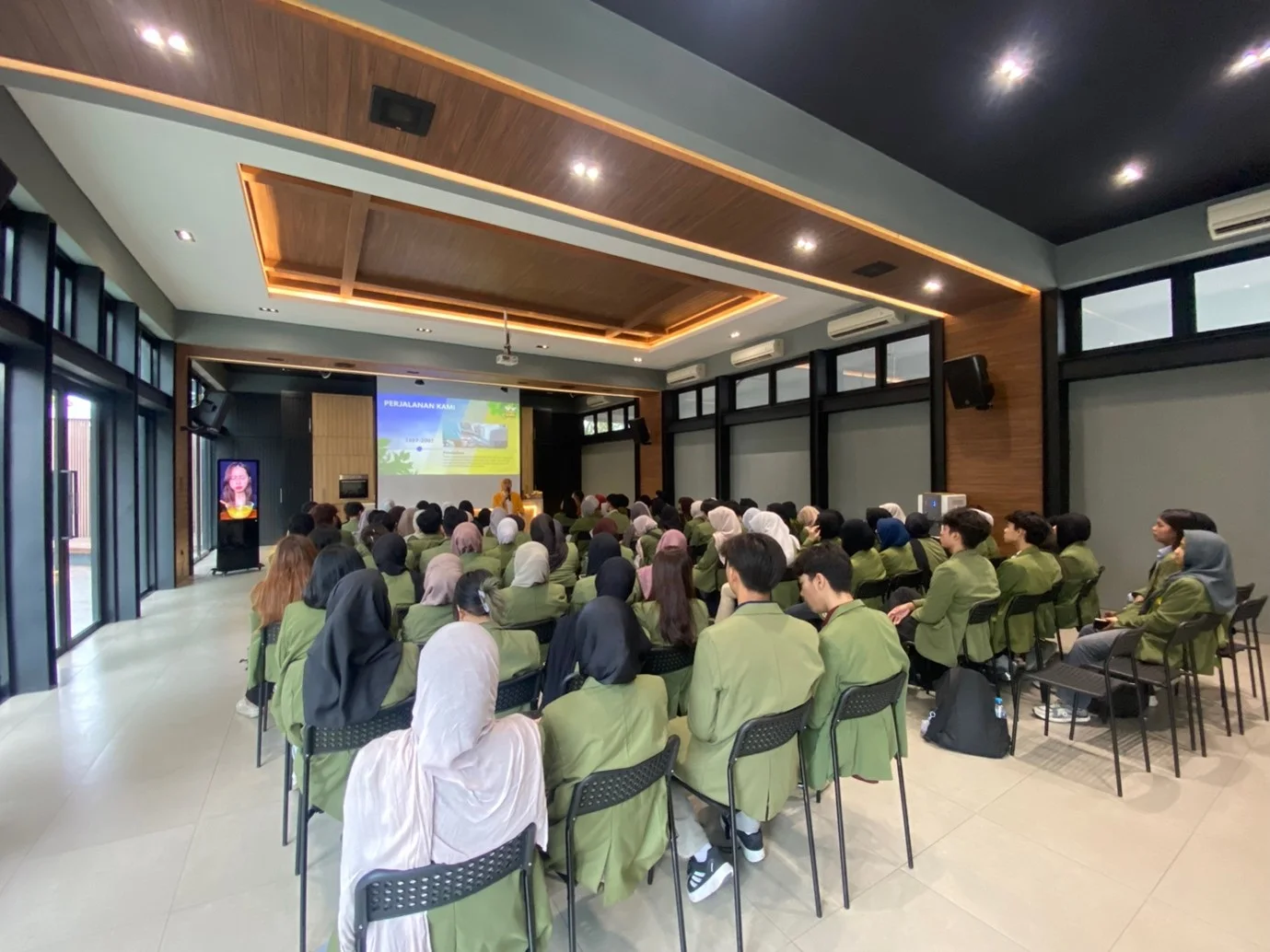
Beyond understanding the structure of production costs, students were guided to connect concepts of budgeting, internal control, and performance evaluation with company activities.
Through this approach, students are expected to better understand that managerial accounting is not just about cost calculation, but also serves as a vital source of information for corporate planning and decision-making.
Bridging Classroom Theory with Industrial Practice
Accounting education in the classroom typically provides an understanding of concepts, calculation methods, and financial analysis. However, its application in the industrial world involves more complex and dynamic operational conditions.
Through the Managerial Accounting Excursion 2026, students were encouraged to see how the concepts they have studied can be used to understand various company activities.
This experience is a vital part of developing critical and analytical thinking skills, especially when students must link financial information with the operational conditions of a business.
The activity also provided space for students to improve their communication skills, teamwork, and understanding of a professional work environment.
By experiencing industrial practices firsthand, students are expected to not only master accounting theory but also understand business issues from a managerial perspective.
This capability is increasingly necessary as the role of the accountant continues to evolve. An accountant is no longer just required to prepare financial reports but must also possess analytical skills to help companies manage risks, improve efficiency, and achieve business goals.
Strengthening the Relationship Between Universities and Industry
The industrial visit to PT Suprama also serves as a step toward strengthening the relationship between higher education institutions and the business world.
Collaboration between educational institutions and companies plays a significant role in creating a learning process that is relevant to the needs of the workforce.
For students, this activity is an opportunity to become familiar with the industrial environment while understanding the competencies required in the fields of accounting and business management.
Meanwhile, for the university, the experience gained through the excursion can be utilized as material for learning enrichment and academic discussion in the classroom.
Through activities like this, the Accounting Study Program at UPN “Veteran” East Java strives to provide an educational process that is not only oriented toward theoretical mastery but also toward the development of practical skills and student readiness for the workforce.
Aligning with Sustainable Development Goals
The implementation of the Managerial Accounting Excursion 2026 is also linked to several goals within the Sustainable Development Goals (SDGs).
This activity aligns with SDG 4, Quality Education, through the implementation of experiential learning that provides students with opportunities to gain practical knowledge outside the campus environment.
Furthermore, this activity relates to SDG 8 on Decent Work and Economic Growth, particularly through the development of student competencies as future professionals.
Regarding the introduction to manufacturing processes, the excursion is also relevant to SDG 9 on Industry, Innovation, and Infrastructure. Students can broaden their understanding of the importance of efficiency, resource management, and innovation in supporting industrial activities.
The relationship between the university and the company reflects the spirit of SDG 17, Partnerships for the Goals.
In the context of higher education, this activity supports efforts to increase the relevance of learning to workforce needs and strengthens collaboration between educational institutions and the industrial sector.
Preparing Adaptive and Competitive Accounting Graduates
Through the execution of the Managerial Accounting Excursion 2026, the Accounting Study Program at UPN “Veteran” East Java strives to provide a broader learning experience for students.
This activity is expected to increase learning motivation while strengthening the understanding of the role of managerial accounting in supporting a company's operational success.
The experience of getting to know the industrial world also serves as preparation for students to develop professional attitudes, adaptability, and skills in analyzing business problems.
Moving forward, industry-based learning is expected to be further developed so that students are better prepared to face the evolving demands of the professional world.
By combining academic understanding and practical experience, accounting graduates are expected to become competent, professional, and ethical individuals who contribute to the development of the business world and sustainable economic growth.


Comments 0
Write a Comment Share your response