

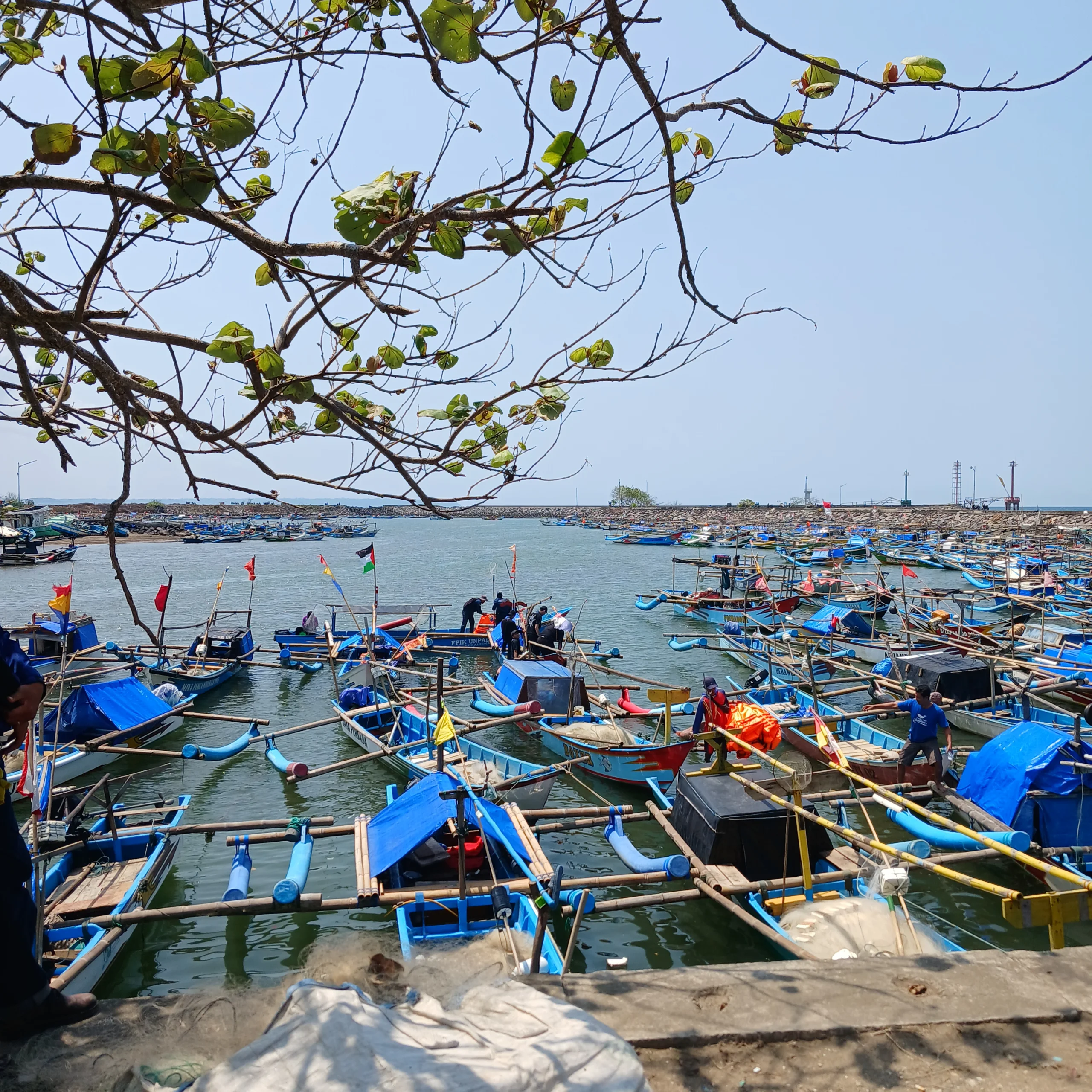
JurnalPost.com - Fishing ports have long been viewed merely as places for ships to dock, for fishers to land their catch, and for traders to conduct transactions. In reality, the role of a fishing port is far broader than just a landing facility. Ports are critical nodes that connect marine fishing activities with land-based economic systems, ranging from the provision of vessel operational needs and landing activities to the handling, distribution, processing, and marketing of fishery products.
Within the capture fisheries system, the port serves as a meeting point for fishers, vessel owners, traders, processors, logistics providers, the government, and various other stakeholders. This interaction forms an economic ecosystem that determines how fish are produced, traded, processed, and how they provide benefits to the community. Therefore, the development of fishing ports should not stop at providing piers, basins, fish auction sites, or vessel supply facilities. Ports need to evolve into hubs of fishery activity that are integrated with industry, while remaining grounded in the principles of responsible fish resource management.
Two port functions, one development goal
Fundamentally, a fishing port has two primary functions: government administration and commercial enterprise. These two functions are not separate entities but rather complement each other in creating orderly, productive, and economically beneficial fishery activities.
The government function encompasses public service delivery, oversight, and the regulation of fishery activities within the port area. This function relates to licensing governance, fishing vessel administration, compliance with operational fishing regulations, seaworthiness inspections, vessel and crew safety, catch data collection, monitoring of fishery activities, and various procedures that support the legality and smooth operation of fishing activities. The government function ensures that fishery activities are conducted in accordance with regulations, possess administrative certainty, and meet safety and resource management standards.
Meanwhile, the commercial function relates to the economic activities taking place at the fishing port. This includes the utilization of port facilities, the provision of supplies for sea voyages, fish landing services, catch transactions, storage, processing, distribution, and business development that provides added value. The commercial function serves as a space for the port to grow as a productive fishery economic hub, creating jobs, encouraging investment, and increasing the income of business actors.
Both functions must be balanced. A port that only emphasizes the government aspect without strengthening economic activities risks becoming an unproductive administrative facility. Conversely, a port that only pursues commercial activities without proper governance, oversight, and resource protection can lead to overexploitation, irresponsible fishing practices, and economic inequality.
Connecting ports with industry: from landed fish to generated value
One of the challenges for Indonesia's capture fisheries is ensuring that the catch not only increases in quantity but also provides greater economic value. Fish landed at the port should not stop as raw commodities to be sold immediately, but rather become part of a value chain connected to processing, distribution, logistics, and market industries.
The integration of fishing ports with industry is essential because the fishing sector has production characteristics that differ from general manufacturing. The catch is highly perishable, the quantity and species composition can change daily, and it is heavily influenced by seasons, weather conditions, fishing grounds, and fleet capacity. Without adequate handling systems and cold chains, fish are at risk of quality degradation even before entering the processing stage.
Fishing ports can serve as strategic points to address these issues. The availability of ice, clean water, hygienic fish handling areas, cold storage, refrigerated transport, and landing information systems integrated with industry can shorten handling times and reduce quality loss. This integration allows the industry to obtain raw materials with more guaranteed quality, while fishers have the opportunity to obtain better prices because the quality of the catch can be maintained.
Furthermore, the connectivity between ports and industry can foster market certainty. Information regarding raw material requirements, product specifications, fish sizes, commodity types, demand volumes, and quality standards can serve as a reference for fishers in planning their fishing operations. The industry no longer merely waits for fish to arrive but can coordinate with ports and fishing operators to build a more planned supply system.
This pattern can create a mutually beneficial relationship. Fishers have certainty regarding the absorption of their catch, the industry obtains a more stable supply, the port increases service productivity, and consumers receive quality fishery products. This integration also opens opportunities for the development of derivative industries, such as fillets, frozen fish, ready-to-cook products, fish meal, fish oil, and the utilization of processing by-products that have not been optimal until now.
Code of Conduct for Responsible Fisheries: the foundation for responsible integration
Strengthening the integration of fishing ports and industry must go hand-in-hand with sustainability principles. One important foundation that can be used is the Code of Conduct for Responsible Fisheries (CCRF) published by the Food and Agriculture Organization (FAO) in 1995.
The CCRF is an international guideline that emphasizes the importance of managing and utilizing fishery resources responsibly, whether in fishing activities, processing, trade, or the management of ecosystems that support fish life. Its principles not only direct how fish are utilized to meet human economic needs but also how such utilization does not diminish the ability of ecosystems and fish resources to support future generations.
In the context of fishing ports, the CCRF principles are relevant from the moment a vessel plans its fishing activities, departs for the fishing grounds, conducts operations at sea, and returns to land the catch. Ports have a strategic position to support the implementation of responsible fishing practices through the provision of information, data collection, oversight, services, and facilities that support compliance with regulations.
The CCRF also emphasizes the importance of minimizing the impact of fishing on the environment, reducing unwanted bycatch, avoiding destructive fishing, maintaining catch quality, and paying attention to the welfare and safety of people involved in fishery activities. These principles demonstrate that the success of the fishery industry should not be measured solely by the amount of raw material available or the value of transactions generated, but also by how that raw material is obtained.
Industries integrated with fishing ports must be able to ensure that their raw material requirements come from fishing activities that are legal, traceable, and mindful of resource sustainability. When the industry only pursues supply continuity without considering fish stock status, fishing pressure, fish size, reproductive seasons, or impacts on the ecosystem, integration can actually increase pressure on resources.
Therefore, fishing ports must act as a bridge between economic interests and conservation principles. Industrial integration needs to be built based on the carrying capacity of fish resources, not solely based on factory production capacity or trade targets.
The integration of fishing ports with industry must be built by considering the balance between raw material needs, industrial capacity, availability of fish resources, and ecosystem sustainability. Increased industrial demand must not encourage overexploitation, competition for resource utilization, or inequality in the value chain. Ports have a strategic role in providing landing data, monitoring the composition and volume of the catch, and connecting fishers with industry through transparent partnerships, fair prices, market access, and improved catch quality. True integration is not just about bringing fish and buyers together, but about creating a system capable of increasing efficiency, added value, and the welfare of fishers in a sustainable manner.









Comments 0
Write a Comment Share your response