

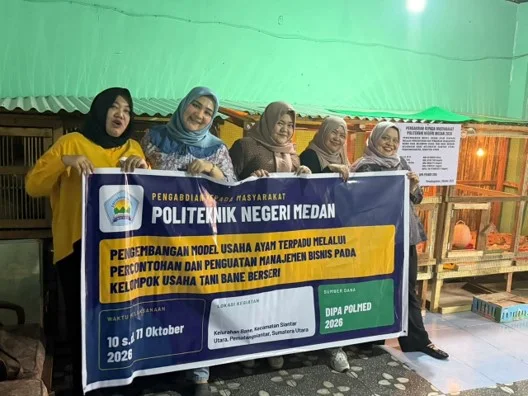
PEMATANGSIANTAR, JurnalPost.com – The Community Service (PKM) team from the Medan State Polytechnic (Polmed) is assisting the Bane Berseri Farmer Group in launching an integrated poultry farming business in Bane Village, North Siantar District, Pematangsiantar City, North Sumatra.
The program, funded through the Polmed DIPA 2026, has been underway since August 2026. The peak of the mentoring activities took place from 10 to 11 October 2026 at the group's model coop site.
The Bane Berseri Farmer Group, composed of local housewives, has been active since 2025. Despite their enthusiasm for developing a poultry business, members previously faced several obstacles, ranging from limited coop facilities to a lack of experience in chicken rearing.
According to initial partner data, the mortality rate of chicks in previous rearing attempts reached 15–20 percent. Furthermore, the group had not yet implemented a bookkeeping system, causing business finances to be mixed with household expenses.
To address these issues, the Polmed PKM team, led by Dewi Comala Sari, S.E., M.Si., introduced two primary solutions: the construction of a model coop (demplot) and the strengthening of the group's business management capabilities.
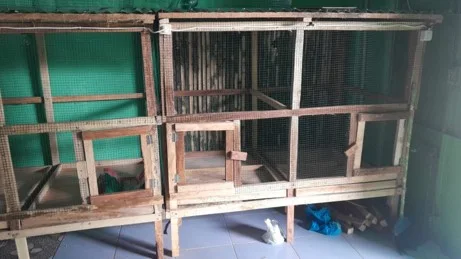
Building a Model Coop with Local Materials
The coop was constructed through a collaborative effort with group members, utilizing local materials that are relatively affordable and easy to maintain.
The coop is designed with a wooden frame, bamboo slat flooring, and wire mesh walls to support proper air circulation.
The bamboo floor is spaced to allow chicken droppings to fall into a husk-lined collection area below. This system is designed to reduce direct contact between the chickens and their waste, maintain coop hygiene, and suppress odors.
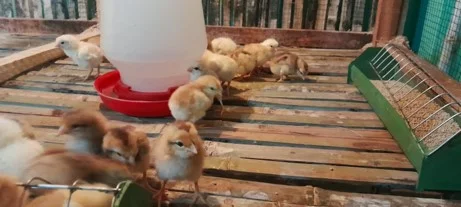
Additionally, the coop is equipped with heating lamps, feeders, water dispensers, and a small door to facilitate daily maintenance.
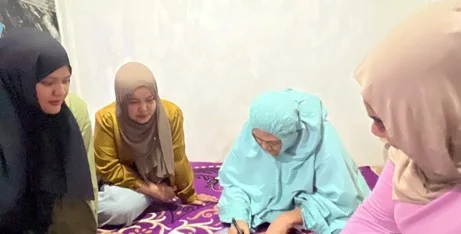
Once construction was complete, group members received hands-on training regarding coop management and chick rearing.
The training material covered coop preparation prior to the arrival of day-old chicks (DOC), the process of introducing the DOC, temperature regulation using heating lamps, and methods for keeping the bedding dry.
Participants were also taught to recognize chick behavior as an indicator of coop temperature. Chicks huddling under the lamp indicate they are cold, while chicks moving away from the heat source and panting may indicate the coop temperature is too high.
"We want the women not just to receive a coop, but to be truly capable of managing it themselves. Therefore, all stages, from construction to maintenance, were carried out together," said Dewi Comala Sari, Head of the Polmed PKM Team.
Strengthening Bookkeeping and Business Management
In addition to providing technical poultry farming guidance, the Polmed PKM team equipped the group's management with basic financial management skills.
The group's chair and treasurer received training on recording cash inflows and outflows using a Farmer's Cash Book.
During the training, participants were emphasized on the importance of separating business funds from household needs. Organized financial records are expected to help the group track operational costs, revenue, and profits from each rearing cycle.
This community service program involved five lecturers from the Polmed Department of Business Administration and the Department of Accounting: Dewi Comala Sari, S.E., M.Si., Harris Pinagaran Nasution, S.E., M.M., Muhammad Dalim, S.Sos., M.I.Kom., Maya Syahlina, S.E., M.Si., and Lisa Medina, S.E., M.Si.
Five students were also involved in the coop assembly, documentation, and group bookkeeping assistance.
Targeting a Chick Mortality Rate Below 5 Percent
Through this mentoring program, the Bane Berseri Farmer Group now has a model coop that can be used for poultry farming activities.
The chicks that have been introduced are reported to be growing healthy and active. Meanwhile, maintenance activities are carried out in turns by group members through a daily roster.
The group aims to reduce the chick mortality rate to below 5 percent, which is lower than the conditions in previous rearing attempts.
In terms of administration, the chair and treasurer have begun implementing regular transaction recording using the Farmer's Cash Book.
The group has also agreed to implement a revolving fund system, setting aside a portion of the harvest proceeds for the purchase of chicks and feed for the next rearing cycle.
As part of the program implementation, a PKM activity sign has also been installed at the model coop site.
"We used to be confused about where to start. Now we have a coop, we know how to care for the chicks, and the group's money is recorded neatly," said Fatimah Anggraini Putri, A.Md., Chair of the Bane Berseri Farmer Group.
Preparing for the First Harvest and Marketing
The first harvest of the Bane Berseri Farmer Group's poultry business is expected to take place at the end of 2026.
The Polmed PKM team plans to continue mentoring until the harvest process, including assisting the group in calculating profit and loss for the first business cycle.
Mentoring is also directed toward preparing for the marketing of poultry products to the surrounding community and food stalls in the North Siantar area.
Moving forward, the model coop is expected to serve not only as a production facility for group members but also as a learning site for residents interested in developing backyard poultry farming businesses.
By strengthening farming skills and financial management, this program is expected to support family food security while opening opportunities for increased income for women at the village level. (*)
Photo credit and rights Photographer: Syaahira, Medan State Polytechnic PKM Team. Usage rights: all photos belong to the Medan State Polytechnic PKM Team and are permitted to be published by JurnalPost by including the credit "Doc. Polmed PKM Team".




Comments 0
Write a Comment Share your response