


JurnalPost.com, Surabaya – Legal education extends far beyond the classroom. Gaining experience in navigating real-world legal issues is a vital component for students to understand how norms, principles, and theories are applied in practice.
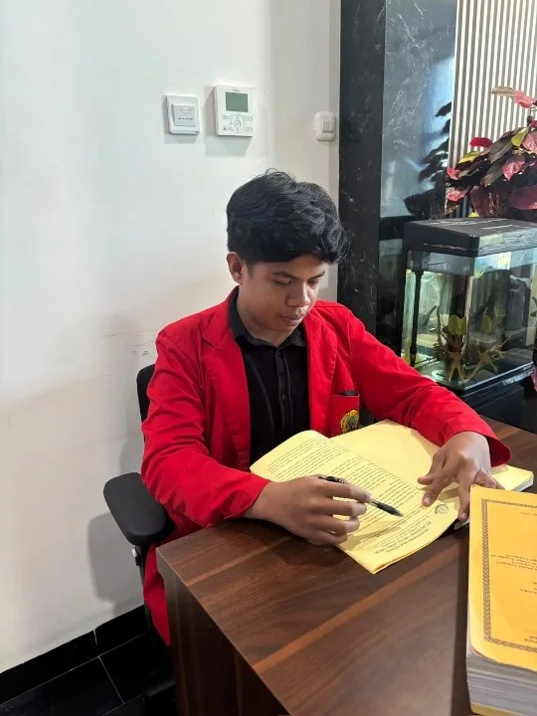
This experience is currently being pursued by Ahmad Saleh, a student at the Faculty of Law, Universitas 17 Agustus 1945 (Untag) Surabaya, during his internship at the East Java High Prosecutor's Office.
During the internship, Ahmad was assigned to the Civil and State Administrative Law division. This division is a critical component of the prosecutor's office, distinct from its criminal prosecution duties.
In the civil and state administrative sector, prosecutors serve as State Attorneys, representing the interests of the state or government in both litigation and out-of-court legal settlements.
This opportunity has allowed Ahmad to observe firsthand how cases are handled within the prosecutor's office.
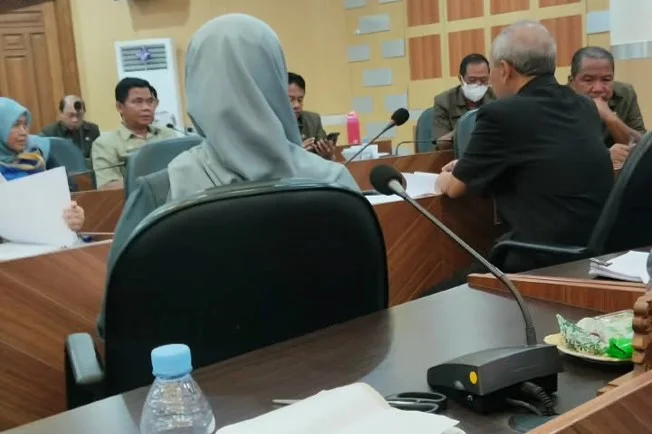
Throughout his internship, he has been mentored by a State Attorney. One of his key activities involved assisting the State Attorney during court proceedings at the Surabaya District Court.
Through this experience, Ahmad learned how parties present legal arguments, how judges preside over hearings, and how State Attorneys fulfill their duties in representing the state's interests.
Learning to Draft Court Documents
Beyond observing court proceedings, Ahmad has also had the opportunity to assist in drafting various legal documents required for litigation.
These documents include Special Powers of Attorney, lawsuits, responses to lawsuits, replications, and duplications.
According to Ahmad, each document requires a different level of precision. Drafting a power of attorney, for instance, requires careful definition of the scope of authority granted to the recipient.
Meanwhile, drafting a lawsuit requires the ability to systematically outline factual and legal foundations, including the precise formulation of the posita and petitum.
Drafting replications and duplications provided a unique experience, as students must understand the opposing party's arguments before preparing a response based on relevant legal construction.
This process has helped Ahmad realize that effective legal argumentation requires not only theoretical mastery but also meticulous attention to facts and the context of the case.
Legal Opinion Analysis
In addition to court documents, Ahmad was tasked with analyzing legal opinions or formal legal advice.
In this process, he learned the steps of identifying facts, determining legal issues, researching relevant regulations, and formulating conclusions that are legally sound.
He noted that this experience provided a concrete picture of the demands of the legal profession.
“Through this internship, I have come to understand that a law graduate is not only expected to know the rules but must also be able to apply that knowledge professionally and responsibly when facing real legal problems,” said Ahmad Saleh.
The internship program serves as a space for Ahmad to connect the material he has studied in university with actual legal practice.
Courses such as civil procedural law, civil law, and administrative law become much clearer when viewed through a practical lens during case handling.
Beyond the academic aspect, Ahmad noted that he learned about professional conduct while at the East Java High Prosecutor's Office. He observed that precision, discipline, and a sense of responsibility are essential parts of working in the legal field.
Preparing for the Workforce
The internship experience at the East Java High Prosecutor's Office is expected to serve as a valuable asset for Ahmad after he completes his studies at the Untag Surabaya Faculty of Law.
He believes that law students should take advantage of internship programs to broaden their horizons and gain direct exposure to work environments related to the legal profession.
Such programs act as a bridge between higher education and the needs of the workforce. Students gain more than just theoretical understanding; they have the opportunity to hone their analytical skills, document drafting, professional communication, and problem-solving based on applicable laws.
For the host institution, involving students contributes to the development of future law graduates who possess a more comprehensive understanding of the legal enforcement landscape.
Through this hands-on experience, students are expected to not only understand the law as a collection of norms and rules but also to know how it is applied professionally to address various issues in society.








Comments 0
Write a Comment Share your response