

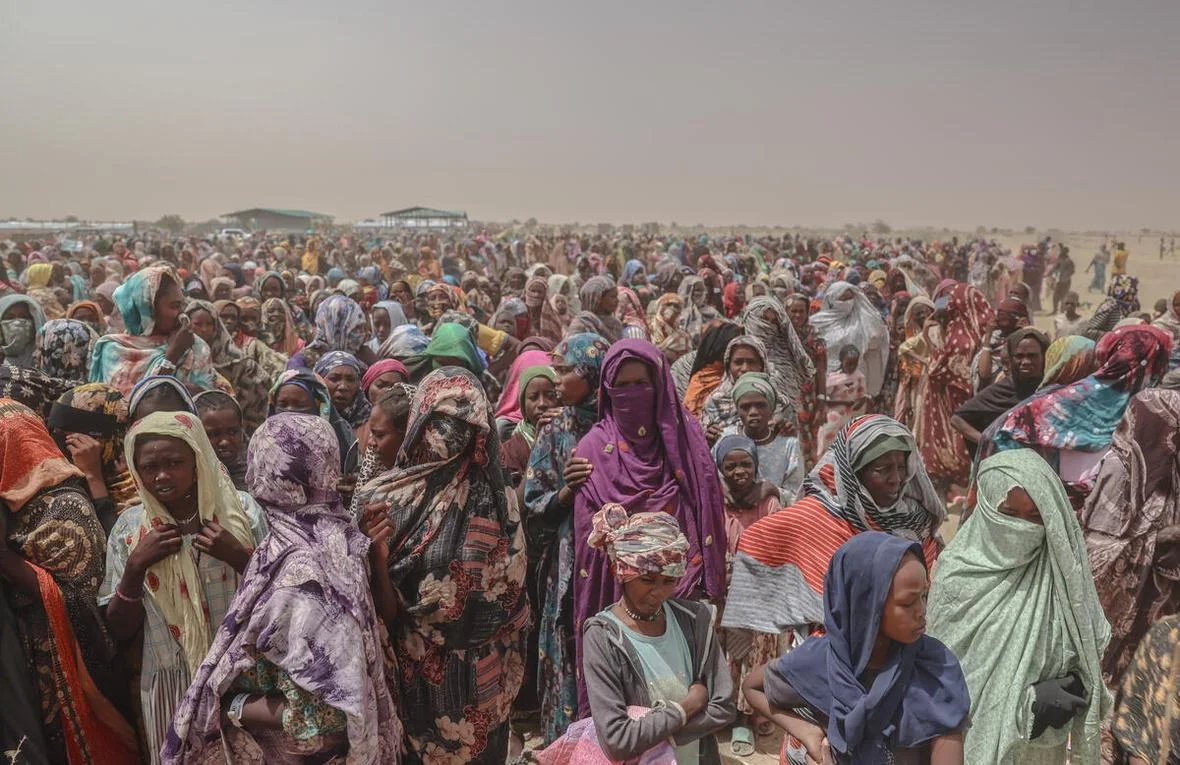
KHARTOUM, JurnalPost.com — If you feel like you rarely hear about the war in Sudan, you are not alone. This conflict is often referred to as a "forgotten crisis," despite being one of the largest in the world today.
Amidst global attention on various international conflicts, millions of Sudanese citizens are facing starvation, displacement, and uncertainty regarding their nation's future.
Initially Just a Power Struggle
The story begins with two men who were once allies. War broke out in April 2023 when General Abdel Fattah al-Burhan and Lieutenant General Mohamed Hamdan Dagalo turned against each other.
Burhan leads the regular Sudanese army, or the Sudanese Armed Forces (SAF). Dagalo, better known as Hemedti, leads a paramilitary group called the Rapid Support Forces (RSF).
The two were once united. Together, they carried out a coup in 2021 that toppled the transitional civilian government.
The rift in their relationship was triggered by issues that sounded technical but were fundamentally about power. Plans to integrate the RSF into the national army sparked a dispute that escalated into armed conflict in April 2023.
The simple question was: if two forces become one, who will be the leader? Neither side was willing to yield.
The origins of the RSF are dark. The RSF grew out of the Janjaweed militia, which was accused of various atrocities by human rights groups during the Darfur conflict in 2003. So, this is not a force that suddenly appeared from nothing.
Two Camps, Many Foreign Players
This war is not just an internal affair. The United Arab Emirates has been accused of supporting the RSF militarily, though it has consistently denied involvement.
Egypt and Saudi Arabia also have interests in the dynamics of the Sudanese conflict, with varying forms of involvement and diplomatic positions.
There is also the issue of gold resources and trade routes in Darfur, which have made the region a point of contention. Both sides have accused each other of foreign support, while such allegations are denied by the parties involved.
It should be noted that this conflict is not merely "Arab versus non-Arab," as it is often simplified.
According to several analyses, both Burhan and Hemedti claim to be fighting for all the people of Sudan. However, ethnic and religious sentiments are also being used in the dynamics of the power struggle.
The Worst Point: El Fasher
One of the most shocking developments for the world occurred in the city of El Fasher, Darfur.
In late October 2025, the RSF seized the city, which had previously been the last stronghold of the Sudanese army in Darfur. Reports of mass killings have since emerged.
A United Nations report in February 2026 concluded that the RSF's actions in the region show signs of genocide.
The RSF itself has been accused multiple times of committing war crimes. These allegations have been denied by the armed group.
The Human Impact
The numbers are hard to fathom. Based on UN data referenced in this article, approximately 9.3 million people are internally displaced, and 4.4 million others have fled to other countries.
As of 2026, about 33.7 million people are in need of humanitarian assistance. A total of 41 percent of the population is experiencing acute food insecurity, with conditions of hunger or famine confirmed in several areas.
The estimated death toll is also staggering. More than 150,000 people are estimated to have died as a result of the conflict. The exact figure is difficult to verify because access to many areas remains limited.
Humanitarian aid is also sluggish. As of April 2026, only about 20 percent of the funding required for the humanitarian aid plan had been met.
Behind these figures are families who have lost their homes, children who have lost the opportunity to attend school, and communities struggling to obtain food and healthcare services.
Latest Situation: Drones and Deadlock
This war is becoming increasingly modern while simultaneously becoming more lethal for civilians.
The UN report cited by the author states that drone strikes accounted for nearly three-quarters of recorded civilian deaths due to the conflict throughout 2026, with approximately 1,630 civilians reported dead.
In November 2026, a drone strike in Khartoum reportedly damaged civilian homes and a UN building.
Fighting between the Sudanese army and the RSF is also still ongoing in West Kordofan, one of the regions at the center of the conflict.
On the other hand, the war is beginning to spill over. The UN has warned that the impact of the conflict has reached the Central African Republic. Ethiopia and Sudan have also reportedly closed each other's consulates following allegations of interference in the conflict.
Regarding peace, the news is not encouraging. There has been no confirmed humanitarian ceasefire based on reports referenced by the author as of November 2026.
Sudanese civilian groups did meet in Switzerland. The seventh round of the Nyon process took place from 25–28 November 2026 to discuss efforts to end the war and return to civilian rule.
However, the meeting remains part of an effort to build consensus among civilian groups, while the war continues.
So, What is the Bottom Line?
In short, the Sudanese conflict is a story of two armed men who refuse to share power, compounded by outside nations with their own interests, and millions of ordinary citizens who must pay the price.
There are no heroic figures here. There is only hunger, displacement, and a war that is slowly widening.
The Sudanese conflict also demonstrates how political ambition and the struggle for power can destroy lives when humanitarian interests are no longer a priority.
Sudan may not always make global headlines. However, the suffering of its people is no less important than humanitarian crises in other countries.
One note: figures and the situation on the ground change rapidly. Data from one agency may also differ from another. Therefore, the numbers in this essay should be understood as a broad overview, not final figures.
References
All references were accessed by the author on 29 November 2026.
Background and Origins of the Conflict
What Is Happening in Sudan? The Brutal Civil War Explained.
Council on Foreign Relations. Sudan's Humanitarian Crisis, Explained.
Middle East Eye. Sudan War: Who's Who.
AllAfrica. Sudan: Why Has Sudan Descended Into Mass Slaughter?
RTÉ News. Sudan War, 31 October 2025.
Nation Africa. Explainer: Why Is Sudan Still at War a Year On.
Role of Foreign Parties
Middle East Eye. Why Is the UAE Involved in Sudan's Bloody Civil War?
Humanitarian Impact
OCHA/ReliefWeb. Sudan Humanitarian Needs and Response Plan 2026, April 2026.
FAO. Five Things You Should Know About Sudan's Food Crisis.
UNRIC. The UN and the Crisis in Sudan, January–June 2026.
UN News. Sudan Hunger Crisis Deepens as UN Warns Millions Face Acute Food Shortages, May 2026.
Latest Developments
Reuters/TimesLIVE. Drones Account for Nearly Three-Quarters of Sudan War Deaths This Year: UN, 17 November 2026.
Ahram Online. UN Building Damaged in Sudan Capital Drone Strikes, 22 November 2026.
Sudan Tribune. Sudan Army, Allies Advance Against RSF in West Kordofan, Down Third Drone, 8 November 2026.
UN News/AllAfrica. As Sudan War Spills Into Central African Republic, UN Warns Against Early Peacekeeper Exit, 20 October 2026.
Reuters/TimesLIVE. Ethiopia and Sudan Close Each Other's Consulates After Allegations of Meddling in Civil War, 5 November 2026.
Rio Times. Sudan Army Claims New Gains in Kordofan.
Rio Times. Swiss Meeting on Sudan War Opens Wednesday.
Essay written by Najwa Aliyah Sa’adah, 29 November 2026.






Comments 0
Write a Comment Share your response