

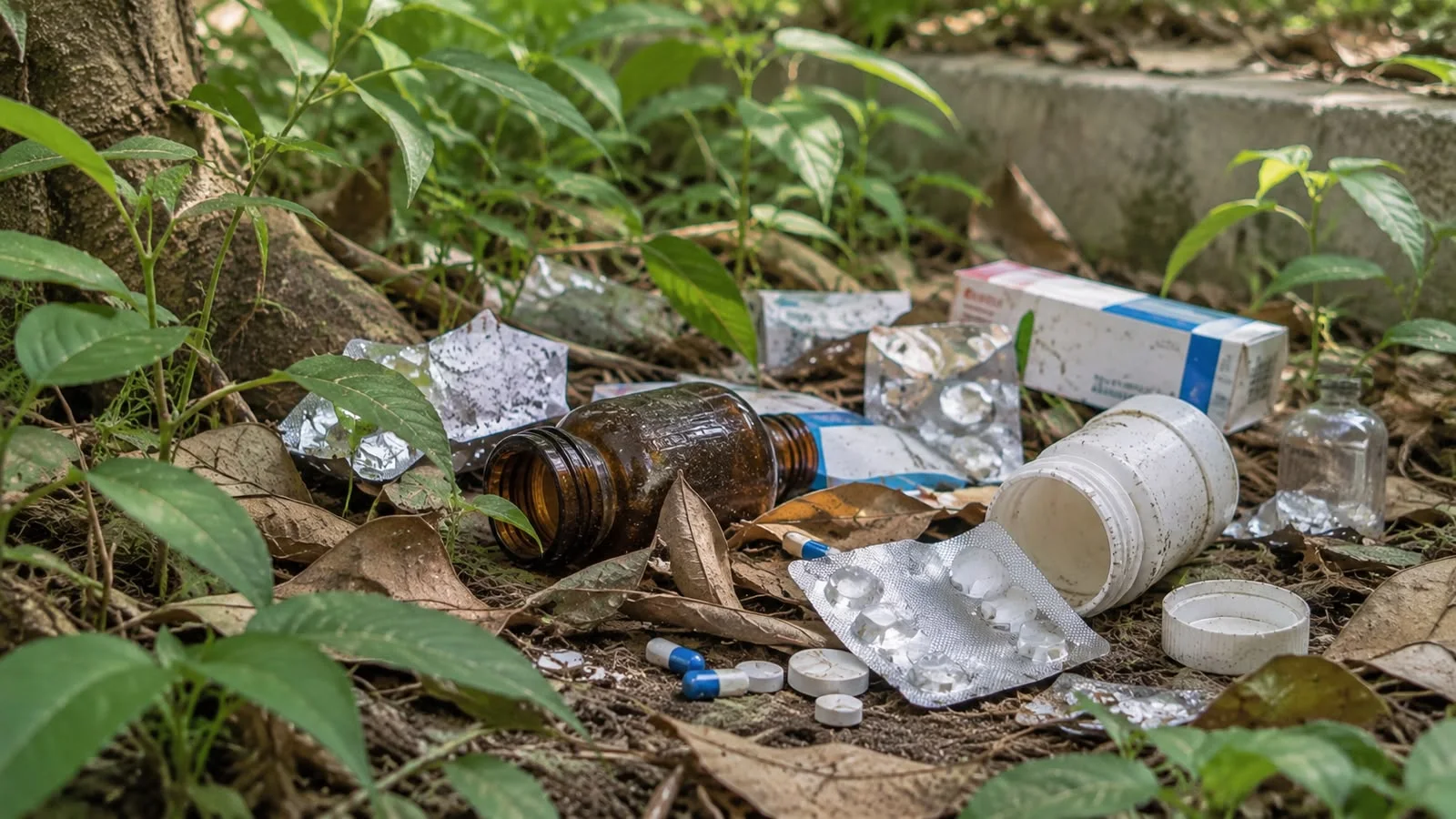
JurnalPost.com - Medicine is often an essential part of household supplies. Pain relievers, fever reducers, and leftover prescription drugs are kept on hand for when family members fall ill. However, one aspect is frequently overlooked: what should be done when these medications are no longer needed, have become damaged, or have passed their expiration date? For some, throwing them away seems as simple as disposing of other household waste. In reality, medication that is no longer fit for use presents unique handling challenges.
This issue is evident in the habits of residents in Pasir Gaok Village, Rancabungur District, Bogor Regency. Based on initial observations and interviews with 10 residents, 8 individuals admitted to still keeping leftover, damaged, or expired medicine at home. Ignorance and uncertainty regarding proper disposal methods are common reasons for this. This condition shows that the issue of household medicine does not end with the habit of storing it, but also concerns public understanding of what to do when the medicine can no longer be used.
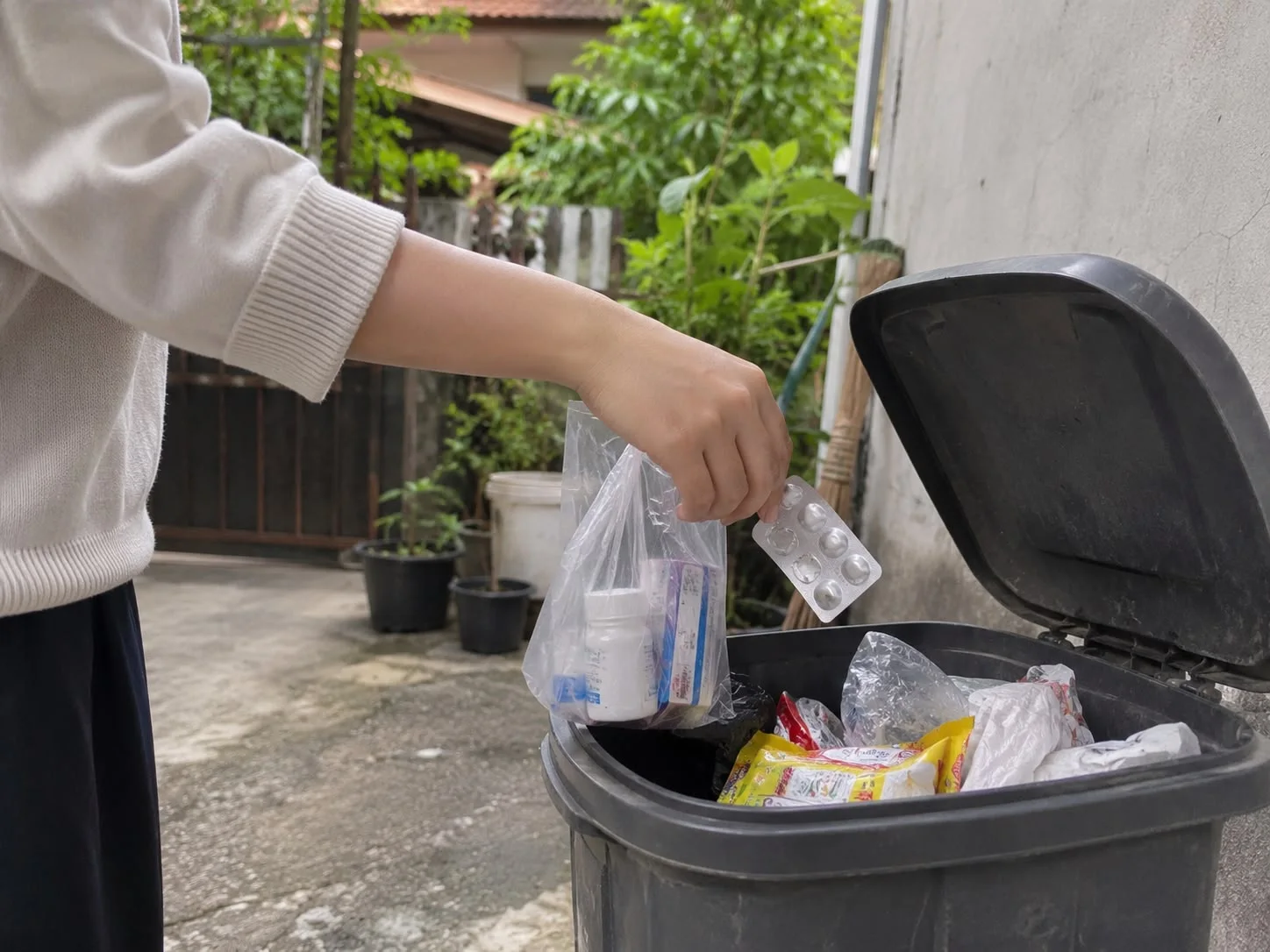
When medicine is finally discarded, the observed habits reveal a concerning picture. All interviewed residents admitted to throwing solid medications, such as tablets and capsules, directly into household trash. Meanwhile, 7 out of 10 residents dispose of liquid medicine through sinks, drains, or soil in their yards. Beyond the medication itself, 9 out of 10 residents also leave bottles and blister packs intact when discarding them. Notably, all respondents claimed they had never received specific education on proper medicine disposal from healthcare workers.
This situation is not an isolated issue. Research by Insani et al. (2020) involving 497 respondents in Bandung showed that 82.1% of respondents dispose of expired medicine in household trash, while 79.5% have never received information on proper disposal methods. These findings indicate a similar pattern of issues across different household environments. Medicine that is no longer used is still often treated like ordinary waste, while information regarding its handling has not fully reached the public.
In fact, medicine is not ordinary waste. Expired or damaged medication can no longer guarantee its quality or safety for use. If disposed of carelessly, its active ingredients have the potential to enter the environment through soil or water. Drug residues, especially antibiotics, are a concern because their presence in the environment can contribute to selective pressure that drives the development of antimicrobial resistance. This condition becomes a broader health issue because resistance can make infections increasingly difficult to treat with available antibiotics.
Another issue arises when medicine is disposed of with its original packaging intact. Bottles, blister packs, and packaging that still contain product identification can potentially be misused by irresponsible parties. Thus, the habit of disposing of medicine without considering the condition of its contents and packaging is not merely a matter of household cleanliness. Public safety and environmental sustainability are also at stake.
In reality, the handling of medicine that is no longer fit for use has been a concern in the pharmaceutical field. The Ministry of Health of the Republic of Indonesia, through its 2020 guidelines on the management of damaged and expired medicine, has provided instructions for handling them in both healthcare facilities and households. The principle of DAGUSIBU (Obtain, Use, Store, and Dispose) also reminds us that responsibility for medicine does not end when it is consumed. However, the existence of these guidelines and information does not necessarily align with the understanding and habits applied by the public in their daily lives.
The portrait in Pasir Gaok provides an initial glimpse into the gap between pharmaceutical information and practices occurring at the household level. Although interviews with 10 residents cannot represent the entire village population, the findings indicate an issue that deserves attention. The habit of storing medicine that is no longer fit for use, disposing of the contents directly, and leaving packaging intact shows that post-use medicine management has not yet received adequate attention.
Ultimately, medicine that no longer provides benefits to its users still requires responsible handling. What is happening in Pasir Gaok serves as a reminder that the issue of medicine lies not only in how the public obtains, uses, and stores it, but also in how they dispose of it. This seemingly simple habit harbors broader health and environmental issues, making it important to continue monitoring and understanding it through more in-depth studies.
References:
Insani, W. N., Qonita, N. A., Jannah, S. S., Nuraliyah, N. M., Supadmi, W., Gatera, V. A., Alfian, S. D., & Abdulah, R. (2020). Improper disposal practice of unused and expired pharmaceutical products in Indonesian households. Heliyon, 6(7), e04551. https://doi.org/10.1016/j.heliyon.2020.e04551
Ministry of Health of the Republic of Indonesia. (2020). Guidelines for the management of damaged and expired medicine in healthcare facilities and households. Ministry of Health of the Republic of Indonesia.






Comments 0
Write a Comment Share your response