


JurnalPost.com - Recently, our social media feeds, from short videos on TikTok to viral threads on X, have frequently featured intriguing phenomena regarding university life. There are countless tutorials sharing tricks on how to craft magical prompts (prompt) so that college essays appear to be written by humans, alongside satirical jokes about students who suddenly develop amnesia when a lecturer tests them on the content of their own assignments in class. It is from this cyber-dynamic that the popular term "AI-giarism" (AI-based plagiarism) was born. It is a stinging critique of a generation that achieves sky-high GPAs while completely outsourcing their thinking process to machines.
Such digital jokes are slowly shifting into a concerning academic reality. The presence of generative artificial intelligence (generative artificial intelligence) like ChatGPT, Gemini, and Copilot has undeniably disrupted the university landscape instantly. Assignments that ideally require days of literature research and deep reflection can now be completed in seconds. For students racing against deadlines, this technology is hailed as a savior of efficiency. However, if we dissect this deeply through the lens of digital public health and educational ethics, this instant convenience actually triggers latent dangers, including the decay of brain neuroplasticity, the paralysis of critical thinking skills, and a conscious disregard for the principles of scientific honesty.
This cognitive identity crisis is not merely a subjective fear or suspicion held by lecturers in the classroom. According to a national-scale report in the Chegg Global Student Survey, the adoption rate of generative artificial intelligence among Indonesian students has surprisingly reached 95 percent. This data positions our students as the most active users of AI for study purposes in the world. Unfortunately, this surge in technology adoption is not proportional to the maturity of our digital literacy. Referring to the release of the Indonesian Digital Literacy Index report from the Ministry of Communication and Digital (Komdigi), the scores for the pillars of digital safety (digital safety) and digital ethics (digital ethics) in our society are still at a level that requires serious attention. These macro figures confirm that the shortcut habit of copying raw text from AI has shifted the essence of independent learning.
From the perspective of scientific responsibility and academic legal ethics, the act of blindly accepting robot-produced text without multi-layered verification is a fatal form of negligence. Technology developers like OpenAI have repeatedly warned of systemic weaknesses in the form of "AI hallucinations" (AI hallucinations). Machines often produce fake statistical figures, insert erroneous narratives, and even fabricate journal references with highly convincing scientific sentence structures. When students use these imaginary references without cross-checking them against real data from credible institutions, they not only tarnish scientific dignity but also violate the principles of transparency and public information accountability.
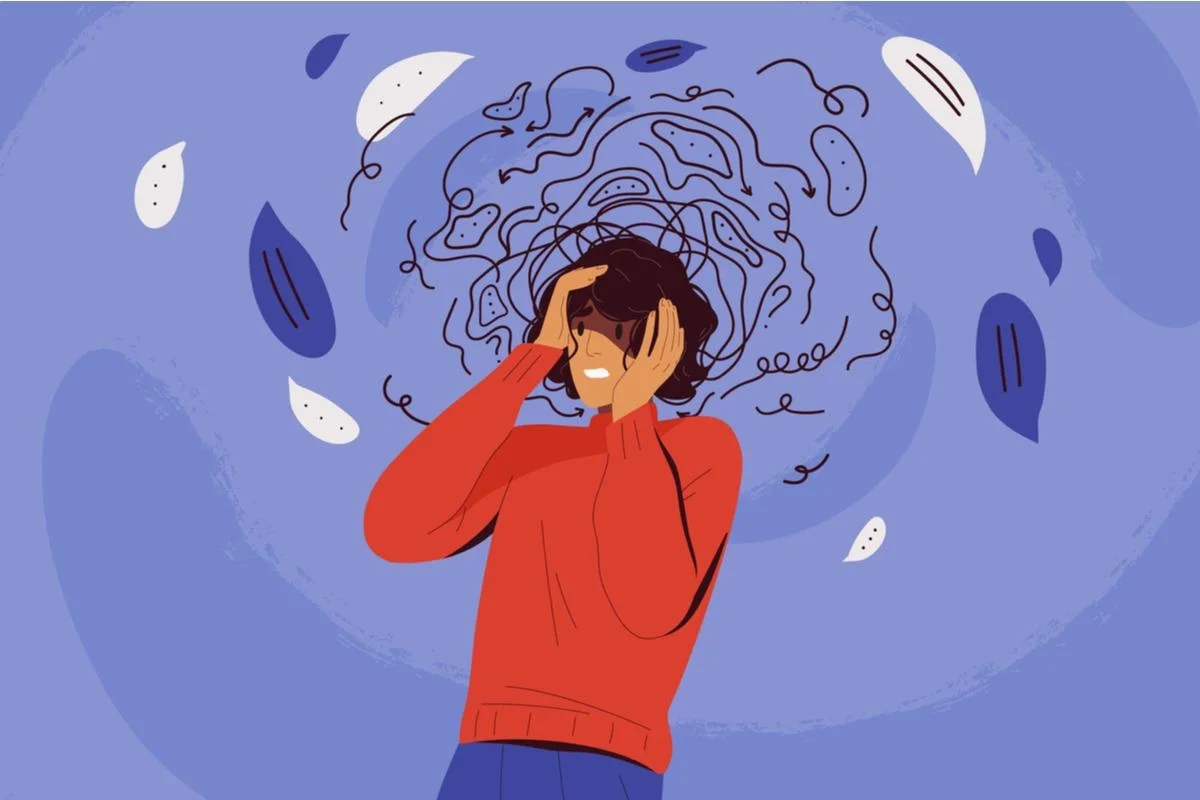
If viewed from the realm of public health, chronic dependence on these algorithms correlates directly with a decline in the daily mental health of students. A brain that is constantly pampered by instant answers will experience a reduction in short-term memory (attention span) and accelerate symptoms of digital dementia (digital dementia). Consequently, students become highly susceptible to academic anxiety (academic anxiety) and acute emotional frustration when faced with real-world field problems that cannot be solved with a single click of a device. From a sociolinguistic perspective, this pattern also kills an individual's authentic character and writing style. Linguistic sensitivity in crafting Indonesian sentences that are vibrant, rhetorical, and rich in nuance eventually becomes dull, replaced by rows of mechanical, uniform, and cold text.
Responding to this behavioral crisis, Universitas Airlangga, through its official guidelines, firmly reminds us that the university's policy positions AI only as a co-pilot, not an autopilot that takes over human intellectual consciousness. The academic constitution legally places the moral responsibility for the authenticity and validity of a work entirely in the hands of the individual author. Using machine-generated writing secretly without transparent declaration is a form of academic fraud (academic fraud) that clearly violates intellectual property rights.
In closing, we certainly do not need to be antipathetic or totally reject the flow of modern technological development. Generative artificial intelligence is a present reality that we cannot avoid. However, students must possess the moral integrity to be honest and fully responsible for the authenticity of their own thinking. If we fail to act wisely and continue to choose the instant path, our education system in the future will only produce highly degreed graduates whose cognitive capacity and mental health are no smarter than a line of computer algorithm code.
“The academic world does not need graduates who are merely skilled at copying machine instructions, but rather young intellectuals who are capable of thinking clearly with common sense, sound mental health, and adherence to the laws of scientific integrity.”








Comments 0
Write a Comment Share your response