

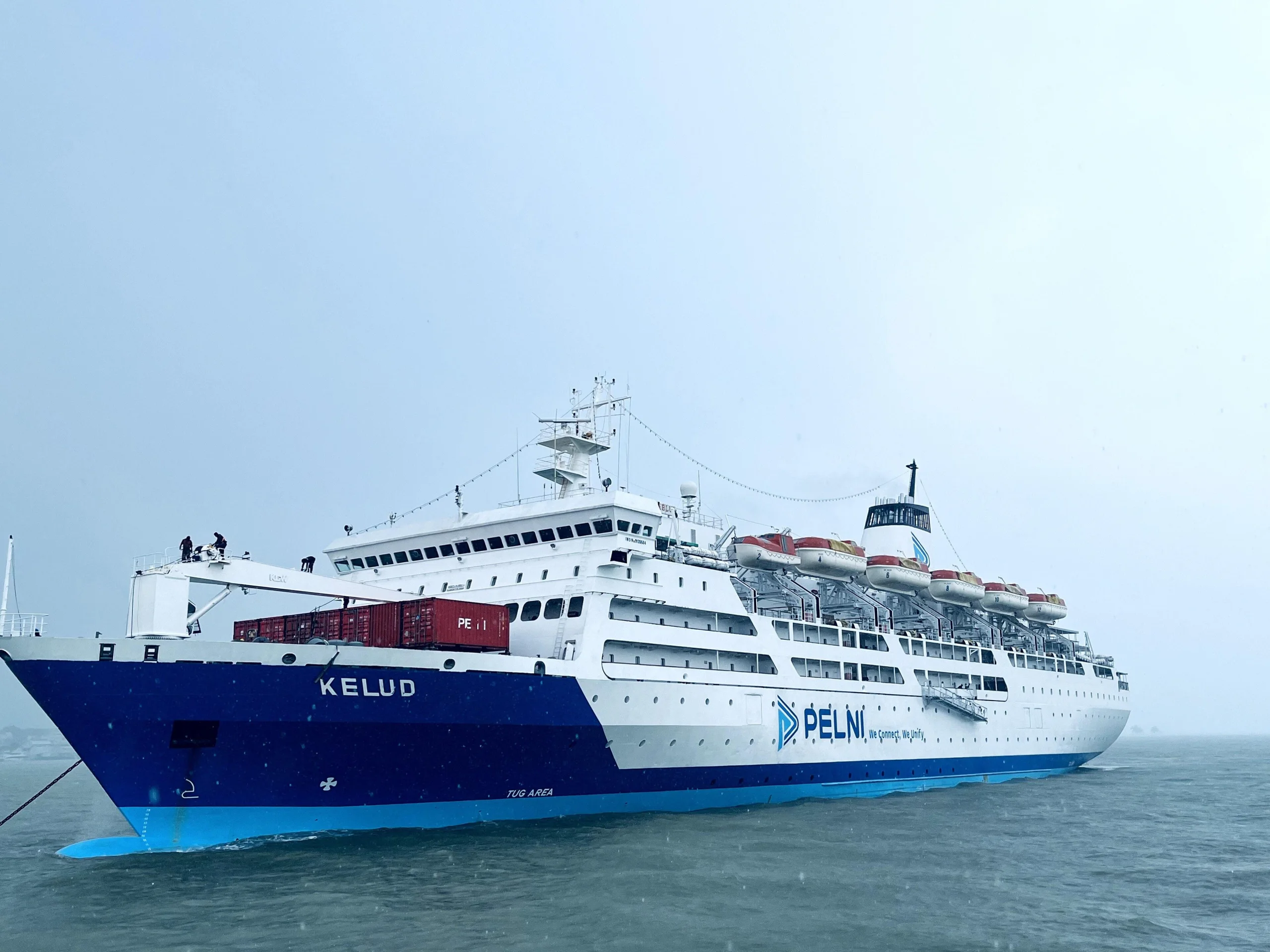
JAKARTA, JurnalPost.com — Service quality is a critical factor in building public trust in service-oriented companies. Amidst rising customer expectations for fast, comfortable, and accessible services, companies are compelled to innovate continuously to maintain their competitive edge.
This is also a key focus for PT Pelayaran Nasional Indonesia (PELNI). The state-owned enterprise, established in 1952, continues to drive the strengthening of excellent service and hospitality through service innovation, digital transformation, and the enhancement of the passenger travel experience.
This commitment is reflected in several awards received by PELNI throughout 2026. These include the Indonesian Consumer Protection Appreciation (ICPA) 2026 from the National Consumer Protection Agency (BPKN), as well as recognition in the Service Innovation and Digital Transformation of Maritime Transport category at the Indonesia Consumer Care 100 Brands Expo & Award 2026 in Jakarta.
These achievements serve as a reminder that excellent service is no longer defined solely by the friendliness of staff. In the maritime transport industry, service quality is the result of integrated systems, facilities, human resource competence, safety, and the company's ability to understand customer needs.
Excellent Service: More Than Just Serving
The concept of excellent service places the customer at the center of the entire service process. Service quality is determined not only by the final outcome but also by the customer's experience before using the service, during the journey, and after the service is completed.
In the context of maritime transport, this experience encompasses the ease of obtaining information, the ticket purchasing process, port services, ship facility comfort, and the handling of customer complaints.
As a company with a broad service scope, PELNI bears a significant responsibility to maintain consistent service quality. Based on the performance press release for the 2025 fiscal year, the company recorded that it served 5,153,846 passengers across Indonesia.
The large number of service users highlights the importance of implementing consistent service standards to support inter-island connectivity.
From an academic perspective, the study by Olawuyi, O. S., and Kleynhans, C. titled A Bibliometric Analysis of Service Quality in the Hospitality Industry (2014–2024) published in the journal Administrative Sciences discusses service quality in the hospitality industry.
One relevant approach to measuring service quality is SERVQUAL, which includes five dimensions: tangibles , reliability , responsiveness , assurance , and empathy .
For a shipping company, these five dimensions can be translated into providing well-maintained ship facilities, accurate travel information, responsive service, safety guarantees, and attention to the diverse needs of passengers.
Hospitality: Providing a Human Touch
If excellent service emphasizes standards and quality, hospitality adds a human dimension to the interaction between the company and the customer.
This value is reflected in friendliness, politeness, empathy, care, and a willingness to help without compromising professionalism.
One application of this was seen during the National Customer Day 2026 commemorations. On 2 September 2026, members of the PELNI board of directors greeted and interacted directly with passengers on the KM Tidar during its Baubau–Maumere route.
The activity, which carried the spirit of “Serving with Heart,” was part of the company's efforts to strengthen its closeness with service users.
Direct interaction is significant in building service quality. Customers do not just need adequate facilities; they also want to be heard, valued, and understood.
When a company opens communication channels, customer experience can serve as input to improve service processes continuously.
However, the application of hospitality is not limited to staff who interact directly with passengers. A work culture of mutual respect, effective communication, and coordination between departments also forms the foundation for high-quality external service.
Thus, friendliness toward customers must be supported by a professional and collaborative work environment.
Digital Transformation as a Support for Customer Experience
Technological developments have changed how people access various services. Customers now expect ease in obtaining information, conducting transactions, and providing feedback quickly and practically.
Companies that fail to adapt to these changes risk losing their competitive edge. In the maritime transport industry, digital transformation is a strategic step to meet customer needs.
PELNI continues to develop digital services, one of which is the PELNI Mobile application. The company has also introduced a rating and review feature that allows passengers to provide feedback after using the service.
This feedback serves as an evaluation instrument to identify aspects of service that need to be maintained or improved.
Operationally, PELNI is also developing various innovations to support passenger comfort. Throughout 2026, the company expanded the use of Smartlock features on several ships, strengthened food safety standards through Hazard Analysis and Critical Control Point (HACCP) certification, and introduced SeaWifi services to support connectivity needs during travel.
These innovations demonstrate that digital transformation and facility improvements are essential parts of the strategy to enhance service quality.
Nevertheless, technology still requires the support of competent human resources. Modern systems will provide optimal benefits if supported by staff who are communicative, professional, and capable of assisting customers when they face difficulties.
Awards as Evaluation, Not the Final Goal
In addition to receiving appreciation in consumer protection and digital transformation, PELNI has also been recognized at The Best Contact Center Indonesia 2026.
On 24 September 2026, the company received a Gold Award in the Customer Experience category with a score of 83.21 and in Employee Engagement with a score of 87.50.
This achievement highlights the importance of the link between customer experience and employee engagement. Quality service cannot be separated from the role of human resources who possess competence, motivation, and an understanding of the company's service standards.
However, awards should be viewed as a catalyst for improvement, not as the final goal.
The main challenge for service companies is maintaining consistent service quality in every interaction, including when facing surges in passenger numbers, changing customer needs, and technological developments.
Periodic evaluations, strengthening employee competence, utilizing customer data, and process improvements are essential steps to ensure that every innovation truly provides benefits to service users.
Building Trust through Sustainable Service
Excellent service is a continuously evolving process. Companies need to adjust service standards to public needs, strengthen the culture of hospitality, and ensure that innovations are felt tangibly by customers.
For PELNI, improving service quality has strategic significance because maritime transport not only connects regions but also supports public mobility and national economic activity.
Ultimately, excellent service and hospitality are not just company slogans. Both are commitments that must be realized through reliable service, adequate facilities, open communication, and a humanistic attitude in every interaction.
Customer trust is not built solely through the awards a company receives, but through the positive experiences that are felt consistently.
When innovation goes hand-in-hand with friendliness and professionalism, maritime transport service can become more than just a journey. It can become a safe, comfortable, and meaningful experience for the public.









Comments 0
Write a Comment Share your response