

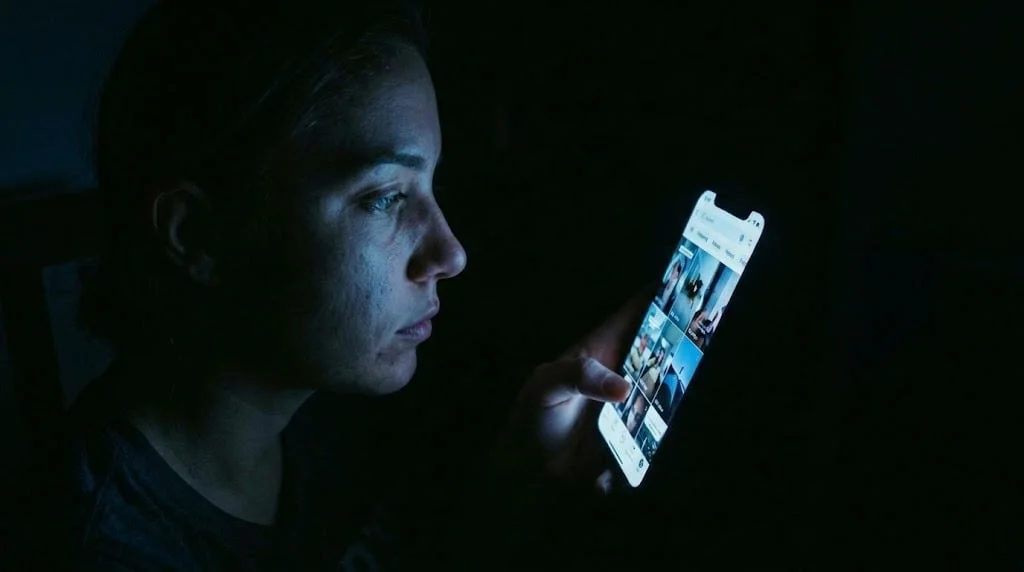
JurnalPost.com - With the advancement of technology, the way we obtain information has shifted. While people once relied on newspapers or television to stay informed, we can now access any information through our mobile phones. Social media platforms like Instagram, TikTok, and X allow users to receive news in seconds. However, this convenience has introduced a new, increasingly common bad habit: doomscrolling. This term refers to the habit of continuously scrolling through screens to consume news or short-form content. Although it can accelerate information dissemination, doomscrolling can lead to various negative impacts, such as reduced sleep quality, strained social relationships, and impaired mental health.
Because of this phenomenon, more people are developing the habit of using their phones before bed. Often, those who engage in this are unaware they have formed such a habit. Initially, someone might just want a bit of entertainment before sleep, but because the content is short-form, they keep scrolling. Social media platforms can display various content based on user interests, often called the 'For You Page,' which makes it difficult to stop. When one video ends, the next one is already displayed, tailored to the user's interests. What was designed to simplify life by providing recommendations without the need for searching ends up causing people to spend more time than planned. Without realizing it, a habit intended for entertainment turns into an uncontrollable addiction to short-form content. Because it is hard to control, doomscrolling can cause people to lose track of time, leading to late-night viewing and reduced sleep. The constant stream of changing content keeps the brain stimulated, making it difficult to rest. Without sufficient rest, one may experience fatigue, decreased concentration, and other mental health issues.
Poor sleep quality leads to other negative impacts, one of which is decreased productivity, particularly for students and workers. Time that should be used to complete tasks is wasted on scrolling through social media. Because time is squandered, tasks are delayed, which can result in suboptimal outcomes. Furthermore, doomscrolling can affect a person's discipline and sense of responsibility. Discipline is built through one's ability to manage time effectively. If time cannot be managed and is instead spent on social media, it becomes difficult to build the discipline and responsibility needed to complete one's duties.
Additionally, doomscrolling has the potential to affect one's ability to maintain concentration, often known as a short attention span. Short-form content that constantly changes provides the brain with rapid, brief stimulation. As a result, a person may find it difficult to perform tasks that require sustained attention, such as reading books or working on assignments. For example, a student accustomed to consuming content lasting only 15 to 30 seconds will find it difficult to focus when they need to read articles for schoolwork, as it requires much more time to absorb information. If this continues, one's ability to maintain focus will decline.
Doomscrolling does not only impact the individual but can also affect one's social relationships. Addiction to social media can reduce opportunities to interact with those around us. Social media was originally developed to connect us with those far away, yet we often forget to maintain relationships with those nearby. When gathering with friends or family, many choose to keep scrolling through their screens. Excessive social media use can cause anxiety when communicating with others. This happens because scrolling social media tends to involve one-way communication, where a person only receives information without having to provide an immediate response. In contrast, interacting with others requires two-way communication; besides listening and processing information, we must also respond. If someone constantly receives information passively, they may struggle when required to interact with others.
Ultimately, doomscrolling is a major challenge arising from technological advancement. Although social media makes it easier to obtain information, excessive use brings various negative impacts, ranging from decreased sleep quality to damaged social relationships. Therefore, society needs to realize the importance of using social media more wisely and maintaining a balance between digital life and the real world. There are several steps we can take to avoid social media scrolling addiction. One is to avoid phone screens before bed to keep our body's biological clock in check, ensuring more optimal sleep quality. Additionally, doomscrolling can be replaced with more productive activities such as reading or exercising. By building healthy digital habits and a healthy relationship with technology, we can enjoy the benefits of technological progress without sacrificing our health and quality of life.








Comments 0
Write a Comment Share your response