

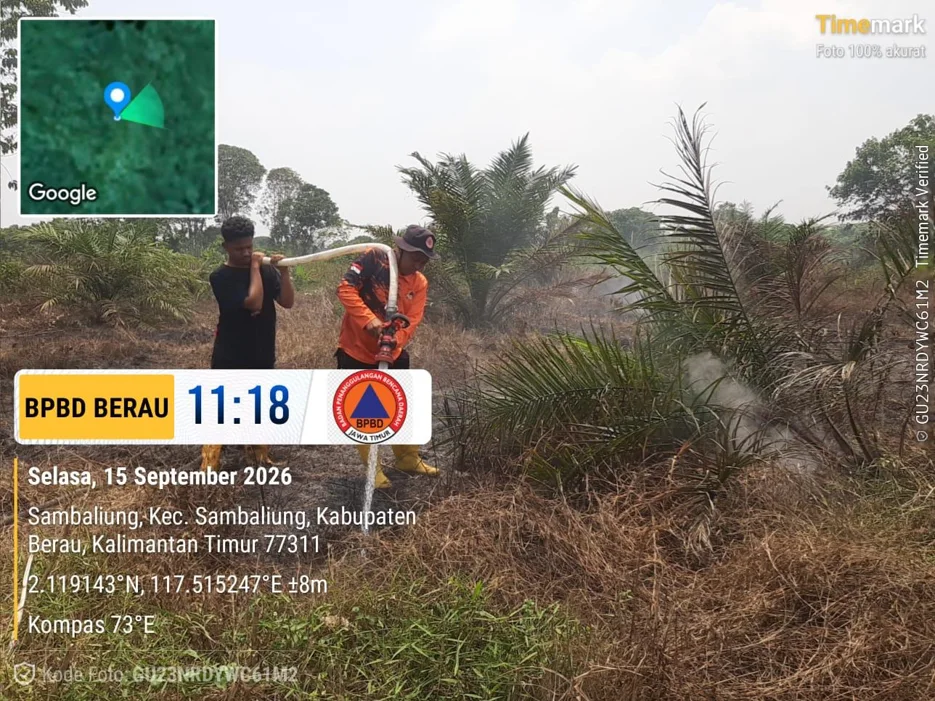
BERAU, JurnalPost.com – Forest and land fires are a recurring disaster in Berau Regency, East Kalimantan. The extent of the burned area is influenced by various factors, including the duration of the dry season and the El Niño phenomenon.
Various efforts have been made by the government, ranging from preventive measures such as socialization and education on forest and land fire prevention, training on No-Burn Land Clearing (PLTB), to direct field response.
The scale of the forest fire issue demonstrates that these fires are not merely an environmental problem but also have significant impacts on economic, social, and health aspects, as well as various facets of development.
The front line of fire response in the field includes the Regional Disaster Management Agency (BPBD), Manggala Agni, the Forest Management Unit (KPH), and company firefighting teams. However, there is a group of community members whose role is crucial and must not be forgotten: the fire volunteer groups.
These groups include the Fire Care Community (MPA) and the Fire Care Farmer Group (KTPA), whose formation and guidance involve various government agencies and plantation companies.
The existence of the MPA and KTPA is a tangible manifestation of community concern for the environment and the safety of their residential areas. They are often the first to detect hotspots, provide initial information, conduct early suppression, and help control fires before they spread and cause greater damage.
So far, the success of forest fire management has often been measured by how quickly fires are extinguished, how much land is saved, and how many personnel are deployed.
Meanwhile, questions regarding the safety of volunteers while on duty, the adequacy of their protection, and the health risks they face have not yet become a primary focus in forest fire response planning.
Fundamental Issues for Fire Volunteer Groups
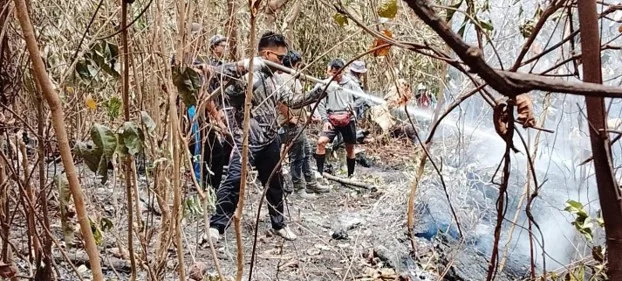
The disparity in equipment between BPBD, Manggala Agni, KPH, and company personnel compared to MPA and KTPA volunteers remains an issue that requires attention.
MPA and KTPA members often head to the field wearing only long-sleeved shirts, thin rubber boots, makeshift footwear, and cloth or surgical masks. Frequently, volunteers perform their duties without any respiratory protection at all.
This condition highlights the importance of making occupational health and safety (OHS3) an inseparable part of forest fire response.
At least four fundamental aspects must be met to minimize risks to fire volunteers: Personal Protective Equipment (PPE), competency, Standard Operating Procedures (SOP), and budget.
Safety and Health Risks for Forest Fire Volunteers
The risks faced by fire volunteers while on duty can be grouped into four categories.
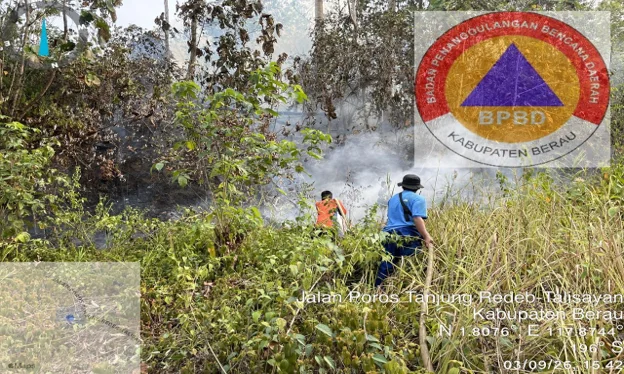
First, physical risks. Heat exposure, dehydration, fatigue, burns, being struck by falling branches or trees, and injuries due to uneven terrain are threats that can occur during the suppression process.
Second, health risks due to smoke exposure. Fire smoke contains a mixture of fine particles and various gases resulting from combustion. This exposure can cause eye irritation, coughing, shortness of breath, respiratory disorders, and exacerbate certain health conditions. Small particles can even penetrate deep into the respiratory tract.
Third, psychological risks. Uncontrolled fire situations, the pressure to extinguish fires quickly, concerns for the safety of residents, and prolonged fatigue can cause stress and mental strain for volunteers.
Fourth, operational risks. Lack of communication between personnel, unclear division of tasks, limited equipment, minimal information regarding site conditions, and the unavailability of evacuation routes can increase the likelihood of workplace accidents.
Four Important Aspects of Volunteer OHS3 Protection
1. Personal Protective Equipment (PPE)
One of the critical issues in implementing OHS3 is the availability and suitability of personal protective equipment.
In firefighting activities, volunteers need equipment that matches the characteristics of the hazards they face. Such equipment includes safety helmets, safety goggles, gloves, appropriate work clothing, safety boots, and respiratory protection tailored to the risk level and usage conditions.
Many MPA and KTPA members still use makeshift clothing during firefighting operations. This condition cannot be blamed solely on the volunteers but is also related to the limited provision of adequate PPE.
Village governments up to the regency government need to pay more attention to fulfilling these safety equipment needs.
2. Volunteer Competency
Volunteers need to receive training on fire hazard recognition, the use of firefighting equipment, field communication techniques, first aid, fatigue and dehydration management, and emergency evacuation procedures.
Improving competency is not only aimed at increasing the effectiveness of firefighting but also at building volunteer awareness regarding their limits and the risks they face.
3. Standard Operating Procedures (SOP)
SOPs for forest fire response should at least include:
Reporting mechanisms and initial assessment of fire conditions.
Appointment of an operation commander or person in charge.
Division of tasks and limits of volunteer authority.
Health checks and personnel equipment verification before duty.
Use of PPE according to hazard levels.
Communication systems and personnel position monitoring.
Availability of drinking water, rest areas, and first aid.
Establishment of evacuation routes and conditions requiring the cessation of activities.
Procedures for reporting accidents, injuries, and health issues after duty.
Not all fire conditions should be met with direct suppression by volunteers. When the situation is beyond the available capabilities, competencies, or equipment, the decision to retreat and request assistance is the appropriate safety measure.
4. Budget and Financing
All OHS3 protection efforts require adequate financial support. This classic problem can be overcome through shared perception and the commitment of all stakeholders.
Funding for MPA and KTPA needs to involve cross-sectoral agencies, ranging from the regency government through the BPBD and Health Office, the provincial government through the KPH and provincial BPBD, to the central government through the Ministry of Forestry, the Ministry of Home Affairs, and the National Disaster Management Agency (BNPB).
Financial support can also involve the private sector through cooperation mechanisms with village or regency governments in accordance with applicable regulations.
Recommendations for Strengthening Fire Volunteer OHS3 in Berau Regency
To make OHS3 an integral part of forest fire response in Berau Regency, seven strategic steps can be considered.
1. Establishing minimum safety standards for volunteers
Minimum volunteer protection standards need to be formulated, covering requirements for competency, PPE, health, communication, and safety procedures before, during, and after duty.
2. Conducting periodic OHS3 training
Training should not focus solely on firefighting techniques. Material needs to include hazard recognition, risk assessment, first aid, smoke exposure control, heat stress prevention, and emergency evacuation.
3. Providing PPE appropriate to the risks
Procurement of equipment must consider the type of activity and potential hazards. PPE must meet relevant standards, fit the user, be maintained, and be checked periodically.
4. Developing a volunteer health monitoring system
Health checks before and after assignments, recording exposure history, and medical follow-up for volunteers experiencing complaints need to be addressed.
5. Strengthening field coordination and command
Every operation must have a clear person in charge, a functioning communication system, task division, and a mechanism for stopping activities when conditions are deemed unsafe.
6. Preparing protection and insurance schemes for volunteers
Protection mechanisms in accordance with statutory provisions need to be studied, including the possibility of providing work accident insurance and health protection for eligible volunteers.
7. Conducting safety evaluations after every operation
Every forest fire response activity needs to end with an evaluation, including incident recording,near missevents, health complaints, equipment damage, and improvement recommendations.
Protecting Forests by Protecting Volunteers
Maintaining the sustainability of forests and land in Berau Regency is a long-term struggle. Collaboration between the local government, BPBD, forestry and environmental technical agencies, village governments, companies, health service facilities, and community groups is essential in handling forest fires.
However, the success of forest fire control is not measured only by how many hectares of land are saved from the flames, but also by the ability to ensure that every volunteer who goes to the front line can return home safe and healthy.
It is time for the OHS3 aspect to be placed as a primary foundation, not just a footnote, in every effort to empower the Fire Care Community and Fire Care Farmer Group in Berau Regency.
Fair financing collaboration and alignment of perceptions are highly necessary for successful forest fire response.
The Berau Regency Government, BPBD, Health Office, and KPH can encourage budget integration for the provision of standardized PPE, health checks through community health centers (puskesmas), and participation in Work Accident Insurance for active MPA and KTPA members in accordance with applicable regulations.
Meanwhile, concession-holding companies around fire-prone areas need to contribute to the provision of safety logistics, backup water sources, and medical support at the nearest command post.
Ultimately, the protection of Berau's forests will only be sustainable if the state and all stakeholders first protect the safety of the citizens who guard them.





Comments 0
Write a Comment Share your response