

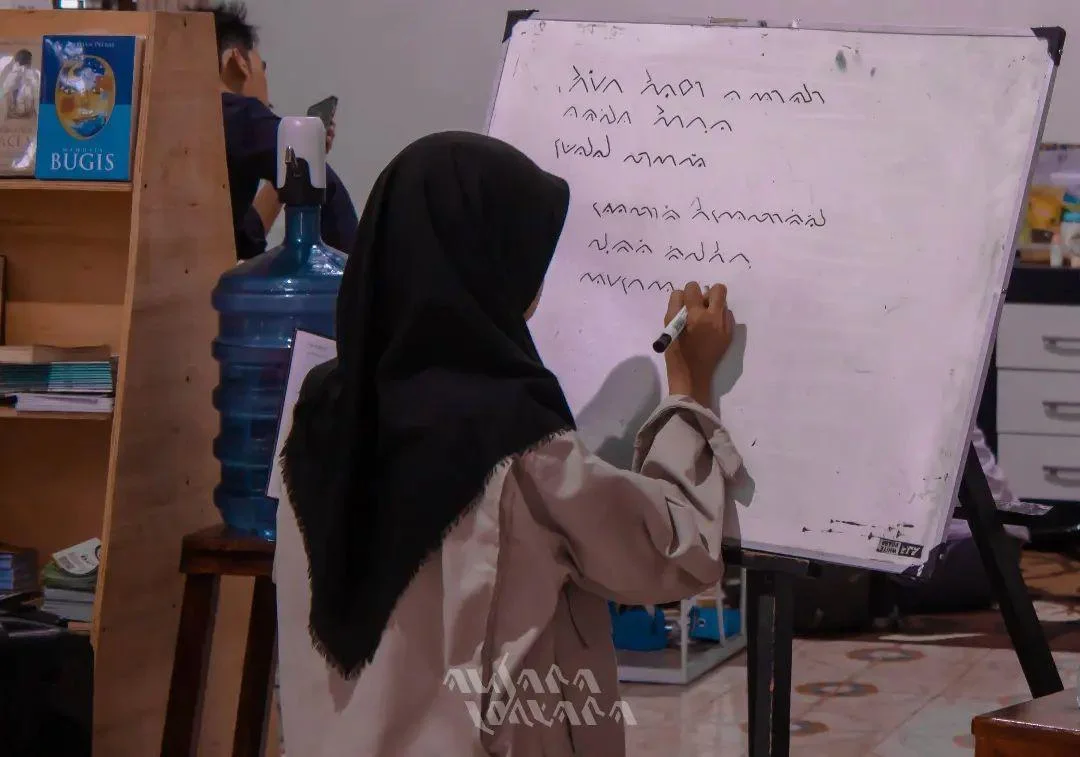
JurnalPost.com – Amid the rapid development of the digital era, the survival of regional languages faces growing challenges. Integrating regional languages into school curricula should ideally be a strategic step to ensure these languages remain actively used, rather than becoming mere relics of the past.
However, implementation in the field often raises questions. Does local content instruction truly impact the preservation of regional languages, or is it running so ineffectively that their usage is slowly declining?
The presence of regional languages in schools holds significant value. Schools function not only as places to acquire knowledge but also play a role in shaping the character and cultural identity of students.
Through activities such as sentence construction, learning proverbs, listening to folklore, and speaking in regional languages, students can maintain a connection to their cultural roots, family, and the local values that surround them.
Furthermore, proficiency in regional languages can strengthen social bonds and intergenerational communication, particularly in communities that still uphold traditional customs.
When Regional Languages Become Mere Rote Memorization
The presence of regional languages as a school subject does not necessarily guarantee their survival. One common obstacle relates to teaching methods and learning materials that lack relevance to students' daily lives.
If instruction relies solely on rigid vocabulary memorization or is viewed as a low-priority elective, students will struggle to see its direct benefits.
This situation is further complicated by the prevalence of slang mixed with foreign languages on social media and in youth social circles.
In casual conversation or when creating digital content, the younger generation tends to use popular language. Consequently, the space for using regional languages is potentially shrinking.
In fact, regional language instruction could be more engaging if linked to daily activities. Teachers, for instance, could encourage students to dialogue in the regional language about school activities, family life, or personal experiences.
By practicing directly, students can more easily understand and retain vocabulary compared to simply memorizing it for exams.
Improving Quality and Support for Teachers
One area that needs improvement is the quality of instruction and the support provided to regional language teachers.
There are still regional language teachers who have not received adequate training in language teaching methods. Some must also teach other subjects simultaneously.
Local governments need to provide attention through continuous training, appropriate incentives, and the provision of teaching materials developed in collaboration with native speakers, cultural activists, and academics.
Such collaboration can help create learning materials that are more vibrant, contextual, and relevant to the students' environment.
Teachers also need to be given space to develop creative learning methods, such as language games, cultural performances, storytelling, and interactive conversation.
With this approach, regional languages are no longer viewed as boring subjects, but as a part of life that holds value and utility.
Leveraging Technology for Preservation
Technology should not be viewed merely as an obstacle or a threat to the survival of regional languages.
Social media, short videos, podcasts, and educational games can serve as new spaces to introduce and use regional languages.
Students could be assigned tasks such as creating content in a regional language, reading folklore, writing songs, or producing simple conversation videos.
This approach can help build awareness that regional languages are not synonymous with something archaic. Instead, they can evolve with the times without losing their identity.
The use of technology also opens opportunities for the younger generation to introduce the richness of local language and culture to a wider audience.
Thus, the digital space can become part of a relevant effort to preserve regional languages for today's generation.
Family as a Space for Language Inheritance
Beyond schools, the family plays an irreplaceable role in maintaining the survival of regional languages.
Schools can teach the language, but the family is one of the primary environments where the language is inherited and used naturally.
A child who only hears a regional language during class hours may view it merely as a school subject. Conversely, a child accustomed to using the language with parents and family members will more easily grasp the meaning and cultural values embedded within it.
Family involvement can help the younger generation understand that regional languages are not just learning material, but a heritage and cultural identity of great significance.
Therefore, the use of regional languages in daily conversation must be continuously encouraged. The younger generation also needs to be given space to use them naturally and confidently, including in social media interactions.
Maintaining Cultural Identity Amid Changing Times
Strengthening the role of regional languages through education requires delivery methods that are contextual and close to the lives of the community.
Educators, schools, families, local governments, and the community need to support one another so that the use of regional languages is not limited to textbooks or exams, but is also present in daily conversation, creative works, and youth expression.
Without consistent commitment, regional languages risk fading away little by little—not because they are forbidden, but because they are used less and less.
Ultimately, the survival of regional languages does not depend solely on their status in the curriculum. They will remain preserved as long as they are spoken, understood, and passed on to the next generation.
We agree that regional languages must be preserved, not merely because they are ancestral heritage, but because they contain ways of thinking, life values, humor, and local wisdom that cannot always be fully translated into other languages.
When a language ceases to be used, what is lost is not just vocabulary, but the way a community views the world.
The Responsibility of Future Educators
As future educators, we realize that the responsibility for preserving regional languages also rests in our hands.
One day, we will stand before students and help determine whether regional languages remain just subjects memorized for grades or become languages whose benefits and beauty are truly felt.
We also want to be role models by using regional languages naturally and with pride. After all, children learn not only from what they hear but also from what they see in daily life.
If teachers and parents can work together, we are confident that regional languages will not become relics to be merely remembered, but living identities that continue to grow and be passed down from one generation to the next.
Preserving regional languages does not mean rejecting progress. On the contrary, such preservation is an effort to ensure that progress continues hand-in-hand with the maintenance of the nation's cultural identity.







Comments 0
Write a Comment Share your response