

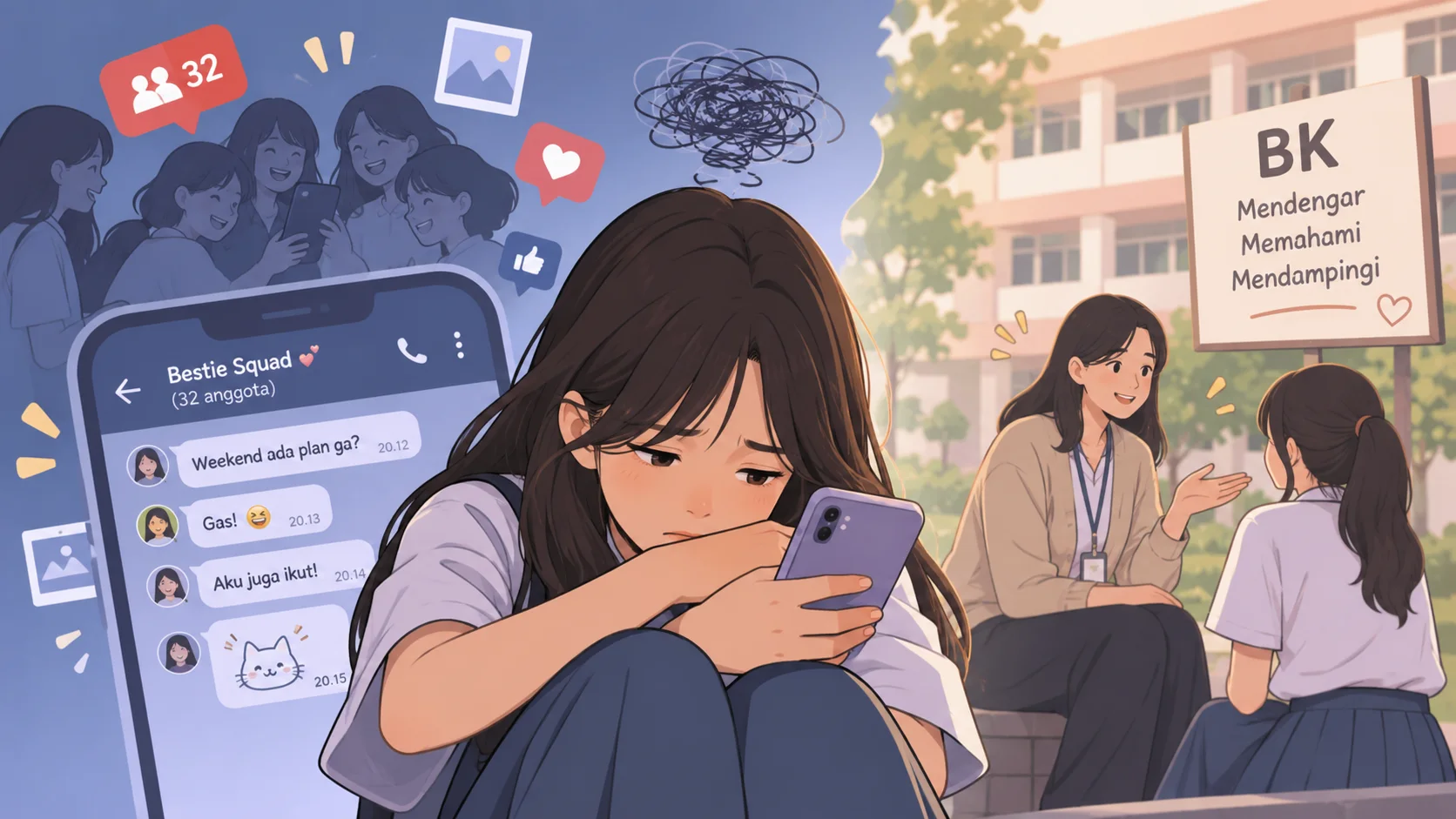
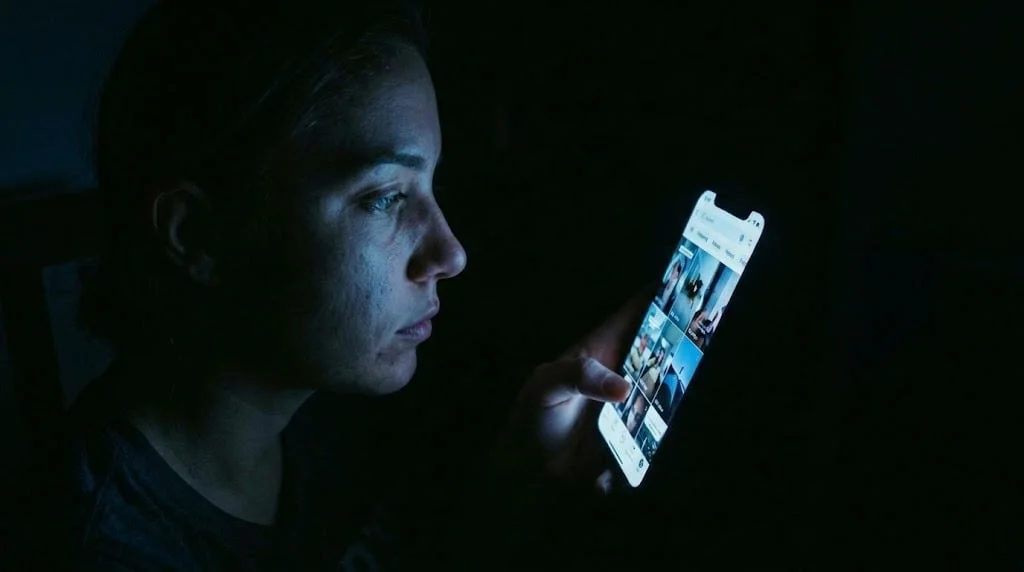
JurnalPost.com - Class WhatsApp groups are buzzing every day. Notifications keep pouring in, and at school, some students always seem to be with their friends. However, not everyone who appears to be part of a crowd truly feels they have someone to talk to. Some are active in group chats but are never invited when their friends gather. Others are surrounded by people yet still feel they lack close, meaningful relationships.
Crowded, Yet Not Connected
A crowd does not always mean connection. Loneliness is not merely the state of being alone, but a subjective experience where one's social relationships feel inadequate compared to what is expected. Digital connections make it easy for students to stay in touch, but they do not automatically make them feel accepted.
The national I-NAMHS survey 2022 noted that approximately 15.5 million of adolescents aged 10-17 years experienced mental health issues in the last 12 months. Of that group, only 2.6 percent accessed support or counseling services. While this data does not specifically measure loneliness, it highlights the limited access adolescents have to support when facing mental health challenges.
Research by Zhang, Purwono, and French (2024) involving 754 twelfth-grade students at three high schools in Bandung found that loneliness is linked to the number of friends, the quality of friendships, and a student's position within their peer group. The sample came from a single city with an upper-middle-class background, so it cannot be considered representative of all Indonesian adolescents. Nevertheless, the findings serve as a reminder that the number of friends is not the same as feeling accepted.
Loneliness is also not always visible. Students experiencing it do not necessarily withdraw or remain quiet. Some continue to joke around, participate in school activities, and stay active on social media, yet they feel they are not trusted enough or lack relationships that allow them to be their authentic selves. Therefore, it is inaccurate to assume that loneliness is simply a result of poor social skills. Exclusive friendships, the habit of ignoring certain peers, and classrooms that fail to provide space for differences can also leave students feeling alienated. The issue lies not only with the individual but also with an environment that may either open or close opportunities for connection.
Counseling Must Be Proactive
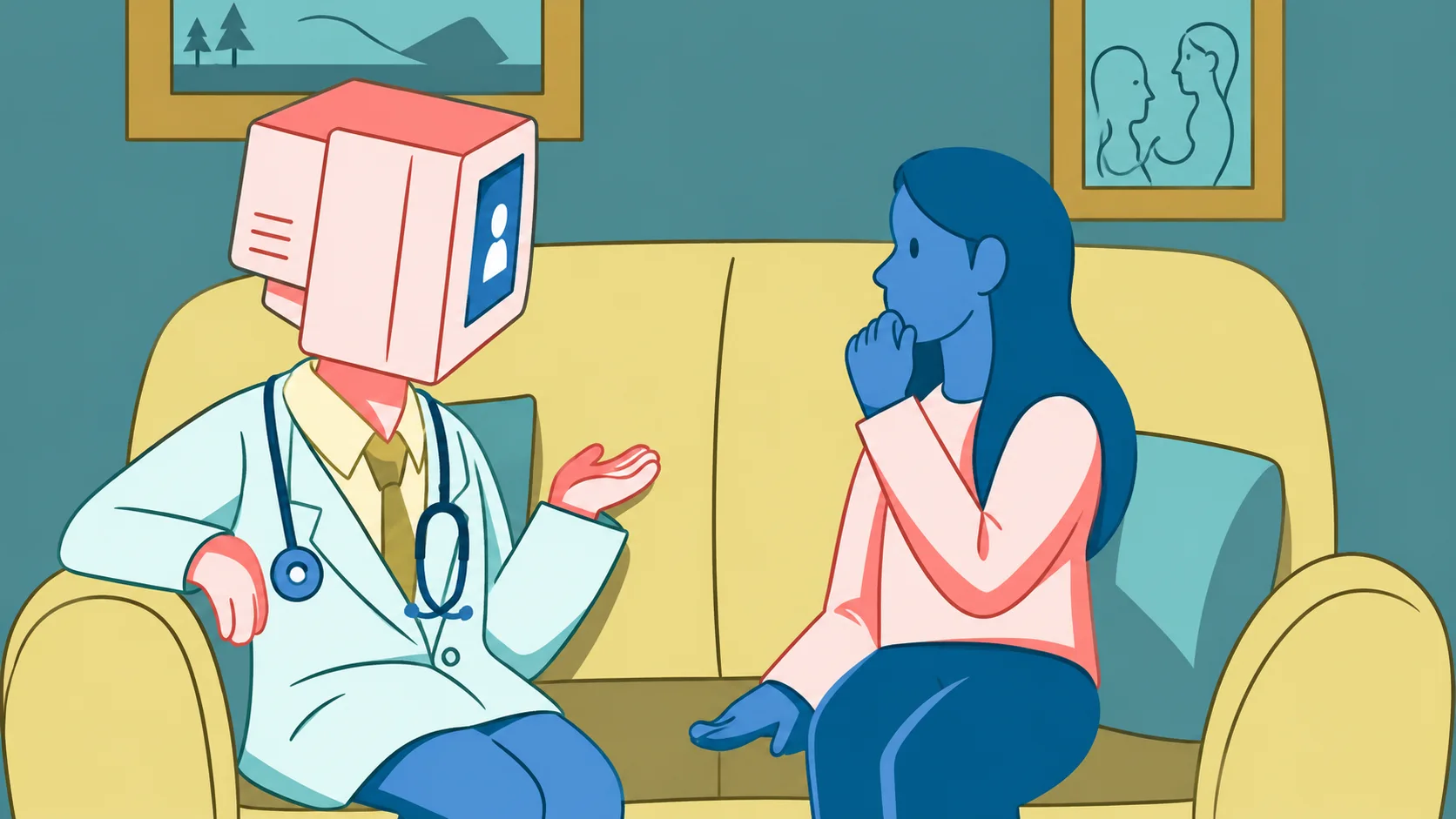
This is where Guidance and Counseling (BK) needs to take action. If the success of counseling services is measured primarily by reported and handled cases, students quietly suffering from loneliness risk being overlooked because they never appear as a "case." In reality, counseling has preventive and developmental functions that can be optimized to build healthy social relationships and a sense of belonging within the school.
So, what distinguishes professional counseling from simple "let's be friends" activities that any teacher could lead? The answer is not the activity itself, but the process. The first step is needs assessment: do students feel accepted in class, have trusted friends, feel comfortable in group activities, and feel like they are part of the school? This information can be gathered through surveys, conversations, observations, and coordination with homeroom teachers. The goal is not to label students as "lonely," but to identify social needs and situations that require attention.
The mapping results serve as the basis for service planning. Classical guidance can address empathy, healthy communication, and acceptance of differences. Group counseling provides space for students to practice interacting and building trust in a safe environment. For students requiring more intensive support, individual counseling can be provided based on assessment results. If the issues faced are beyond the scope of the school counselor, referrals to other professionals should be considered. Determining when services are sufficient at the classroom level and when more intensive support is needed is a core competency of school counseling.
From the Counseling Office to the School Environment
This effort cannot be done alone; counselors need to collaborate with homeroom teachers, subject teachers, and school administration to build a more inclusive climate. This includes classroom activities that involve diverse groups of students, addressing exclusive social patterns, and creating spaces for participation for students who have been less involved. By doing so, the responsibility for building connection is not placed solely on the students who feel lonely.
This approach has a foundation, though it is not a guarantee. A study by Attri, Springer, and Kelder (2025) of 24 studies across 12 countries found that 11 out of 23 evaluated interventions had a positive impact on student connectedness to school. While these results do not guarantee every program will succeed, they offer hope that a sense of belonging can be cultivated through planned interventions. The study also noted that most interventions target individuals or interpersonal relationships rather than the school culture as a whole.
Of course, this idea is not easy. Many counselors handle large numbers of students with limited time and support, and loneliness cannot be entirely solved by schools, as family and external environments also play a role. Therefore, this concept is not about adding to anyone's burden, but rather inviting schools to prioritize identifying students who are quietly struggling.
The success of counseling services should not be measured only by a reduction in reported problems, but also by whether students feel accepted, have supportive relationships, and feel they are part of the school. After all, school is not just a place for learning and achievement, but also a space for adolescents to build meaningful relationships.
Counselors must do more than just identify who looks alone. They need to understand who actually feels alone in the middle of a crowd. From there, counseling can take on its role—not just helping students cope with loneliness, but also helping to build a school environment where every student feels they have a place.




Comments 0
Write a Comment Share your response