

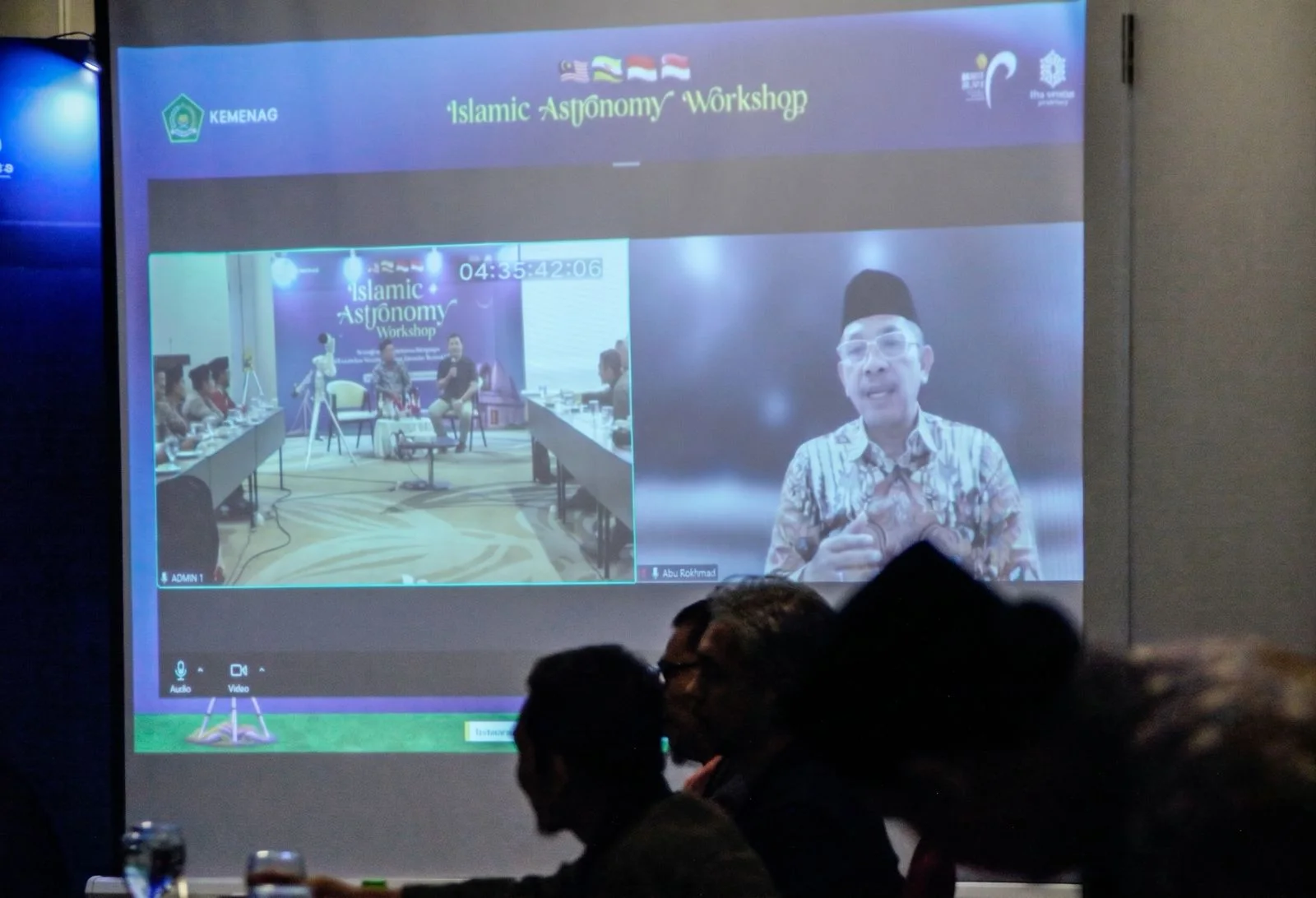
BANDUNG, JurnalPost.com – The Indonesian Ministry of Religious Affairs (Kemenag) is exploring strengthened cooperation among MABIMS member countries to advance Islamic astronomy. This collaboration encompasses hilal (new moon) documentation and image processing, astronomical data exchange, joint observations, and the enhancement of human resource competencies in the field of falak (Islamic astronomy).
The exploration of this cooperation was discussed during the MABIMS Islamic Astronomy Workshop held in Bandung, West Java, from 24 to 26 November 2026.
The event was attended by two delegates from Malaysia, two from Brunei Darussalam, and invited delegates from the Philippines. Several penghulu (religious officials) with expertise in hisab (calculation) and rukyat (observation) from Bandung and its surrounding areas also participated.
MABIMS is a cooperation forum for the Ministers of Religious Affairs of Brunei Darussalam, Indonesia, Malaysia, and Singapore, which addresses various religious issues, including the development of falak and the determination of the beginning of the Hijri month.
Indonesia Promotes Exchange of Islamic Astronomy Knowledge
The Director General of Islamic Community Guidance at the Ministry of Religious Affairs, Abu Rokhmad, stated that Indonesia has extensive experience in integrating scientific approaches with religious considerations through the isbat (confirmation) session mechanism to determine the start of Ramadan, Syawal, and Zulhijah.
This mechanism prioritizes deliberation by involving the government, Islamic mass organizations, academics, and experts in falak.
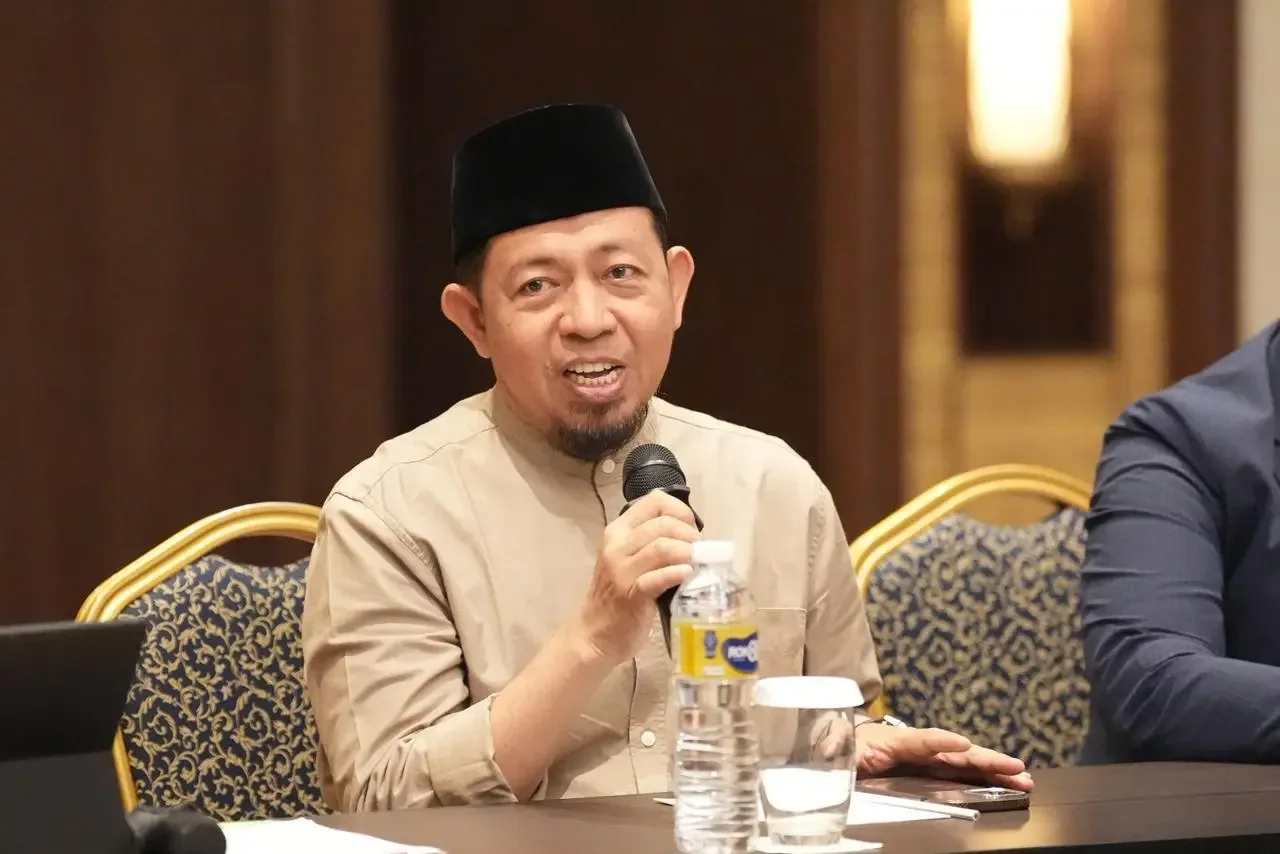
"This model may be unique to Indonesia. In the Indonesian context, although the authority to determine the start of Ramadan rests with the government, the government continues to invite all Islamic organizations, including academics and falak experts, to discuss and deliberate," said Abu Rokhmad.
He expressed hope that Indonesia's experience in developing falak could serve as a resource for knowledge exchange among MABIMS member countries.
The workshop is also expected to open opportunities for concrete cooperation in developing methods and technologies for Islamic astronomical observation.
"Who knows, during our visit to the Bosscha Observatory in Bandung later, we might gain new insights. For example, ideas regarding technical understanding of hilal documentation and image processing, exploring data exchange, and joint observations for the hilal, dawn, and twilight," Abu remarked.
Regeneration of Falak Experts a Priority
Beyond strengthening international cooperation, Abu emphasized the importance of regenerating falak experts by increasing the interest of the younger generation in Islamic astronomy.
According to him, technological advancements must be utilized to strengthen the understanding of the scientific processes involved in determining prayer times. The ease of obtaining calculation results through digital devices must be balanced with an understanding of the underlying methods.
"If we only accept the final results without understanding the process, that is a significant loss. Therefore, I hope that various technological developments are truly utilized to understand the process, such as how to calculate the qibla direction, how to calculate the start of Ramadan, and so on," explained Abu.
Mastery of falak is essential as it relates directly to various needs of the Muslim community, ranging from determining the start of the Hijri month and measuring the qibla direction to calculating prayer times.
MABIMS Hilal Criteria as a Foundation for Collaboration
The Acting Director of Islamic Religious Affairs and Sharia Guidance at the Ministry, Muchlis M. Hanafi, stated that the agreement on the MABIMS imkanur rukyat (visibility) criteria in 2021 serves as an important foundation for strengthening Islamic astronomy collaboration in Southeast Asia.
These criteria establish a minimum hilal altitude of 3 degrees and a minimum elongation of 6.4 degrees, which began implementation in 2022.
Elongation is the angular distance between the Moon and the Sun. Together with the hilal altitude, this parameter is used as part of the hilal visibility criteria in determining the start of the Hijri month.
"This is certainly not just about numbers, but a starting point where we begin to learn to read the sky using the same language," said Muchlis.
He also encouraged the strengthening of the hilal observation network among MABIMS member countries so that data and experiences from various observation points can complement one another.
This cooperation has the potential to be expanded to studies on early prayer times, dawn and twilight observations, and qibla measurement services.
"Imagine if the observation network in our region were interconnected. Reports from our observation posts would complement each other. This would certainly be more convincing," he said.
Utilizing Technology and AI in Hilal Observation
Technological developments are opening new opportunities in the development of Islamic astronomy, including the use of astronomical cameras, astrophotography techniques, digital image processing, and artificial intelligence (AI).
However, Muchlis cautioned that the use of technology must be balanced with scientific integrity, transparency of methods, and honesty in interpreting observation data.
Strengthening regional cooperation is not intended to eliminate the authority of each country in determining the start of the Hijri month.
"MABIMS is not just about standardizing decisions, but about how we align data, methods, and scientific language while still respecting the authority of each country," Muchlis emphasized.
With the exchange of data and the strengthening of observation methods, MABIMS member countries are expected to build an increasingly robust knowledge base for Islamic astronomy.
Workshop Participants Visit Bosscha Observatory
During the workshop, participants received training from three speakers with expertise in astronomy and falak.
The three are Cecep Nurwendaya from the Ministry of Religious Affairs' Hisab Rukyat Team, Hendro Setyanto from the Nahdlatul Ulama Falakiyah Institute and Director of the Imah Noong Observatory, and Muhammad Yusuf, an astronomy researcher at the Bosscha Observatory.
The topics discussed included the relationship between the Sun and the Earth in determining prayer times, techniques for capturing and processing dawn and twilight images, telescope motion systems, astrophotography, and hilal image data processing.
The series of activities also included a visit to the Bosscha Observatory in Lembang, West Bandung Regency, as part of broadening participants' insights into astronomical observation instruments and technology.
Through the MABIMS Islamic Astronomy Workshop 2026, the Ministry of Religious Affairs hopes to form an increasingly strong and sustainable scientific network for the development of Islamic astronomy in Southeast Asia, while simultaneously opening opportunities for future research collaboration and observation data exchange.




Comments 0
Write a Comment Share your response