

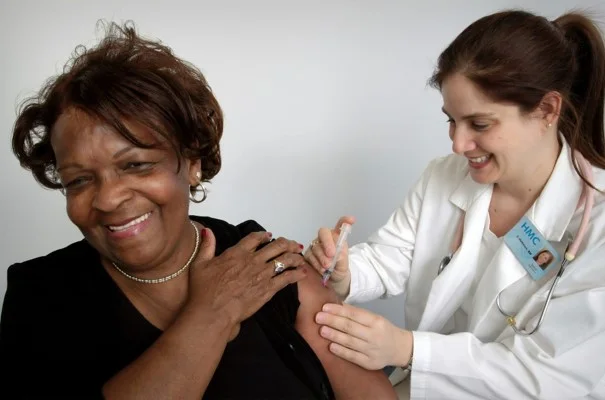
SURABAYA, JurnalPost.com – When we hear the word immunization, most of us immediately picture a baby being held by their mother at a community health center. However, vaccine protection does not end after the toddler years. School-aged children, adolescents, women of childbearing age, adults with comorbidities, and the elderly also require it.
This is the message highlighted by the Ministry of Health (Kemenkes) during World Immunization Week 2026 through the theme “Immunization Throughout Life.”
During the commemoration, the Deputy Minister of Health emphasized the importance of immunization for both children and adults to prevent various diseases, including those related to infections.
This concept aligns with the third goal of the Sustainable Development Goals (SDGs), which is to ensure healthy lives and promote well-being for all at all ages. Sustainable Development Goals (SDGs) point three, which is to ensure healthy lives and promote well-being for all at all ages.
When Immunization Coverage Drops, Old Diseases Return
Measles provides a stark lesson on the dangers of declining immunization coverage in the community.
According to the Ministry of Health, complete routine immunization coverage in Indonesia once reached 92 percent in 2018, but fell to 87.8 percent in 2023.
In 2024, the coverage for the first dose of the measles-rubella vaccine (MR1) was recorded at 92 percent, while the second dose (MR2) only reached 82.3 percent. These figures remain below the 95 percent target required to build herd immunity against measles. herd immunity against measles.
Immunization coverage is also a key metric for the success of the SDGs. Indicator 3.b.1 measures the proportion of the target population that has received vaccines under the national program.
The impact of low immunization coverage is visible in several regions. In Sumenep Regency, East Java, as of 26 August 2025, there were 2,139 suspected measles cases, with 205 cases confirmed through laboratory testing.
Nationally, throughout 2025, there were 63,769 suspected measles cases with 67 deaths. Meanwhile, based on reports in March 2026, the number of cases at the beginning of that year had reached 8,810 suspected cases with five deaths.
This problem is also occurring globally. The World Health Organization (WHO) and UNICEF reported that in 2024, there were 14.3 million children with zero-dosestatus, meaning children who have not received the first dose of a DTP-containing vaccine as an indicator of access to routine immunization.
Indonesia also faces significant challenges in equitable immunization. According to Ministry of Health data, 1,356,367 children did not receive basic immunization during the 2019–2023 period.
Why Do Adults Also Need Immunization?
Immunity obtained from some childhood vaccines can wane over time, necessitating booster doses as recommended. booster doses as recommended.
Furthermore, the risk of experiencing severe infection can increase in old age or among people with chronic diseases.
Therefore, global health experts are promoting a life-course immunization approach. life-course immunization.
This approach views vaccination as an effort to maintain health, bodily function, and quality of life at every stage of age, rather than just a health program for children (Stancu et al., 2023).
The Ministry of Health also emphasizes that immunization is important for adults. Some examples include HPV, COVID-19, and meningitis vaccines, as needed and medically indicated.
In 2025, the Adult Immunization Task Force of the Indonesian Society of Internal Medicine (PAPDI) updated the adult immunization schedule by adding a recommendation for the Respiratory Syncytial Virus (RSV) vaccine.
RSV is a virus that can cause respiratory tract infections, including pneumonia, especially in vulnerable groups.
Unfortunately, public awareness regarding adult immunization remains relatively low.
A study by the Parliamentary Analysis Center of the Indonesian House of Representatives on 2024 noted that adult vaccination coverage in Indonesia was approximately 0.5 per 1,000 population. This figure lags behind Singapore with 90 per 1,000 population, Japan with 250 per 1,000 population, and South Korea with 311 per 1,000 population.
Immunization at Every Stage of Life
The Indonesian government has expanded the routine childhood immunization program from 11 to 14 antigens by adding PCV, rotavirus, and HPV vaccines.
The PCV vaccine helps prevent diseases caused by pneumococcal bacteria, including pneumonia. The rotavirus vaccine helps prevent severe diarrhea caused by rotavirus, while the HPV vaccine helps prevent cervical cancer and other diseases related to HPV infection.
The following is an overview of immunization by age group.
1. Infants and children under two years old
Immunizations provided include hepatitis B, BCG, oral and injectable polio, DPT-HB-Hib, PCV, rotavirus, and measles-rubella (MR). The Japanese Encephalitis (JE) vaccine is also given in certain regions according to government programs.
2. School-aged children
Through the School Children Immunization Month (BIAS), children receive immunizations according to the program schedule, including:
Grade 1: MR and DT.
Grade 2: Td.
Grade 5: Td and HPV according to the target group.
Grade 6: HPV according to the program schedule and provisions.
3. Women of childbearing age and pregnant women
Tetanus-diphtheria (Td) immunization can be given based on the results of immunization history screening and tetanus protection status up to T5.
Vaccination during pregnancy should be consulted with health workers to ensure it is appropriate for the mother's condition.
4. Adolescents, adults, and the elderly
Types of vaccines that may be recommended include HPV, COVID-19, meningitis, influenza, hepatitis B, pneumococcal, and RSV for groups that meet the indications.
Vaccine selection must be adjusted to the age, occupation, immunization history, health condition, and risk factors of each individual.
Hoaxes and Hesitancy Become Immunization Challenges
Why are there still many people who have not received immunization?
The Indonesia Health Survey (SKI) 2023 identified several reasons why children did not receive immunization. 47 percent were related to a lack of family permission, 45 percent were due to fear of side effects, 23 percent did not know the schedule, and 22 percent considered immunization unimportant.
These findings show that immunization barriers are not only related to vaccine availability but also to understanding, trust, and family support.
The spread of misinformation regarding vaccines can increase public hesitancy. Therefore, evidence-based health education is a crucial part of increasing immunization coverage.
Similar challenges are faced by various countries. To support the achievement of the SDGs, the WHO is implementing the Immunization Agenda 2030 (IA2030).
The IA2030 progress report states that vaccination against 14 diseases successfully prevented nearly 4.2 million deaths in 2023. However, this figure is still below the target of approximately 4.6 million deaths prevented.
At the World Health Assembly in May 2026, member states reaffirmed their commitment to the IA2030, including strengthening immunization that protects various age groups.
Simple Steps to Complete Immunization
Every individual can contribute to improving health protection through several simple steps.
First, check your immunization status through your Maternal and Child Health (KIA) book or personal immunization records. If any schedule has been missed, the public can consult with health workers at community health centers or other health facilities.
Second, complete the immunizations included in the government program. Routine immunization for target groups, including HPV for school-aged girls, is available for free through government programs.
Third, consult with a doctor regarding adult vaccine needs based on age, occupation, pregnancy plans, or comorbidities.
Fourth, filter health information before believing or sharing it. The public can refer to official sources such as the Ministry of Health, WHO, the Indonesian Pediatric Society (IDAI), and PAPDI.
Fifth, act as an agent of health education. Students can help spread correct information about immunization to their families, the surrounding environment, and through social media.
Immunization as a Lifelong Health Investment
Immunization is a lifelong health investment. Its protection does not stop when the infant immunization schedule is complete, but needs to be maintained into old age as needed.
High immunization coverage can help reduce the risk of spreading various vaccine-preventable diseases.
This effort also supports SDG target 3.3 regarding the control of infectious disease epidemics and target 3.8 on universal health coverage, including access to safe, effective, quality, and affordable vaccines.
Building a healthy society requires a shared awareness that immunization is not just a need for children. Every stage of life has different health protection needs.
By increasing understanding, expanding access to services, and completing immunizations according to health worker recommendations, Indonesia can move closer to the goal of a healthy and prosperous life for all, at all ages.
References
ANTARA. (2026). Health Minister Reminds of the Importance of Immunization to Face Measles Outbreaks.
IDN Times. (2025). PAPDI Releases Latest Adult Immunization Schedule, Includes RSV Vaccine.
Ministry of Health of the Republic of Indonesia. (2024a). 95 Percent of Children Must Receive Immunization, Check Out the 3 New Antigen Types.
Ministry of Health of the Republic of Indonesia. (2024b). Health Minister: Immunization Plays a Major Role in Creating a Healthy Society.
Ministry of Health of the Republic of Indonesia. (2025a). World Immunization Week 2025: Let's Complete Immunization for a Healthy Generation Towards Golden Indonesia.
Ministry of Health of the Republic of Indonesia. (2025b). Measles Outbreak Increases, Ministry of Health Reminds of the Importance of Complete Immunization.
Parliamentary Analysis Center, Expertise Agency of the DPR RI. (2024). Low Vaccination Coverage for Adults in Indonesia.
RRI. (2026). World Immunization Week 2026, Deputy Health Minister Invites Vaccination Throughout Life.
Stancu, A., Khan, A., & Barratt, J. (2023). Driving the Life Course Approach to Vaccination Through the Lens of Key Global Agendas. Frontiers in Aging, 4, 1200397.
United Nations Statistics Division. (2025). SDG Indicator Metadata: Goal 3, Target 3.b.
World Health Organization. (2025). New Report Highlights Need for Redoubled Efforts to Reach 2030 Global Immunization Targets.
World Health Organization. (2026). Global Health Leaders Reaffirm Commitment to Immunization Agenda 2030.
World Health Organization & UNICEF. (2025). Global Childhood Vaccination Coverage Holds Steady, Yet Over 14 million Infants Remain Unvaccinated.

Comments 0
Write a Comment Share your response