


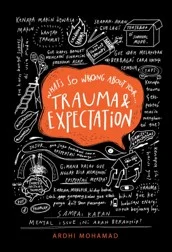
Book Identity
Book Title: What Can I Do While I'm Alive?
Author: Kim Sang-hyun
Translator: Yuniar Budiarti
Publisher: Haru Media Sejahtera, Ponorogo, East Java
Publication Year: 2023
Page Count: 132 pages
ISBN: 978-623-5467-14-6
Genre: Self-Improvement
MALANG, JurnalPost.com — Thinking about the future can sometimes make a person hesitate to take the first step. Fear of failure or the habit of comparing oneself to others' achievements often leads to procrastination on things one actually wants to try.
This issue is quite relatable to student life, especially when adjusting to a new environment, facing various academic demands, and beginning to determine one's life path.
My interest in these issues led me to read the book What Can I Do While I'm Alive? by Kim Sang-hyun. Through daily experiences, the author discusses how anxiety, hope, and doubt arise when someone is striving for something important in their life.
I appreciate how the author discusses fear as a natural experience, even when one has tried their best.
Courage Grows Through Process
The core idea I gathered from this book is that the desire to succeed is often accompanied by the fear of failure. The more important a goal is to someone, the more they may overthink before acting.
Kim Sang-hyun invites readers to acknowledge these feelings and still take the steps they are capable of. This perspective helped me understand that courage does not always have to exist before one starts something; it can also grow throughout the process.
The part I remember most is the author's story about learning to play the piano. As a child, he took piano lessons because his parents decided so. During those lessons, he spent more time waiting for the time to pass than enjoying the activity.
More than twenty years later, he returned to learning the piano by his own choice. This time, he enjoyed practicing so much that he barely noticed the time passing.
The same experience can leave a different impression when one has a personal reason for doing it.
Understanding the Reasons Behind Every Choice
That piano story made me rethink how I make decisions in life. Advice from family and close friends can certainly help us see various options, but ultimately, we must understand the reasons behind the choices we make.
When a choice aligns with one's interests and goals, one is better prepared to take responsibility for both the process and the outcome.
I also grasped a message regarding the habit of measuring personal progress based on others' achievements. We might see a friend succeed first without knowing the process they went through or the circumstances that supported their success.
In such situations, I find it more helpful to look back at what I have learned and identify areas that still need improvement.
Everyone has a different journey, set of opportunities, and challenges. Therefore, others' achievements do not always have to be the benchmark for one's own success.
Relevance to Student Life
As a student, the message in this book feels very close to my own experiences on campus.
Completing assignments, attending labs, and adapting to friends with different personalities can sometimes cause anxiety about the possibility of making mistakes.
However, courage can start with simple things, such as asking about a lab procedure one does not understand or fixing a part of an assignment that is incorrect.
Mistakes are not always a sign of incompetence. Instead, they can help someone identify areas that still need to be learned and developed.
This understanding is important for students who are undergoing their education while preparing for life after graduation.
Strengths of the Book
The strength of the book What Can I Do While I'm Alive? lies in its simple and accessible language.
The author uses everyday experiences to discuss feelings that are sometimes difficult to explain. The piano story, for example, helped me understand the influence of personal motivation through a concrete situation.
With a length of 132 pages, this book is also light enough to read between academic activities.
I also appreciate the author's attention to the effort one has made, especially when the results have not yet met expectations.
When we focus too much on the end goal, we easily overlook the small progress we have actually made. This book provides space for readers to accept failure, understand the lessons behind it, and try again when ready.
Weaknesses of the Book
Although it has a message relevant to daily life, the book also has some shortcomings.
A number of the tips regarding anxiety and self-confidence feel similar to discussions in other self-improvement books. These themes also appear several times, making parts of the book feel repetitive.
Additionally, because it contains more of the author's personal experiences and thoughts, readers who prefer stories with a continuous narrative might not enjoy the delivery style.
Nevertheless, these shortcomings do not diminish the main message that Kim Sang-hyun wants to convey to the reader.
Valuing the Journey and Daring to Take Opportunities
Overall, What Can I Do While I'm Alive? helps me understand that everyone can develop at a different pace.
The stories in this book provide space to rethink the choices made, the reasons behind them, and how to appreciate every effort made.
The message I remember most is that one can start moving forward even without knowing what the final result will be.
I recommend this book to teenagers and students who are looking for a life direction, feeling discouraged, or are still hesitant to try new things.
The experiences shared by the author are quite close to daily life, making them easy to relate to the reader's own situation.
After reading this book, I want to be bolder in taking opportunities and give myself time to learn when things do not go as expected. Because living life is not just about reaching a goal, but also about the courage to keep learning and trying.






Comments 0
Write a Comment Share your response