

JurnalPost.com – Many business owners still believe that the process of establishing a Commanditaire Vennootschap (CV) is complete once the deed of establishment is signed before a notary. In practice, however, business legality does not end with the creation of the deed.
There are several subsequent stages that are equally important, ranging from registering the business entity and obtaining a corporate Taxpayer Identification Number (NPWP) to registering through the Online Single Submission (OSS) system to acquire a Business Identification Number (NIB).
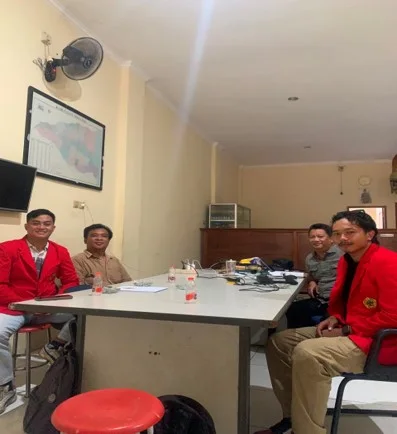
Based on my internship experience at a notary office, I have observed that many new business owners do not fully understand these stages. Many focus solely on the deed of establishment without realizing the importance of other essential administrative documents.
This situation indicates that awareness regarding business legality still needs to be improved, particularly among micro, small, and medium enterprises (MSMEs).
The Status of a CV from a Legal Perspective
Legally, a CV is a form of partnership regulated under the Commercial Code (KUHD). A CV consists of active partners who manage and are responsible for the business operations, and silent partners (commanditaire) who provide capital.
Although a CV is not a legal entity like a Limited Liability Company (PT), its establishment still requires a clear legal and administrative foundation.
The deed of establishment created by a notary serves as an authentic document that provides certainty regarding the identity of the partners, the scope of business, the capital structure, and the rights and obligations of each party.
The registration of a CV is conducted through the Business Entity Administration System (SABU) via a notary. These provisions are currently regulated under the Minister of Law and Human Rights Regulation Number 24 of 2026 concerning Services in the Business Entity Sector.
Through this process, the existence of the CV is officially recorded in the business entity administration.
The Importance of NPWP and Business Identification Numbers
After completing the establishment and registration process, a CV must obtain an NPWP as a tax identity issued by the Directorate General of Taxes.
A corporate NPWP is essential for fulfilling tax obligations and supporting various administrative needs, such as opening company bank accounts, engaging in business partnerships, and participating in project tenders according to applicable requirements.
In addition to the NPWP, business owners must manage licensing through the OSS system. Through this system, business owners can obtain an NIB as an official identity for conducting their business activities.
The implementation of risk-based business licensing in Indonesia is regulated under Government Regulation Number 28 of 2025.
In this system, the NIB serves as the business license for low-risk activities. Meanwhile, business activities with medium or high risk levels require additional documents, such as standard certificates or specific permits, in accordance with applicable regulations.
Therefore, business owners must understand that possessing an NIB does not always mean that all licensing requirements have been met.
The Role of the Notary in Supporting Business Legality
In practice, the registration process through the OSS system can sometimes cause confusion, especially for business owners who are not accustomed to using digital-based administrative services.
Errors in filling out information or discrepancies between the data in the deed of establishment and the data entered into the system can cause delays in the administrative process.
This is where the role of the notary becomes relevant. Beyond creating authentic deeds and assisting with CV registration, a notary can provide guidance on document completeness and the administrative procedures that business owners must follow.
This role reflects the function of a notary as a public official who provides legal certainty through their authority to draft authentic deeds.
Administrative assistance can also help business owners understand the legality stages more comprehensively. However, the authority to issue NPWPs and business licenses remains with the relevant government agencies and systems.
Legality as the Foundation for Business Sustainability
Complete legal documentation is not only about fulfilling legal obligations but also influences the credibility and professionalism of a business entity.
Business partners and financial institutions generally consider the completeness of administrative documents when entering into cooperation with a company.
With orderly administration, business owners have better opportunities to access financing, expand their business networks, and participate in various procurement activities according to established requirements.
Legality can also help minimize potential legal and administrative issues that may arise during the course of business operations.
Thus, managing legality should not be viewed merely as an administrative burden, but as part of a long-term strategy for business development and sustainability.
Reflections from an Internship at a Notary Office
Through my internship experience and involvement in assisting with corporate NPWP applications and the issuance of registration receipts via the OSS system, I have gained an understanding of the importance of administrative stages in completing the legality of a CV.
Although I was not directly involved in the process of creating the deed of establishment, the experience showed that business legality is a series of interconnected processes.
The deed of establishment serves as the basis for forming the partnership, business entity registration provides administrative certainty regarding its existence, the NPWP functions as a tax identity, and the NIB serves as the business owner's identity within the licensing system.
Each stage has its own function that supports the creation of business activities that are legally and administratively orderly.
Ultimately, the role of a notary in the CV legality process is not limited to drafting the deed of establishment but also contributes to improving the legal understanding of business owners.
Awareness of the importance of legality must be continuously fostered so that business owners, especially MSMEs, can build professional, responsible, and sustainable business activities.








Comments 0
Write a Comment Share your response