

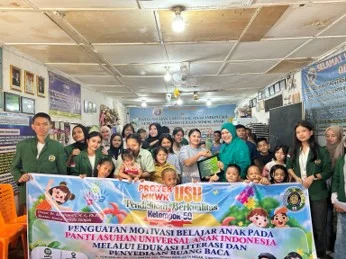
MEDAN, JurnalPost.com — Students from the University of Sumatera Utara (USU), part of the Compulsory Curriculum Course (MKWK) Project Group 50, carried out literacy education activities and provided a reading space at the Universal Anak Indonesia Orphanage on Saturday (7/11/2026).
Carrying the theme of Quality Education, the activity was titled “Strengthening Learning Motivation for Children at the Universal Anak Indonesia Orphanage through Literacy Education and the Provision of a Reading Space.”
This program serves as a manifestation of the students' concern for the importance of educational access and the development of a literacy culture, particularly for children living in orphanage environments.
Through an educative and interactive approach, the students aimed to foster an interest in reading and build the children's awareness regarding the importance of education for their future.
Fostering Interest in Reading through Educational Activities
The event began with an opening by the master of ceremonies, followed by remarks from the Group 50 leader, Muhammad Alfaiz Mahdafi Pane.
Subsequently, the students provided education on the importance of schooling, literacy, and reading habits as a means to increase knowledge and learning motivation.
The material was delivered through an interactive approach so that the children could more easily grasp the messages conveyed. They also had the opportunity to engage in discussions, participate in educational activities, and receive guidance in the reading corner.
The atmosphere became even more lively when the students invited the children to participate in various educational games. Prizes were also distributed as a form of appreciation for their participation and enthusiasm throughout the event.
This approach is expected to build a fun learning experience while encouraging children to be more active in developing their potential.
Providing a Reading Space to Support Learning
Beyond providing education, the USU students also set up and organized a reading space by utilizing the facilities available at the Universal Anak Indonesia Orphanage.
The reading space is equipped with reading materials that the children can use to study, read, and broaden their horizons in their daily lives.
The provision of this facility is part of an effort to maintain the sustainability of the program so that the benefits of the activity do not cease once the student project is completed.
The presence of the reading space is expected to create a comfortable learning environment while encouraging the formation of reading habits from an early age.
The enthusiasm of the children and the warm welcome from the orphanage management supported the implementation of the entire series of activities.
The leader of Group 50, Muhammad Alfaiz Mahdafi Pane, along with all group members, hopes that the program can have a positive impact on increasing reading interest, learning motivation, and the development of the children's literacy culture.
Supporting Quality and Inclusive Education
The implementation of this MKWK Project by Group 50 is also in line with the Sustainable Development Goals (SDGs), specifically the fourth goal regarding Quality Education.
Through community service activities, the students strive to support equal learning opportunities and create an inclusive educational environment for children.
Quality education is not only related to formal learning in school but also requires the support of the social environment, the availability of reading materials, and opportunities to develop skills and creativity.
The students' involvement in these activities also serves as a learning tool to develop social awareness and apply the knowledge gained during their studies.
The activity concluded with the presentation of mementos, group documentation, and the delivery of gratitude to the management of the Universal Anak Indonesia Orphanage.
Through this literacy education and the provision of a reading space, the USU students hope that the children will be increasingly motivated to learn, build reading habits, and develop their potential to achieve a better future.





Comments 0
Write a Comment Share your response