

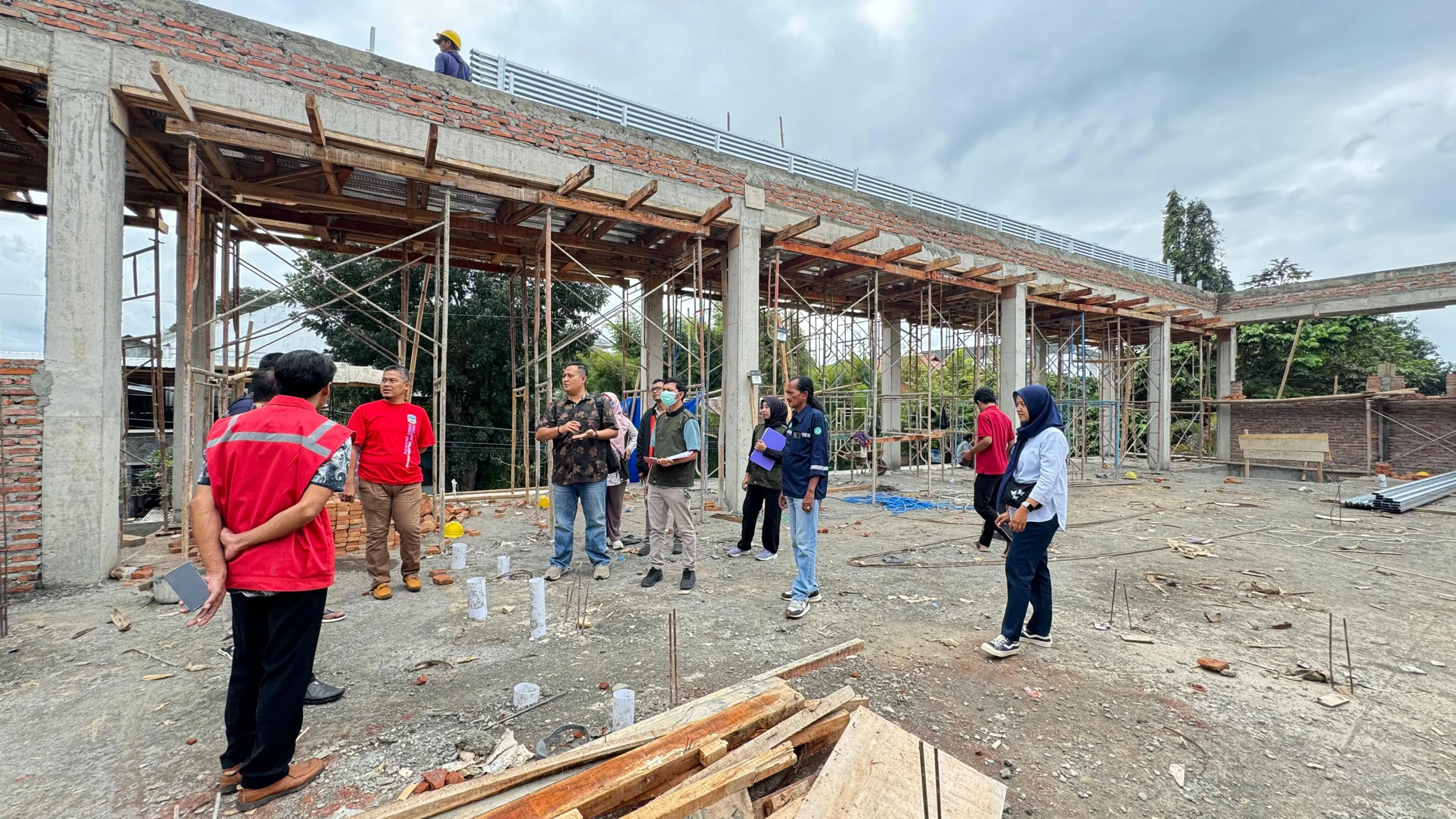
JurnalPost.com - In many local government organizations, the presence of the inspectorate is synonymous with one thing: auditing. When auditors arrive, the office atmosphere changes; documents are tidied, explanations are prepared, and many hope the audit will conclude without any findings.
This perception is understandable, but it raises a question. If the inspectorate is only known as a party that constantly seeks faults, who helps the local government avoid missteps from the start? In my view, the regional inspectorate needs to shift its paradigm from the role of awatchdog that always looks for errors to atrusted advisor capable of identifying issues early on, without compromising its independence.
Oversight That
Arrives Too LatePost-audit, or examinations conducted after activities are completed, remains necessary to enforce accountability. However, by the time findings emerge, the budget has already been spent and the policy has already had an impact. The resulting improvements are corrective rather than preventive. This also affects work culture: regional agencies tend to become defensive and reluctant to consult.
Strengthening the capacity of the Government Internal Supervisory Apparatus (APIP) has been an agenda since the 2015-2019 National Medium-Term Development Plan (RPJMN), which targeted 3 percent of ministries, agencies, and local governments to reach capability level 85. However, data as of July 2018 shows that only about 20 percent, or 127 out of 628 APIP units, have achieved this. While the Financial and Development Supervisory Agency (BPKP) has issued a new assessment model via BPKP Regulation No. 6 of 2025, the message remains relevant: improving APIP capability is a long-term process requiring consistent effort. Scores alone are insufficient; what must change is how the inspectorate executes its professional roles and services with adequate management support.
The Role of APIP Extends Beyond Auditing
Law No. 23 of 2014 on Regional Government states that the Inspectorate assists the regent/mayor in fostering and supervising the implementation of regional government. Furthermore, under Government Regulation No. 60 of 2008 regarding the Government Internal Control System, APIP is tasked with providing reasonable assurance regarding compliance, efficiency, and effectiveness in achieving goals; providing early warnings and improving risk management effectiveness; and maintaining and improving the quality of governance through audits, reviews, evaluations, monitoring (assurance), and other supervisory activities (consulting).
The problem is that the consulting and early warning functions are always overshadowed by the assurancefunction. In internal audit literature, the paradigm shift from a supervisor to a strategic partner that helps organizations solve problems and anticipate risks has long been the direction of development. That is the core idea of a trusted advisor.
What Does a Trusted Advisor Look Like?
Being a trusted advisor does not mean weakening the oversight function, but rather shifting the Inspectorate's entry point to an earlier stage (early warning) to strengthen preventive measures over repressive ones, reflected in four forms:
1. Changing Roles: shifting from an examiner to a companion who supports activities from the planning stage, rather than arriving only after completion.
2. Strategic Partner: assisting local government management in resolving various governance issues.
3. Early Warning System Provider (Early Warning System): playing an active role early on in mitigating risks that could hinder organizational goals.
4. Changing Work Relationships: providing a safe space for consultation before policies are enacted and positioning the Inspectorate as a partner in achieving success.
Trust is the capital of prevention. An inspectorate viewed as a partner will encourage greater openness among officials, and openness is a prerequisite for good governance.
Challenges That Cannot Be Ignored
This shift in role is not simple. Independence is an issue because the inspectorate is part of the local government structure and reports to the regional head. How can it be both an advisor and an objective supervisor for the same organization?
Furthermore, the boundary between consulting and assurance must be clearly defined. An auditor involved in consulting or providing advice on an activity cannot be the same party that performs the assurancefunction. Capacity is decisive: supervisory resources (quantity and quality of auditors, budget, and infrastructure) must be commensurate with the workload. Finally, organizational culture must change: if the inspectorate is still perceived as a threat or merely a tool for political interests, the role of an advisor will be difficult to cultivate.
Steps to Begin
1. Regional head support for the consultative function, with guarantees of independence.
2. Clear regulations distinguishing between assurance and consultingfunctions.
3. Early assistance for high-risk priority activities.
4. Improving human resource quality and developing information technology infrastructure for oversight, including risk-based supervision.
5. Developing appropriate performance indicators to assess the Inspectorate's value-add to partners, focusing not on the number of findings, but on the reduction of recurring issues and the implementation of improvements.
Oversight Through Trust
Becoming a trusted advisor does not mean weakening the Inspectorate's function. When deviations occur, firmness is still required. What changes is the starting point: from seeking faults to preventing them.
As a public administration student, I believe that good governance is not born from fear of supervisors, but from trust in a system that works from the start. The best supervisor is not the one with the most findings, but the one who prevents the most.
References
1. Republic of Indonesia. Government Regulation No. 60 of 2008 on the Government Internal Control System.
2. Republic of Indonesia. Law No. 23 of 2014 on Regional Government.
3. Financial and Development Supervisory Agency. BPKP Regulation No. 6 of 2025 on Improving APIP Capability.
About the Author
Fahrizal Rizki Maulana is a Master of Public Administration student at Jenderal Soedirman University. He has an interest in regional governance, internal oversight, and public policy.











Comments 0
Write a Comment Share your response