


Kupang, JurnalPost.com — A community service team from the Faculty of Medicine and Veterinary Medicine (FKKH) at Nusa Cendana University (UNDANA) held an interactive education session on independent nutrition fulfillment for young mothers in Solor Village, Kota Lama District, Kupang City.
The activity, titled “Interactive Education Based on Independent Nutrition Mapping Modules for Young Mothers in Solor Village” was held at the Bogenvil Posyandu 5, on Wednesday (16/9/2026).
This program is part of the FKKH UNDANA academic community's contribution to improving public knowledge and skills, particularly among young mothers, in meeting the nutritional needs of their children and families.
The education was delivered using a module as a learning medium to ensure the material could be understood systematically and easily applied in daily life.
The activity received support from the Kupang City Community Health Center (Puskesmas), the Solor Village administration, and the Kota Lama District office.
The Kupang City Puskesmas supported the delivery of health and nutrition education, while the Solor Village government helped facilitate the event at the Bogenvil Posyandu 5.
A representative from the Kota Lama District was also present to monitor the proceedings.
This cross-sector collaboration is expected to strengthen the involvement of the government, health facilities, universities, and the community in improving family health quality.
Young Mothers as Primary Targets
The selection of young mothers as the target group was based on the significant role mothers play in determining food choices and family consumption patterns.
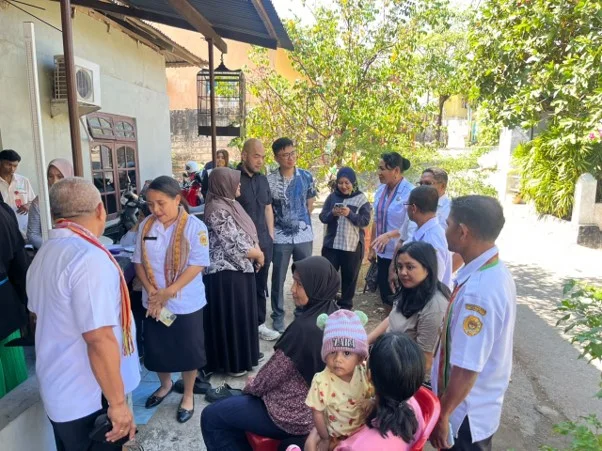
Knowledge regarding nutritional requirements, food selection, food preparation, and nutritional monitoring is considered essential for mothers to make informed decisions in meeting the needs of their children and other family members.
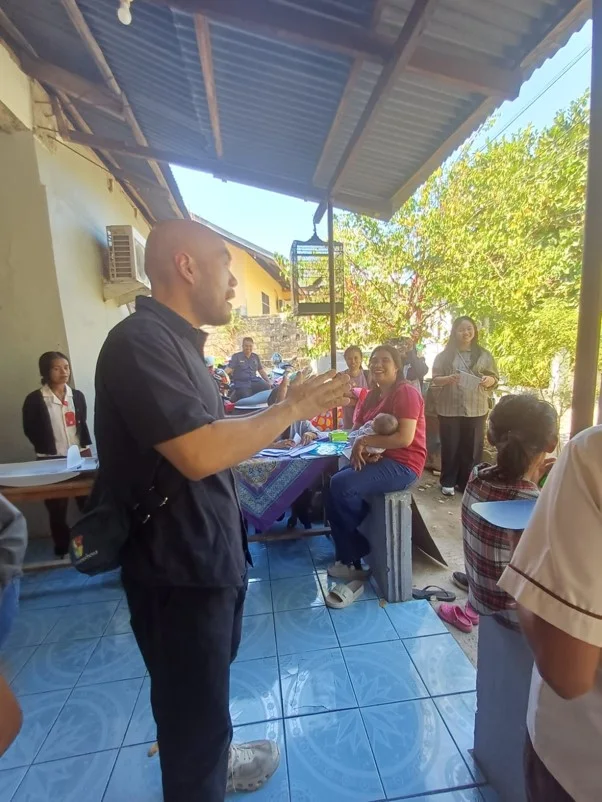
The educational material was presented by dr. Sugi Deni Pranoto Soegianto, M.Med.Klin, Sp.A (K) ETIA.
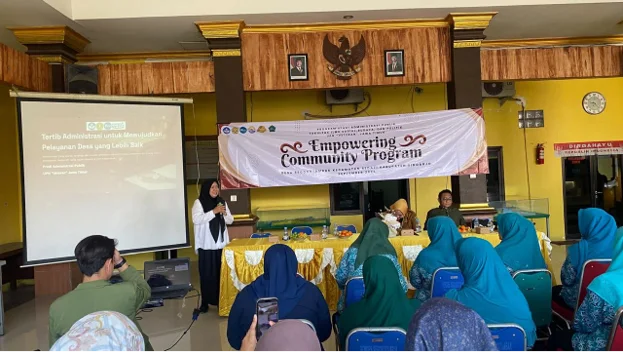
During the session, participants did not just receive a presentation; they were also encouraged to engage in two-way communication.
The mothers were given the opportunity to share their experiences, ask questions, and discuss various challenges they face in meeting their family's nutritional needs.
Participants gained an understanding that nutritional fulfillment is not determined solely by the quantity of food consumed.
Food diversity, quality, nutrient adequacy, and feeding patterns appropriate to a child's age and needs are also vital components in supporting growth and development.
Introducing Independent Nutrition Mapping
In addition to providing education on nutritional needs, the FKKH UNDANA community service team introduced an approach called independent nutrition mapping.
Through this approach, families are expected to be able to recognize their children's nutritional status, identify areas requiring attention, and determine simple steps to improve their nutritional fulfillment patterns.
The use of the module was a key component of the activity.
The module was not only used during the educational process but can also be reviewed by participants after the event concludes.
This provides mothers with a practical guide to use when selecting food and monitoring the nutritional needs of their family members.
The atmosphere was interactive, with participants actively asking questions and sharing experiences regarding dietary habits and children's nutritional needs.
The discussion was intended to ensure that the material provided would not remain merely theoretical, but could be linked to the real-world conditions faced by each family.
Posyandu Deemed Strategic
Holding the activity at the Bogenvil Posyandu 5 was considered strategic, as the Posyandu is a facility with direct proximity to the community, particularly in maternal and child health services.
By conducting the activity within the Posyandu environment, information regarding health and nutrition can be delivered directly to the community groups that need it most.
The collaboration between the FKKH UNDANA team, the Kupang City Puskesmas, Solor Village, and the Kota Lama District is expected to continue beyond the conclusion of the event.
This partnership opens opportunities to strengthen the sustainability of health and nutrition education for the community.
The FKKH UNDANA team hopes that the knowledge gained by participants can be applied in their daily family lives.
Young mothers are also expected to utilize the module as a guide to pay attention to their children's nutritional needs and to perform simple, independent monitoring of their nutritional status.
The activity also serves as part of an effort to build sustainable relationships between universities, the government, healthcare facilities, and the community.
Through this community service program, FKKH UNDANA not only fulfills its functions of education and research but also takes a role in increasing community capacity through knowledge and skills tailored to family health needs.
This module-based education is expected to be the first step in encouraging families in Solor Village to become more active in recognizing, meeting, and monitoring their children's nutritional needs independently.



Comments 0
Write a Comment Share your response