

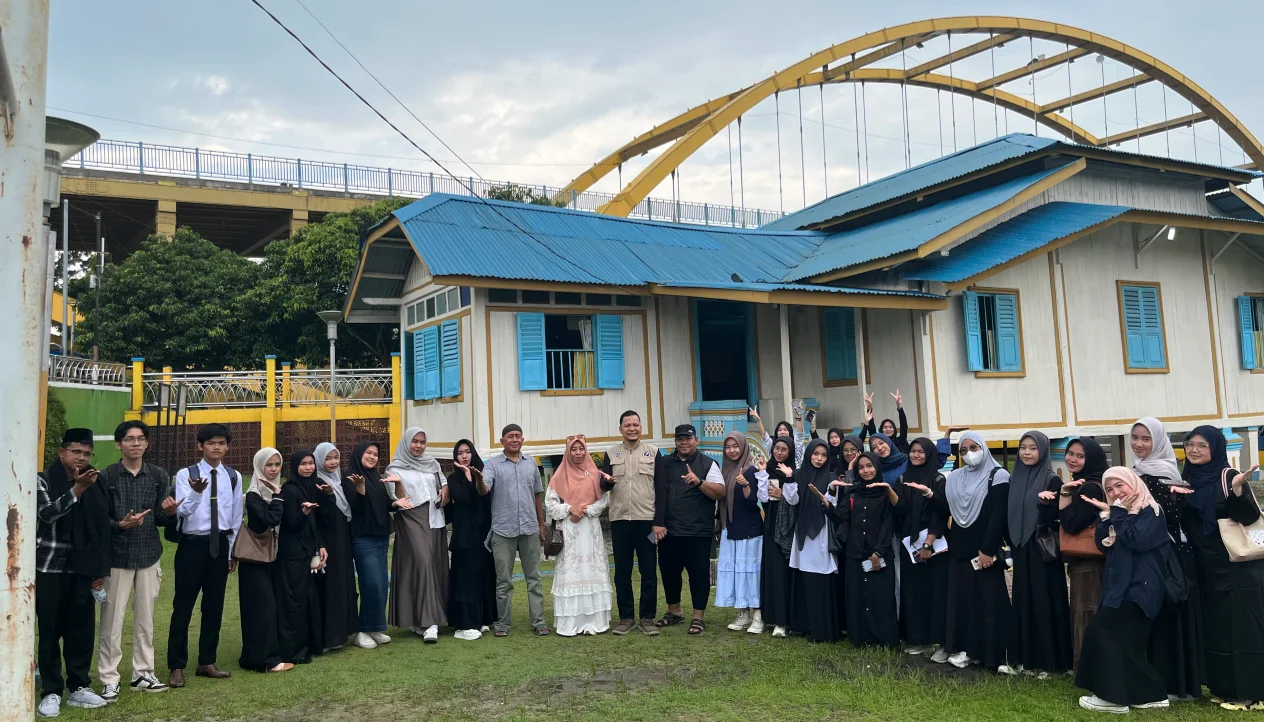
PEKANBARU, RIAU, JurnalPost.com – Amidst the rapid pace of modern urban development, Pekanbaru still harbors historical relics that reflect the cultural identity of the Malay community, most notably the Tuan Kadi Guest House.
Situated in Kampung Bandar, Senapelan, not far from the Siak River, this traditional wooden house serves as a vital link in the history of Pekanbaru’s development, connecting the Malay cultural tradition with the legacy of the Siak Sultanate.
According to historical records published by the Pekanbaru City Library and Archives Office, the house was built by H. Nurdin Putih, the father-in-law of Tuan Qadhi H. Zakaria, around 1895. Meanwhile, other municipal tourism sources cite 1896 as the year of construction. Both sources indicate that the building dates back to the late 19 century.
The house was originally used as a resting place for the Sultan of Siak and his entourage when visiting Senapelan. Several historical accounts link the building to Sultan Syarif Kasim II, whose visits added significant historical value to the area.
Although known as the Siak Sultan’s Guest House, the building is not a royal palace. It functioned as a temporary stopover for the Sultan during his visits to the region.
Architecture Reflecting Malay Traditions
One of the most compelling aspects of the Tuan Kadi Guest House is its traditional Malay architectural design.
The building utilizes a stilt house structure made of wood with a distinctive pyramid-shaped roof. Various architectural details reflect the craftsmanship and cultural traditions of the Malay community in Riau.
During an educational visit to the site, Syaripudin, S.S., explained several architectural elements that illustrate the social values inherent in the household life of the Malay community in the past.
One example is the water storage vessel located near the entrance. Traditionally, the presence of such a vessel is associated with the custom of welcoming guests as a gesture of respect and hospitality.
Another unique feature is the perforated wall, which allowed women in the private quarters of the house to observe guests without having to interact directly or enter the public space.
The layout of the building also reflects the separation between public and private spaces. Academic research published on 2023 explains that the original floor plan separated the guest reception area from the rooms designated for family members.
This architectural arrangement demonstrates that traditional Malay houses were not merely designed as dwellings, but also reflected the customs, privacy, and cultural values of their society.
The Connection Between Malay Culture and Islamic Values
This historic house also illustrates the close relationship between Malay traditions and the influence of Islamic teachings.
During the educational visit, it was explained that the house’s staircase holds symbolic meaning related to Islamic teachings. Based on notes taken by students, the five steps symbolize the five pillars of Islam.
However, academic research published in the Jurnal Lintas Ruang on 2023 notes the existence of six steps, which are associated with the six pillars of faith.
This discrepancy in information requires further verification so that the symbolic meaning of the building’s architectural elements can be accurately documented.
Nevertheless, this discussion highlights the importance of understanding how religious values and cultural traditions influence the development of traditional architecture.
Preserving Historical Heritage for Future Generations
As a significant historical relic, the Tuan Kadi Guest House requires sustainable preservation efforts.
The building’s structure, which is largely made of wood, and its historical characteristics require careful maintenance to ensure its original identity is preserved.
In November 2025, the Pekanbaru City Government announced a restoration partnership with Bank Indonesia, which provided funding support of Rp800 million.
The restoration program aims to improve the condition of the building while maintaining its original architectural form.
Preservation efforts are essential because historical buildings not only represent achievements in architecture but also store the memories, traditions, and historical information that shape a society’s identity.
For the younger generation, understanding the history of places like the Tuan Kadi Guest House is a crucial step in fostering appreciation for their cultural heritage.
Introducing Pekanbaru’s Cultural Heritage to the World
A visit by students from class 5A of the English Education Study Program at the Islamic University of Riau (UIR) to the Tuan Kadi Guest House on 20 November 2026 provided an opportunity to learn firsthand about this cultural relic.
Through observation, documentation, and explanations from experts, the students gained a deeper understanding of the relationship between historical buildings and their regional cultural identity.
Introducing the Tuan Kadi Guest House to the international community can also help promote Indonesia’s cultural diversity.
Although many international tourists are familiar with major destinations like Bali and Jakarta, various historical relics in other regions, including Riau, also deserve wider attention.
Ultimately, preserving the Tuan Kadi Guest House means safeguarding an important part of Pekanbaru’s history while maintaining the legacy of Malay civilization.
The story of this historic house reminds us that cultural heritage is not merely a relic of the past, but a responsibility that must be guarded, preserved, and passed on to future generations.





Comments 0
Write a Comment Share your response