


JAKARTA, JurnalPost.com — The rapid advancement of digital technology is pushing social and youth organizations to improve their administrative management, particularly in financial recording and reporting.
Transparency and accountability are no longer just requirements for corporations or government agencies. Youth organizations must also maintain organized financial management systems to ensure every income and expenditure is properly recorded, audited, and accounted for.
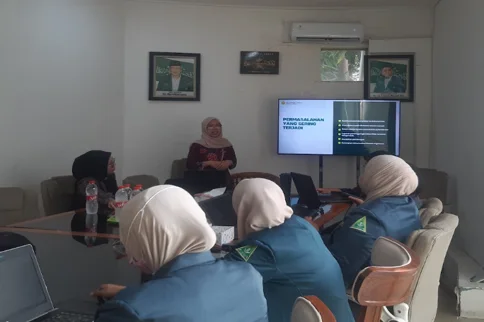
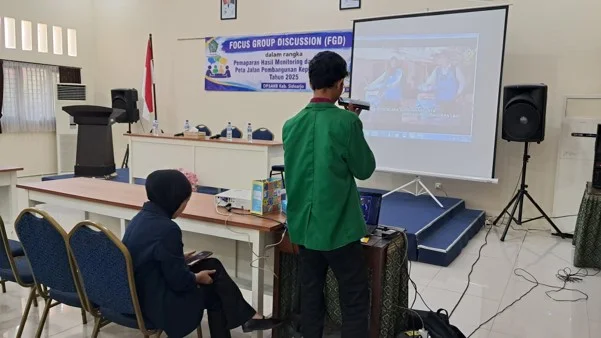
Addressing this need, a community service team from the Universitas Pembangunan Nasional “Veteran” Jakarta (UPN Veteran Jakarta) provided training on financial reporting digitization for members and board members of the South Jakarta branch of the Nahdlatul Ulama Student Association and the Nahdlatul Ulama Female Student Association (PC IPNU-IPPNU).
The activity was designed to enhance the board's ability to compile financial reports that are more systematic, transparent, and accessible by utilizing spreadsheet applications.
Promoting More Orderly Financial Administration
Youth organizations are typically run by individuals with diverse educational backgrounds and experiences. While this diversity is a strength, it also presents challenges in administrative management.
High organizational enthusiasm is not always matched by adequate financial recording skills. In practice, cash inflows and outflows are sometimes not documented in a uniform format.
Consequently, preparing financial reports can be time-consuming. Furthermore, leadership transitions often result in a loss of institutional knowledge regarding previous recording mechanisms.
Through this mentorship, participants were introduced to a simpler yet structured recording system that can be used sustainably.
Spreadsheets as a Simple Financial System
Spreadsheets were chosen because they are easily accessible, relatively familiar to users, and cost-effective to implement.
Often, spreadsheets are viewed merely as basic calculation tools. However, when designed effectively, they can serve as a simple financial information system for an organization.
By using pre-prepared formulas and formats, administrative tasks can be performed more efficiently, ranging from transaction recording and account categorization to cash reconciliation and financial report generation.
This system also helps reduce calculation errors that typically occur with manual recording.
For youth organizations with limited resources or operational budgets, the spreadsheet approach is highly relevant as it is easy to implement and requires no complex technological infrastructure.
Participants Engage in Hands-on Transaction Recording
The mentorship went beyond theoretical delivery; participants were directly involved in practicing financial administration management.
They were first introduced to the importance of transparent and accountable financial governance before learning the basic principles of transaction recording.
Following this, participants conducted simulations by entering common organizational transactions into a prepared spreadsheet template.
Through these simulations, participants observed how recorded transactions could be automatically processed into financial summaries and cash reports.
The use of standardized templates is expected to help the organization maintain consistent reporting formats across different leadership terms.
In addition to simplifying audits, uniform recording facilitates smoother administrative handovers during leadership transitions.
Digitization Does Not Require Complex Systems
Digital transformation within an organization does not always require building complex applications or information systems.
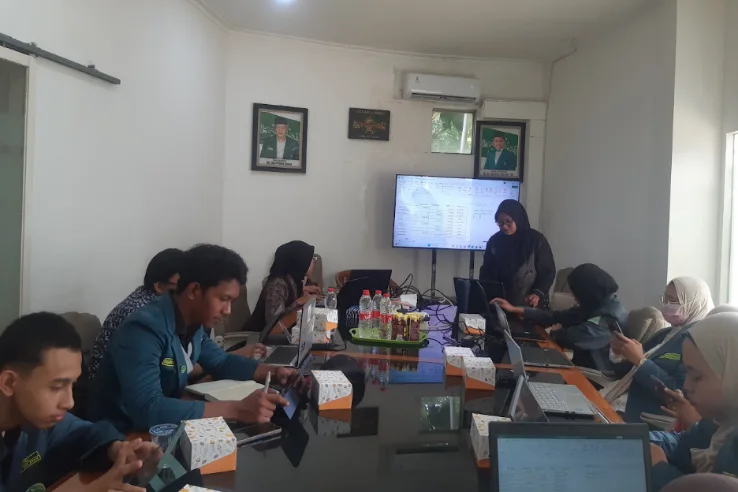
Simple steps, such as using standardized spreadsheets, can be a significant part of administrative digitization.
With a structured system, transaction data becomes easier to track, calculations are automated, and report preparation becomes faster.
This simple digitization can serve as a foundation before the organization develops more integrated financial management systems in the future.
Implementing the Tri Dharma of Higher Education
For universities, community service activities are a form of implementing the Tri Dharma (Three Pillars) of Higher Education.
Knowledge developed in academic environments should not remain theoretical but should be applied as solutions tailored to the needs of society and organizations.
The collaboration between the university and the youth organization demonstrates that innovation is not synonymous with sophisticated technology.
Simplifying administrative processes through existing technology can have a tangible impact when applied according to user needs.
Through this mentorship, PC IPNU-IPPNU South Jakarta is expected to become more disciplined in financial recording while building a sustainable administrative system.
Ultimately, digitizing financial reports is not just about using technology, but about building an organizational culture that is more transparent, professional, and accountable.
The adoption of standardized spreadsheets is a first step toward organizational governance that is more adaptive to technological developments and prepared for future administrative demands.







Comments 0
Write a Comment Share your response