

SUKOHARJO, JurnalPost.com – Used cooking oil, which typically ends up as kitchen waste, still holds potential to be repurposed into household products. This opportunity was introduced by students from the Universitas Sebelas Maret (UNS) Community Service Program (KKN) to women in Trangsan Village, Gatak District, Sukoharjo Regency, Central Java.
Through a program titled "Opening Business Opportunities through the Production of Versatile Soap from Used Cooking Oil," the UNS KKN students encouraged the community to recognize the economic potential of household waste that is often considered valueless.
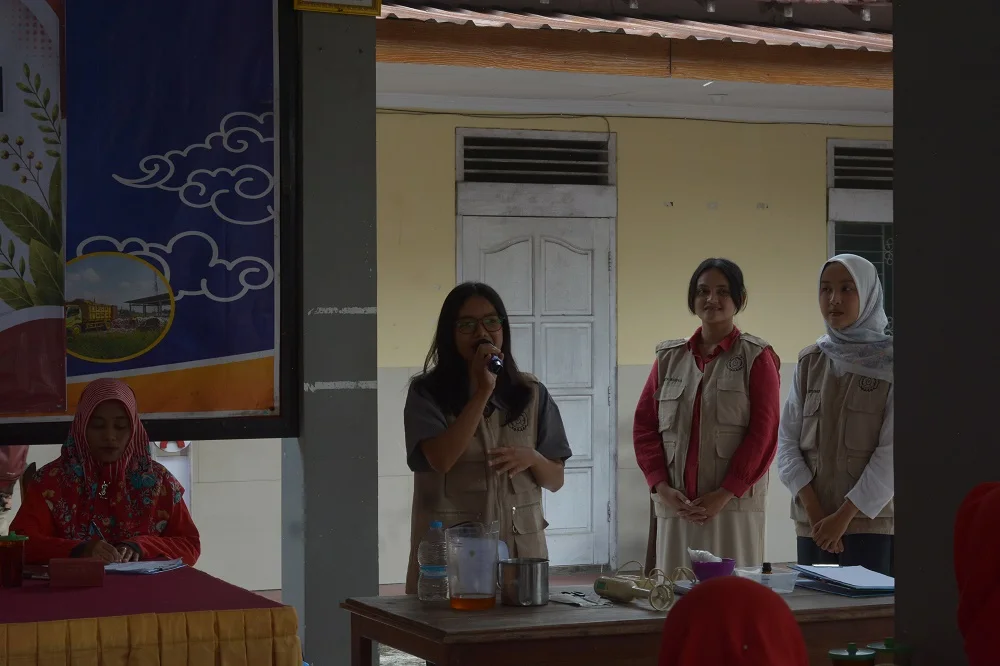
The event, held at the Trangsan Village Hall on Tuesday (4/8/2026) at 10.30 WIB, was attended by 30 members of the Family Welfare Empowerment (TP PKK) team of Trangsan Village.
In addition to providing education on waste management, the activity introduced the process of making versatile bar soap from processed used cooking oil.
Encouraging Household Waste Utilization
Trangsan Village is well-known as a center for the rattan craft industry in Sukoharjo Regency. The local community's craft products serve as a major attraction that supports the development of the village as a tourist destination.
However, behind this potential, some residents still face economic challenges, including limited job opportunities and the need to supplement family income.
Based on observations and interviews conducted by the KKN students with local business owners, a portion of the community still relies on jobs with unstable income.
Many housewives also contribute to the family economy through small business activities, including selling home-cooked food.
This situation prompted the UNS KKN students to present an empowerment program that utilizes simple materials easily found in daily life.
One of the materials chosen is used cooking oil.
Used cooking oil that is disposed of carelessly can pollute the environment, especially if poured directly into drains. With proper processing, this waste can be utilized as a raw material for making soap for specific cleaning purposes.
Introducing the Versatile Soap-Making Process
During the event, participants received an explanation on the importance of managing used cooking oil, along with an introduction to the steps for processing it into bar soap.
The UNS KKN students explained that household waste does not always have to end up as trash. Some types of waste can be reused if handled using appropriate methods.
The participants were also introduced to the soap-making process, from material preparation to an overview of the final products that can be created.
This program is expected to provide new knowledge to the PKK women, particularly regarding opportunities to utilize materials already available within their households.
Program coordinator Addia Atmadewani stated that the activity was designed to combine two goals: increasing environmental awareness and introducing business opportunities to the community.
"Through this activity, we want to show that used cooking oil, which is usually considered waste, can still be utilized into products with utility value. We hope that the community not only learns how to process it but also sees the business opportunities that can be developed from these products," she explained.
According to Addia, the utilization of used cooking oil is expected to go beyond waste reduction and potentially develop into a productive activity that provides economic benefits for families.
However, processing used cooking oil into soap still requires attention to material safety, the use of protective equipment, and precision in the manufacturing process to ensure the resulting product is safe for its intended use.
Distributing Processed Soap to Participants
Beyond providing instruction, the UNS KKN students also distributed versatile bar soap made from used cooking oil to the women who attended the event.
The distribution of these products was intended to provide a concrete example that used cooking oil can be transformed into useful items.
By seeing the final results firsthand, participants are expected to gain an understanding of the types of products that have the potential for further development.
Throughout the event, the members of the Trangsan Village TP PKK participated in the education and soap-making demonstration with great enthusiasm.
The participation of the attendees was a crucial part of the program's execution, as the activity was specifically aimed at encouraging community involvement in household waste management.
Opening Opportunities for Eco-Friendly Product Businesses
In addition to raising awareness about waste management, the UNS KKN students' activities were also directed toward introducing alternative productive economic activities for the people of Trangsan Village.
Soap bars made from used cooking oil are considered to have potential for development as household products. If quality, safety, packaging, and marketing requirements are met, these products could become a viable small-scale business option.
Developing such businesses can be done through community groups, including the TP PKK, by considering the availability of raw materials, production costs, and consumer needs.
For housewives who already have experience running food businesses or other economic activities, processing waste into value-added products can be a new skill to expand their capabilities.
Although the economic potential still needs further study, this activity serves as an initial step in introducing more productive ways to utilize household waste.
The UNS KKN students hope that the knowledge gained during the event can be applied and developed independently by the community.
Through the involvement of the PKK women, the program is also expected to foster sustainable empowerment activities in Trangsan Village.
In this way, used cooking oil, previously considered waste, can be viewed as a material with potential, while also serving as a learning tool for the community to develop creativity and business skills.



Comments 0
Write a Comment Share your response