


JurnalPost.com – Language development is a vital component of a child's growth. Through language, children can convey desires, express feelings, understand others, and build social interactions.
Language proficiency is not merely marked by the number of words spoken; it also encompasses the ability to understand language, respond to communication, and use words to convey needs and ideas (Feldman, 2019).
In early childhood, language development varies from child to child. However, when a child's verbal communication skills remain very limited compared to their age group, this condition requires attention.
Monitoring development and providing appropriate stimulation can help parents understand their child's needs and provide more meaningful communication experiences.
When the Ability to Express Desires Is Limited
One common pattern in early childhood language development is when a child relies more on gestures than words to communicate.
The child might point to desired objects, grab them directly, or guide others to assist them.
While these are forms of communication, the ability to use verbal language remains a crucial aspect that requires attention in a child's development.
This pattern was observed in R, a two-year-three-month-old boy who underwent a developmental assessment.
Based on interviews with his mother and observations, the child could use the words “ayah” (father) and “kan” (referring to fish). Meanwhile, to express desires, he more frequently pointed, grabbed objects, or guided others.
The child was still able to understand simple instructions given to him. However, his ability to express desires through words remained limited.
This condition demonstrates that the ability to understand language and the ability to express language are distinct aspects. Therefore, both need to be considered when understanding a child's communication development.
Language Develops Through Interaction and Experience
A child's language development does not occur in isolation from their environment. Children acquire language experience through the people they interact with, daily activities, and the various stimuli they receive and learn from.
Emergentist Theory explains that language development emerges through the interaction between a child's developmental characteristics, linguistic input from the environment, and the experiences the child acquires.
In this perspective, language development depends not only on the child's innate ability but also on how the child gains opportunities to hear, understand, and use language in meaningful contexts (Poll, 2011).
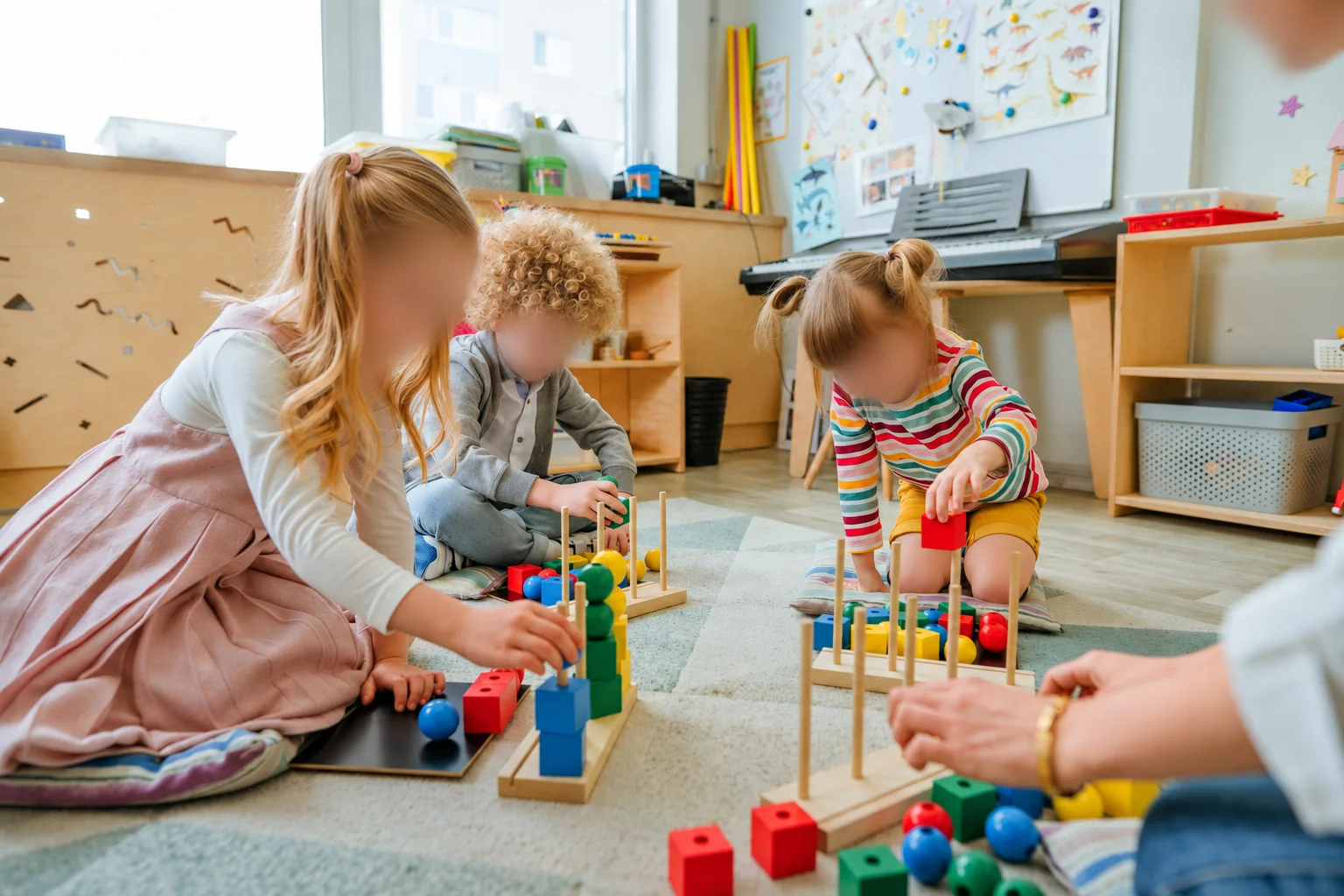
Daily interactions, such as conversations during meals, playing, reading books, or doing activities together, can be opportunities for a child to gain language experience.
Words used in real-life situations help children connect language with objects, actions, and the experiences they are currently undergoing.
In R’s case, his mother had attempted to provide stimulation by talking to him, asking about desired objects, and using picture books.
R also had opportunities to interact with his mother, siblings, and other children. This shows that language stimulation had been carried out within the family environment, even though R’s verbal language skills remained limited.
When a Child Is Unable to Express Desires with Words
Language also functions to help children communicate their needs and desires.
When the ability to express desires through words is limited, children may rely more on gestures or show specific responses when others do not understand what they want.
In R’s case, some situations involving unfulfilled desires were accompanied by crying and screaming. These responses occurred, for example, when R wanted food or when his gadget was taken away.
In such situations, the limitation in verbal communication becomes an aspect that needs to be understood alongside the behavioral responses that emerge.
This does not mean that every instance of crying or tantrum is caused by a language delay. A child's behavior can be influenced by various factors.
Therefore, communication skills, emotional regulation, developmental conditions, and the underlying situation of the behavior need to be understood holistically.
Understanding Child Development Through Assessment
Developmental monitoring helps identify skills that a child has mastered as well as those that still require attention.
One tool used in developmental screening is the Denver II, which assesses several developmental aspects, including language, gross motor, fine motor-adaptive, and personal-social skills.
In the Denver II assessment conducted on R, five items were found to be delayed and four items were marked as caution in the language aspect.
These results indicate that there are a number of language skills that could not be demonstrated according to the assessment items.
Overall, the screening results indicate a suspected developmental delay, with the most prominent issues in the language and verbal communication aspects.
The Denver II is a screening tool, not a tool for establishing a definitive clinical diagnosis. Screening results that show developmental concerns need to be followed up with a more comprehensive examination so that the child's developmental profile and needs can be understood more accurately.
A history of premature birth and health conditions in R’s early life are also relevant developmental information to consider.
However, this history cannot be directly concluded as the cause of the language delay experienced by R.
Language Stimulation Can Be Done in Daily Activities
Language stimulation does not always have to be done through special activities or the use of specific learning media.
Daily activities can be utilized as opportunities to introduce, repeat, and use words in contexts close to the child's experience.
One approach that can be used is focused stimulation. This approach is carried out by presenting target words repeatedly in the context of play or daily routines.
Through consistent exposure to words in meaningful situations, children have the opportunity to hear and recognize the use of those words without being directly asked to imitate them (Zuccarini et al., 2020).
Its application can be done through the following ways.
1. Following the child's interests
Parents can use objects, activities, or games that are currently capturing the child's attention as opportunities to introduce words.
2. Repeating words in context
Target words can be used repeatedly and naturally when the child is playing, eating, or doing daily activities.
3. Providing examples of word usage
Parents can mention words that match the child's activities so that the child receives a language model that can be heard and understood in context.
4. Providing opportunities to communicate
Children can be given time to respond through words, sounds, gestures, or other forms of communication without always being pressured to imitate words directly.
This approach places interaction as an important part of language stimulation. Parents do not just introduce words but also connect those words with the child's ongoing experience.
Parents as Part of Language Stimulation
Language stimulation can involve parents because interactions with the child take place in various daily activities.
Parents have the opportunity to recognize the child's interests, know the objects or activities frequently encountered, and adjust word usage to the situation the child is experiencing.
Parental involvement in language intervention is also one of the approaches researched to support children's expressive language development (Zuccarini et al., 2020).
In the intervention conducted with R’s mother, psychoeducation focused on improving skills in providing language stimulation through the focused stimulationapproach.
These activities included understanding the principles of stimulation, selecting target words according to the child's needs and interests, providing examples, and practicing applying stimulation in daily interactions.
Through this practice, the mother was introduced to ways of using target words naturally, repeating words in appropriate contexts, following the child's interests, and giving the child opportunities to try communicating.
Stimulation can then be applied in daily routines at home, so it does not have to depend on formal practice sessions.
Strengthening parental skills is a form of support for a child's language development.
However, home stimulation does not replace professional assessment or intervention if the child shows developmental needs that require further handling.
Understanding Language Development and Child Needs
Language development involves a child's ability to understand and produce language, interaction experiences, and various interrelated developmental characteristics.
Children with limited verbal language skills require an understanding of their developmental condition, not just an assessment based on the number of words they can speak.
Language stimulation through daily interactions, such as playing, talking, reading, and responding to the child's communication, can be a form of support for language development.
If a child's language skills remain limited or cause concern, further monitoring and developmental assessment are needed to determine the child's needs comprehensively.
References
Feldman, H. M. (2019). How young children learn language and speech: Implications of theory and evidence for clinical pediatric practice. Pediatrics in Review, 40(8), 398–411. DOI: 10.1542/pir.2017-0325.
Poll, G. H. (2011). Increasing the odds: Applying emergentist theory in language intervention. Language, Speech, and Hearing Services in Schools, 42(4), 580–591.
Zuccarini, M., Suttora, C., Bello, A., Aceti, A., Corvaglia, L., Caselli, M. C., Guarini, A., & Sansavini, A. (2020). A parent implemented language intervention for late talkers: An exploratory study on low risk preterm and full-term children. International Journal of Environmental Research and Public Health, 17(23), 9123. DOI: 10.3390/ijerph17239123.








Comments 0
Write a Comment Share your response