

The author is an Industrial Engineering student at the University of 17 August 1945 (UNTAG) Surabaya.
SURABAYA, JurnalPost.com – The issue of inorganic waste management, particularly single-use plastic bottles, remains a tangible daily challenge in densely populated urban residential areas.
Although lightweight, the hollow and rigid shape of plastic bottles means they occupy significant space. Consequently, storage containers in households and temporary collection points at the neighborhood (RW) level fill up rapidly before the scheduled collection by sanitation workers or waste collectors.
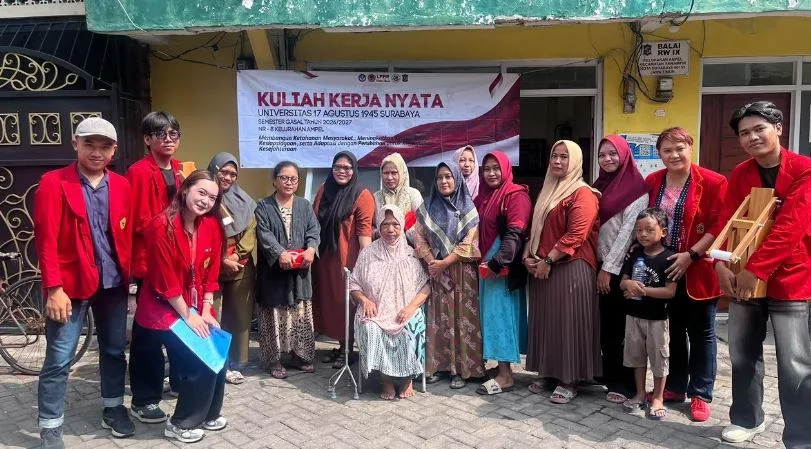
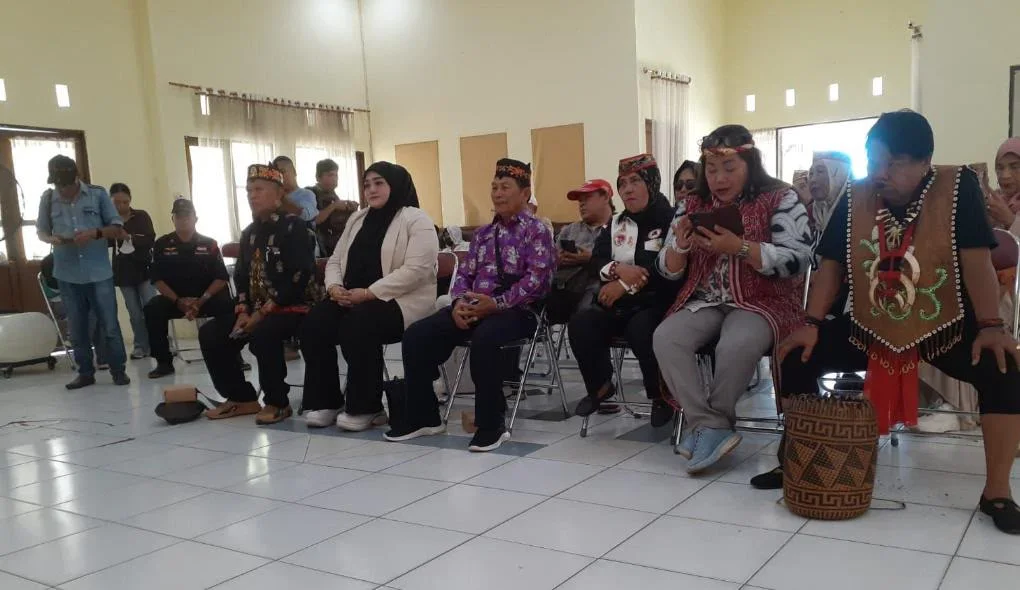
Addressing these real-world conditions, students from the Community Service Program (KKN) NR-8 at the University of 17 August 1945 (UNTAG) Surabaya introduced a practical, appropriate technology in the form of a manual bottle press at the RW 09 Hall, Ampel Village, Semampir District, Surabaya.
Through socialization activities and live demonstrations with local women and neighborhood officials, this sturdy, ergonomic wooden-framed tool was introduced as a practical solution to reduce plastic waste volume directly at the source.
Appropriate Technology Without Electricity
From an engineering perspective, the effectiveness of a tool in a community is not determined by the complexity of its machinery, but by its ease of operation, low maintenance costs, and compatibility with residents' habits.
This manual bottle press is designed using simple mechanical lever principles and requires no electricity. By simply removing the bottle cap, placing it in the compression chamber, and pulling the lever down, the previously bulky plastic bottle can be compressed until it shrinks significantly.
This fast and safe process allows anyone, from housewives to waste bank volunteers, to use it without difficulty.
Efficiency in Plastic Waste Management
The positive impact of reducing the volume of plastic bottles is highly significant for environmental management in RW 09, Ampel Village. With the bottles significantly flattened, the capacity of storage sacks increases exponentially, no longer cluttering the RW Hall or residents' porches.
Beyond maintaining environmental cleanliness and aesthetics to prevent scattered waste, this space efficiency also facilitates easier transport and increases the economic value when the plastic waste is submitted to waste banks or recycling partners.
Building Environmental Awareness
Furthermore, the mentoring and hands-on practice conducted with residents demonstrate that technology transfer must go hand-in-hand with education and active community participation.
The presence of this manual press serves as a catalyst for collective awareness that sorting and processing waste before disposal is not a burdensome task.
When residents directly experience the benefits in easing daily waste management, these good habits will grow into a sustainable, independent culture.
Ultimately, the innovation of the manual bottle press at the RW 09 Ampel Hall proves that the contribution of universities through the KKN program can provide a concrete impact on society.
A simple step born from empathy for residents' needs and designed as appropriate technology can be an effective solution in creating a cleaner, more organized, and sustainable residential environment.




Comments 0
Write a Comment Share your response